

Quick answer: A responsible CBD vape comparison starts with four questions: what is in the formula, how much CBD and THC are present, what hardware is being used, and whether the batch information is supported by a current COA. A clean-looking package or a large cannabinoid number is not enough. Adult buyers should also consider age requirements, destination restrictions, battery safety, storage, and whether the product is appropriate for their own circumstances.
A CBD vape is a product designed to deliver a CBD-containing formula through a vaporizer device. The phrase can refer to a disposable device, a rechargeable cartridge, a pod system, or a product filled with a particular oil. Those are different purchasing decisions. A label-first review helps you compare the liquid, the device, and the evidence behind the listing without confusing a retail description with a medical claim.
What should a CBD vape listing tell you?
A useful product page should identify the product format, the total amount of formula, the CBD amount, the THC information, the ingredients, the device type, the batch or lot number, and the available testing documentation. It should also provide adult-use and destination information. If a listing only says “premium CBD vape” and shows a flavor name, you do not have enough information to compare it responsibly.
The U.S. Food and Drug Administration says that many questions about the safety and quality of consumer CBD products remain unanswered. It has also warned that some products have not contained the amount of CBD claimed or may contain contaminants. That is why a transparent listing should make it possible to connect the product to a particular batch record. Read the FDA consumer information about CBD and use it as a reminder to evaluate evidence rather than slogans.
CBD vape ingredients: start with the formula
Read the ingredient list before reading the flavor description. Depending on the product, you may see a carrier, botanical or terpene ingredients, flavor components, and one or more cannabinoids. A buyer should be able to tell whether the formula is a single-cannabinoid product or a blend. If an ingredient is unfamiliar, look it up through a reliable source or ask the manufacturer for an explanation.
Do not assume that “natural” means risk-free or that a familiar flavor name tells you what is actually in the device. Essential oils, concentrated flavoring agents, and other additives can behave differently when inhaled than when used in food or cosmetics. If the listing does not clearly explain ingredients intended for the vape format, treat that lack of information as a reason to pause.
How to read CBD and THC amounts
Labels may show total CBD per device, CBD per cartridge, CBD per milliliter, or a percentage. These measurements are not interchangeable. To compare two products, write down the total formula amount and the total CBD amount, then calculate the approximate CBD concentration. Also check the THC result. A hemp-derived claim does not replace the need to read the cannabinoid panel and the applicable rules for the destination.
A high number is not automatically a quality signal. Concentration should be considered alongside the ingredients, batch evidence, device construction, and how easy it is for a buyer to understand the product. Avoid making dosing promises based on another person’s experience. The appropriate amount and suitability can vary, and anyone using medication or managing a health condition should speak with a qualified healthcare professional.
Disposable or rechargeable?
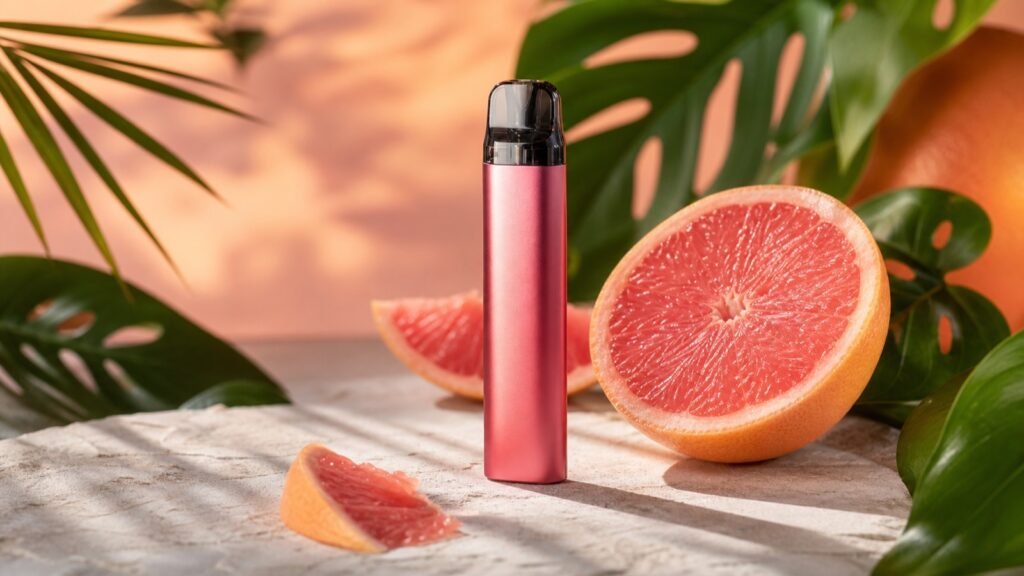
A disposable CBD vape is generally sold as a ready-to-use device that is discarded when the formula or battery is depleted. It may be convenient, but the buyer should still find the device capacity, battery information, ingredients, and disposal guidance. A rechargeable cartridge or pod system may create less single-use hardware, but it adds charging, compatibility, and storage decisions. Compare the total product cost, not only the initial price.
For a deeper format comparison, see our guide to CBD vape pens vs. disposable devices. Whichever format you choose, do not modify the hardware, refill a device unless the manufacturer explicitly designed it for refilling, or use a charger that is not compatible with the device. Stop using a device that becomes unusually hot, leaks, smells burnt, swells, or behaves unpredictably.
Why batch information matters
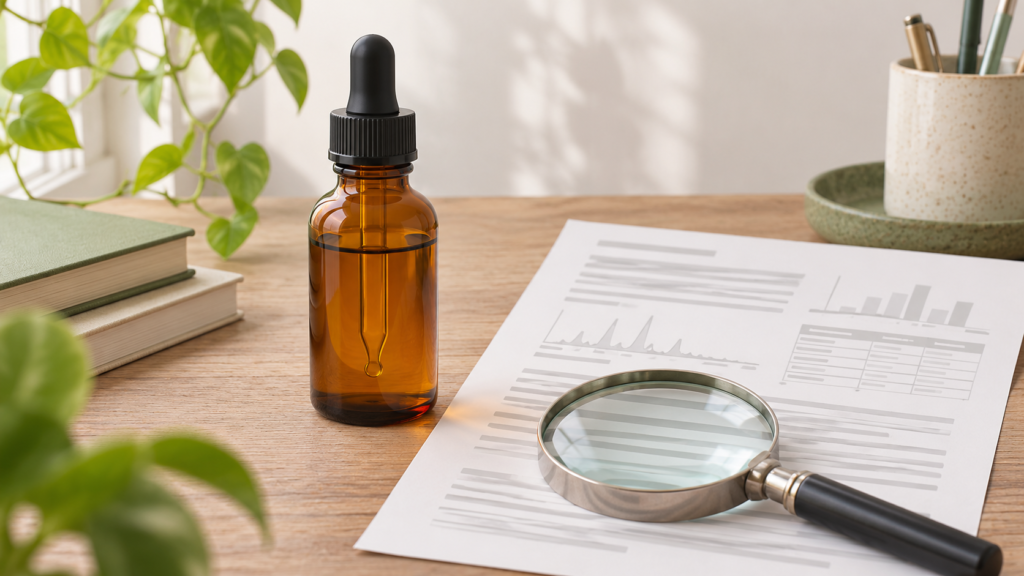
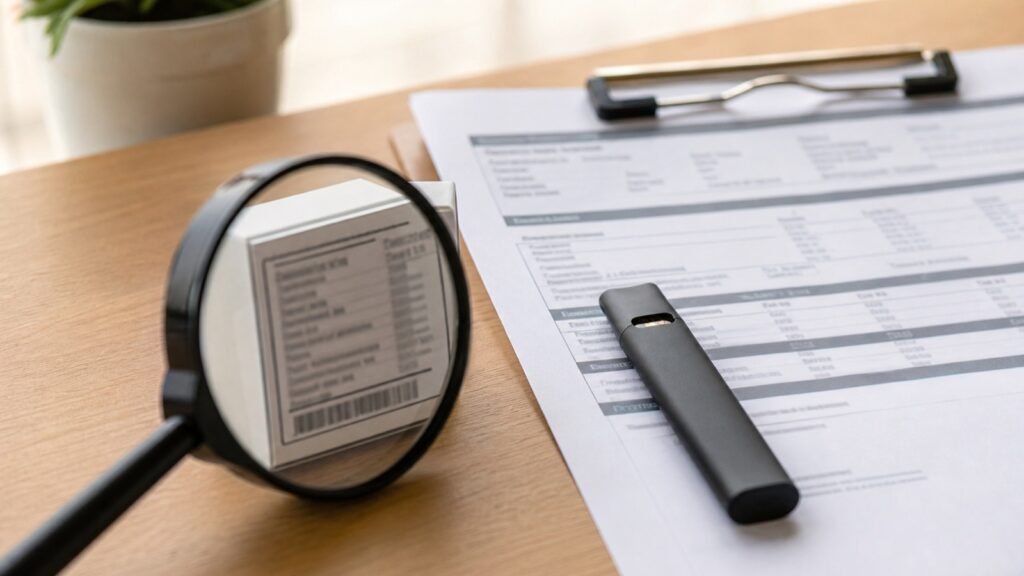
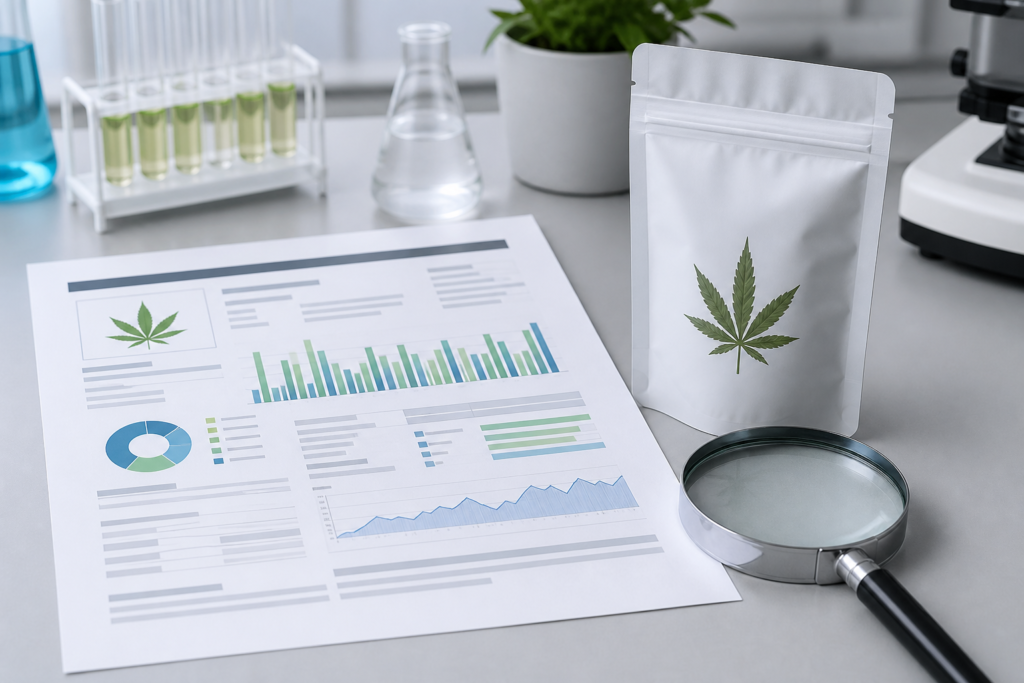
A COA is meaningful only when it is connected to the product. Look for a batch or lot number on the package, product page, or report. Then compare the product name, batch identifier, test date, laboratory name, cannabinoid results, and any available contaminant panels. A report for another flavor, an old batch, or a different device should not be treated as proof for the product in your cart.
Our COA comparison guide explains a practical five-part check. Start by confirming identity. Then read the cannabinoid table without confusing “not detected” with “zero in every circumstance.” Finally, note what the report does not test. A COA is evidence about a sample; it is not a promise that every future batch will be identical.
CBD vape hardware checks
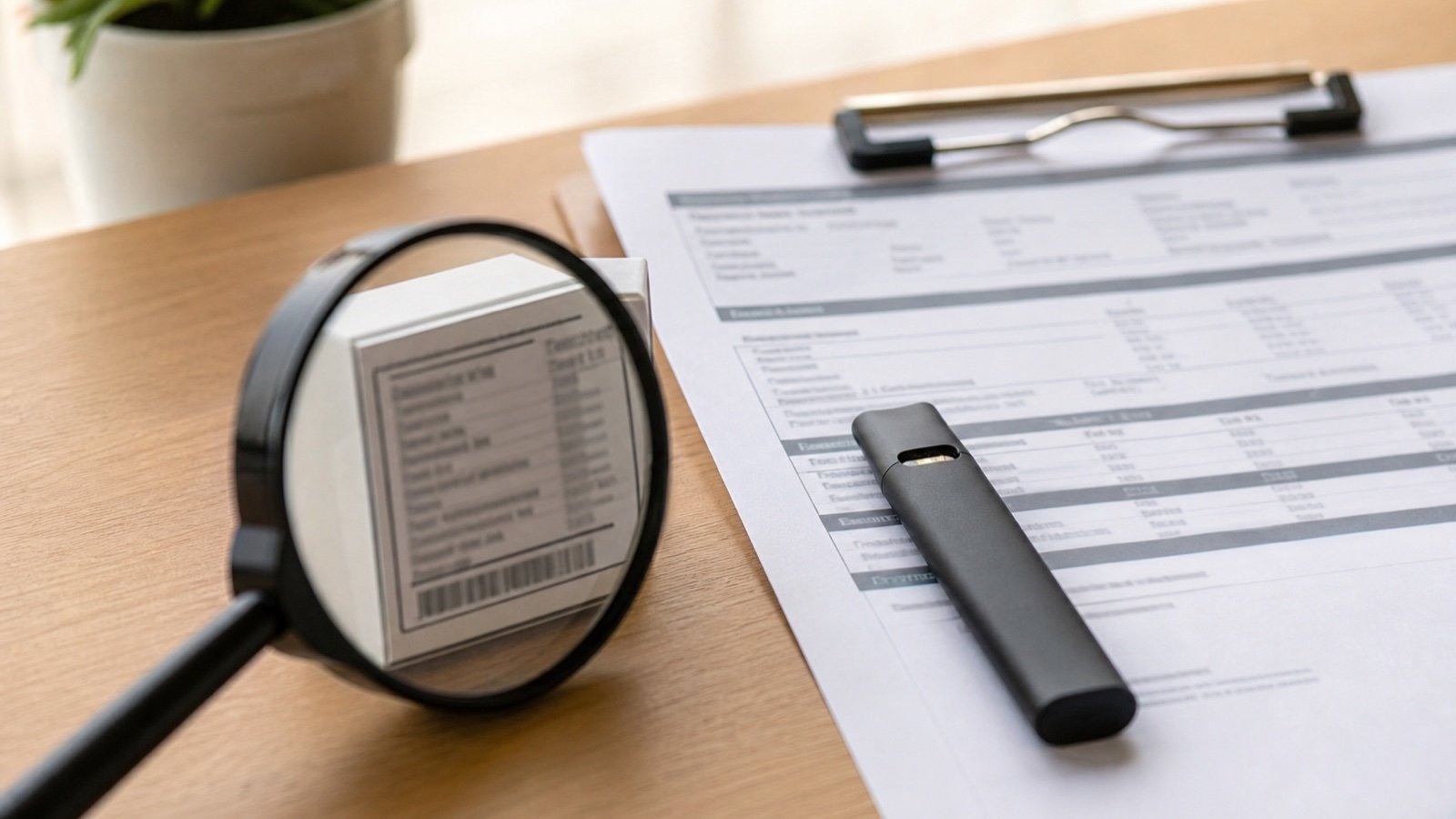
Hardware affects the shopping decision because the same formula can behave differently in different devices. Look for a clear device description, mouthpiece and body materials where provided, airflow or activation method, battery type, and charging instructions. A product page should not hide basic safety information behind a flavor selector.
- Check activation: draw-activated and button-activated devices require different use habits.
- Check charging: confirm whether the device is rechargeable and which cable or adapter is specified.
- Check leaks: packaging should protect the device, and the product should arrive sealed and intact.
- Check heat: unusual heat, swelling, or a damaged battery is a stop-use signal.
- Check compatibility: do not force a cartridge into a battery or use a charger that the manufacturer does not support.
Storage and handling
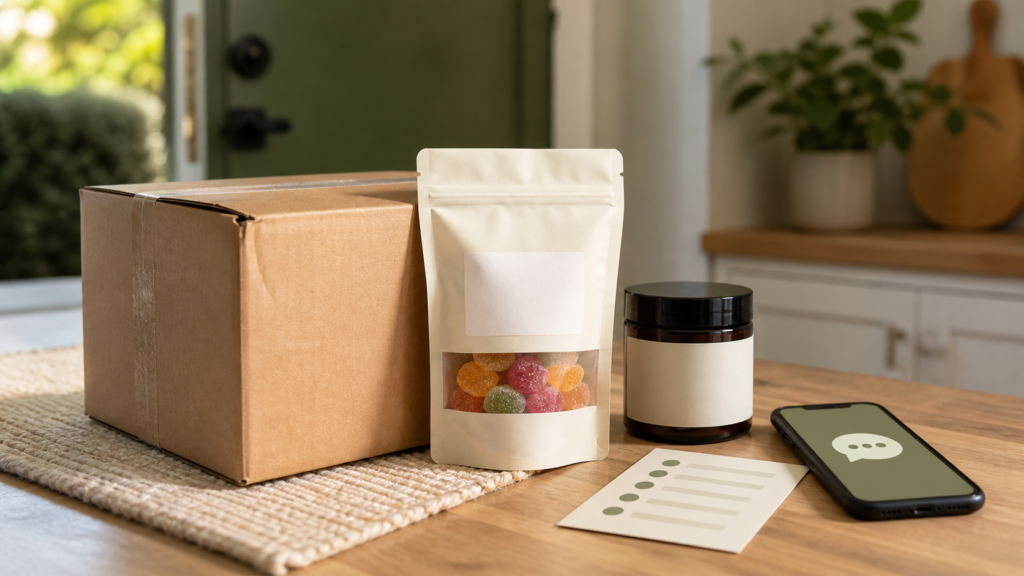
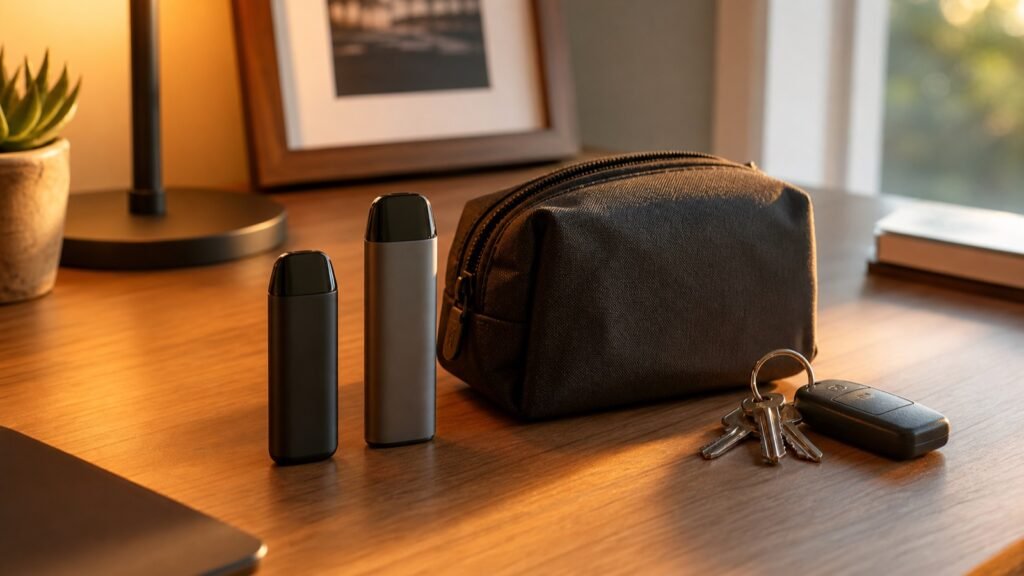
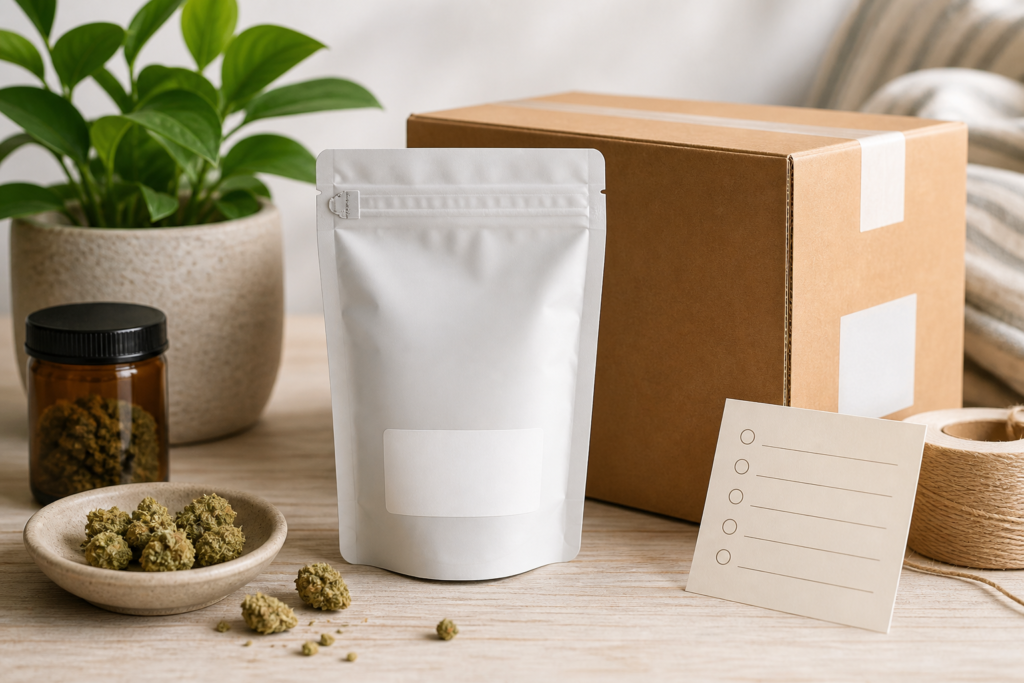
Store a CBD vape in a cool, dry location away from direct sun, heat sources, children, and pets. Keep it in its original packaging when possible so the batch information and directions remain available. Do not leave a device in a hot vehicle. If the package arrives leaking, cracked, damaged, or missing its identifier, photograph the condition and contact the seller before using it.
Shipping and legal checks
Online availability is not the same as universal permission to purchase or receive a product. State, local, carrier, age, and product-specific rules may differ. Before checkout, review the seller’s shipping and destination policy and the legal disclaimer. The USDA maintains federal hemp production rules, but that does not answer every retail, possession, labeling, or delivery question for every location. The buyer remains responsible for complying with applicable law.
CBD vape claims to treat carefully
Retail pages sometimes use language about sleep, pain, anxiety, inflammation, or other conditions. Those claims can turn a consumer product description into a medical claim. Herbxmind content should focus on what a product is, how to read its label, how to compare documentation, and how to use responsible purchasing judgment. It should not promise to diagnose, treat, cure, or prevent a disease. The FDA has specifically raised concerns about unapproved CBD products marketed with disease claims.
A practical CBD vape buying checklist
- Confirm that the product is intended for adults where permitted.
- Record the format, total volume, total CBD, CBD concentration, and THC information.
- Read every ingredient, including carriers and flavor components.
- Identify the batch or lot number before purchase.
- Open the current COA and check that it matches the batch.
- Review device, charging, storage, and disposal instructions.
- Confirm shipping restrictions for your destination.
- Save the product page, COA, receipt, and batch details for your records.
Frequently asked questions
Is a CBD vape the same as a CBD oil?
No. A vape formula and a product intended for oral use are different formats. Never assume that an oil labeled for one route of use is appropriate for inhalation.
Does a COA prove that a CBD vape is safe?
No. A COA provides information about a tested sample and the categories included in that report. It does not replace professional advice, product instructions, or a review of all ingredients.
How can I compare two CBD vapes?
Compare the complete formula, CBD and THC amounts, batch-matched COAs, hardware, total volume, device cost, shipping restrictions, and customer support. Avoid comparing only flavor or milligram claims.
What should I do if a vape gets hot?
Stop using it, move it away from flammable materials if it is safe to do so, and follow the manufacturer’s safety instructions. Do not open, puncture, or modify a battery.
Bottom line
The strongest CBD vape purchase is the one you can explain: you know what is in the formula, how the device works, which batch was tested, what the evidence actually says, and whether the product can be shipped to you. Use the Herbxmind blog for label education, and contact the seller when an important detail is missing.
Editorial note: This article is for adult educational use where permitted. It is not medical or legal advice and does not guarantee product safety, legality, or suitability.
A practical CBD vape guide should answer more than “which flavor should I choose?” Adult buyers need to evaluate the exact formula, ingredients, device, battery instructions, batch evidence, laboratory report, storage guidance, and destination policy. A vape listing can look simple while combining a cannabinoid product with hardware and shipping constraints. Use the following process to compare the package and product page without turning marketing claims into medical, safety, or legal guarantees.
Identify the exact vape format
First determine whether the product is a disposable, a cartridge, a pod, or a reusable pen system. A disposable usually combines oil and battery in one device. A cartridge may require a compatible battery. A pod may use a proprietary connection or charging system. Product names are not standardized, so check the listing and package for the actual design.
- Record whether the device is reusable, rechargeable, or intended for one use.
- Check oil volume, package count, and stated cannabinoid amounts.
- Confirm whether the device includes a battery, charger, cable, or separate pen.
- Read button, draw-activation, airflow, and storage instructions.
- Note the support process for leaks, inactive hardware, or damaged packages.
This prevents a common mistake: comparing the price of a complete disposable with the price of an empty or reusable battery. Hardware and oil are separate parts of the buying decision.
Read the ingredient list
“CBD vape” is not a full ingredient description. Review the cannabinoid ingredients, carrier ingredients, flavors, and other additives listed for the exact product. Confirm that the formula applies to the cartridge or disposable you are considering rather than to a general brand range. If the page uses broad words such as natural or premium, look for the complete ingredient information behind the marketing language.
For a product containing multiple cannabinoids, note whether the label separates CBD, CBDA, THC, THCA, CBG, or other compounds. Units may be shown as milligrams per device, milligrams per gram, or percentage by weight. Do not compare figures until the units and package basis match.
Match the COA to the finished product
A certificate of analysis is most useful when it identifies the finished vape oil and the current lot. Check the laboratory name, report number, sample name, dates, product form, lot or batch identifier, units, and panels. A report for a raw ingredient or an earlier batch may provide context, but it is not automatically direct evidence for a later cartridge or disposable.
Read the panel rather than relying on a badge. Some reports show cannabinoids only, while others include pesticides, heavy metals, residual solvents, microbes, or other screens. A blank section is not the same as a pass. “Not detected” and “below LOQ” are interpreted within a method and reporting limit. The narrow conclusion is that the named sample was tested for the named analytes under the stated conditions.
Save the report URL and access date. If several reports appear for the same batch, ask which version is current and whether one was corrected or superseded.
Review device and battery information
For a rechargeable pen, check the charging method, indicator behavior, activation method, and storage instructions. For a disposable, confirm whether it is rechargeable and what the seller recommends if it arrives inactive. Do not use a cable or charger simply because it fits; follow the product instructions and keep the device away from excessive heat and moisture.
A reusable battery may make later cartridge purchases simpler, but it adds compatibility and maintenance questions. A disposable may reduce the number of separate components, but the entire device is replaced when the oil or battery is depleted. Neither observation proves an environmental or financial advantage for every buyer.
Check cartridge compatibility and handling
If the product uses a replaceable cartridge, confirm the connection and compatible battery model. Do not assume that similar shapes or a shared flavor name mean the components work together. If the seller uses a proprietary pod, check whether replacement pods are available and how the device should be stored.
Do not add a different liquid to a cartridge or disposable unless the manufacturer specifically says the device is designed for that use. Mixing products can change the formula, hardware behavior, and relationship to the original COA. If the device leaks or arrives damaged, stop and follow the seller’s support and return instructions rather than altering the hardware.
Compare cost on a consistent basis
Compare total price, oil volume, declared cannabinoid amount, package count, and any separate battery or charger cost. For a reusable system, include the initial battery and later cartridge purchases. For a disposable, include the full device each time. Compare package with package and use the same measurement basis for every option.
A precise cost-per-draw figure is often unavailable because draw duration, airflow, and user behavior vary. If the label does not state enough information to calculate a figure honestly, mark the comparison as incomplete. A transparent estimate is better than a precise-looking number built on assumptions.
Review storage and delivery rules
Follow package instructions for light, heat, position, and charging. Keep the device and packaging out of reach of children and pets. Check the seller’s current age, identity, signature, returns, and destination restrictions. A seller’s willingness to ship is not a complete legal determination, and rules can differ by product type, location, timing, and carrier.
Before ordering, check current official information for the destination and note the date of the seller’s policy. Do not assume that a vape can be shipped or carried everywhere because a different hemp product is available. When a destination restriction is unclear, pause and ask for a specific explanation.
Use a pre-order checklist
- Is the exact vape format and hardware clear?
- Are the ingredients and cannabinoid units listed?
- Does the COA match the finished oil and current batch?
- Are battery, compatibility, charging, and storage instructions available?
- Can cost be compared using the same package and content basis?
- Are age, destination, and delivery restrictions explicit?
- Is there a clear process for a leak, mismatch, or inactive device?
If several answers are missing, compare a listing with clearer documentation. The objective is not to find a universally best vape but to choose a product whose evidence and handling requirements are understandable.
Questions for the seller
- Which exact product and lot are currently shipping?
- Was the sample tested as finished oil or as a raw ingredient?
- Which safety panels were included and what do their limits mean?
- Which battery or cartridge connections are compatible?
- What happens if the received package does not match the listing?
- Which destinations are currently excluded?
A responsible answer should point to documents and policies, not promise a medical result, universal safety, or permanent legality. If a seller avoids basic questions, treat the gap as unresolved.
Common mistakes
Common errors include assuming every cartridge fits every battery, treating one COA as proof for an entire product line, comparing milligrams without checking units, ignoring the ingredient list, and using a general shipping statement as a legal conclusion. Also avoid altering a sealed disposable or adding a different liquid to a cartridge. Keep the exact product, device, and evidence connected throughout the comparison.
If you take medication, have a health condition, are pregnant or breastfeeding, or are considering a product for a minor, speak with an appropriately qualified healthcare professional. This guide is consumer education, not diagnosis or treatment advice.
FAQ
What is the most important part of a CBD vape guide?
Match the exact formula, device, and batch to the label and available laboratory documentation before comparing price or flavor.
Does a COA prove a vape is safe?
No. It reports results for a named sample and listed panels under stated conditions. It is not a universal safety or medical guarantee.
Can I use any cartridge with any CBD vape pen?
No. Compatibility depends on the battery, connection, cartridge, and manufacturer instructions.
Can a seller guarantee that a vape can ship to every state?
No. Shipping and legal rules depend on product details, destination, timing, and applicable requirements.
Conclusion
A careful CBD vape guide should connect the product formula to the device, label, batch, COA, cost basis, handling instructions, and destination policy. Use narrow, verifiable statements, record unresolved questions, and avoid medical, legal, or guaranteed-effect claims. This process helps adult buyers compare disposable and reusable formats with clearer expectations.
Editorial note: Herbxmind publishes adult-use consumer education for US readers. Product formulas, laboratory documents, hardware, shipping policies, and regulations can change. This article is not medical or legal advice. Editorial review date: November 6, 2026.
For a final record, save the product page, package photograph, batch details, COA link, and seller response together. This makes later questions more precise if a page changes or a replacement device arrives. Documentation does not prove quality or legality by itself, but it prevents an important detail from being lost and helps separate what was advertised from what was actually delivered.
If any field is missing, write down the question before ordering rather than filling the gap with an assumption. A clear “unknown” is more useful than an unsupported conclusion.
Use that same rule when comparing flavors, devices, and discounts: verify the product first, then compare convenience and price.