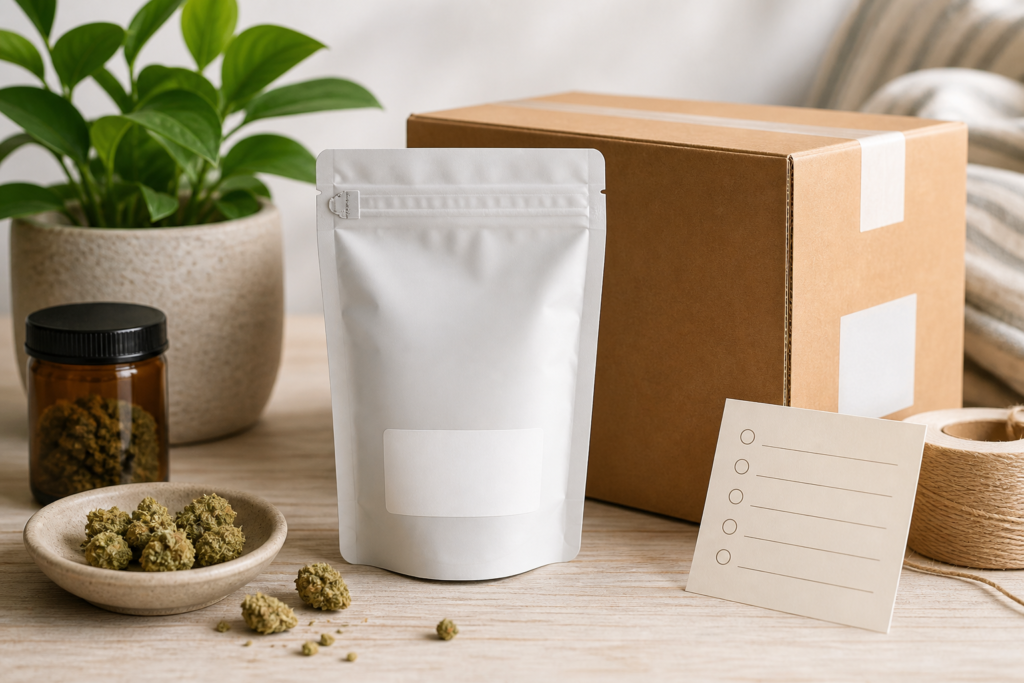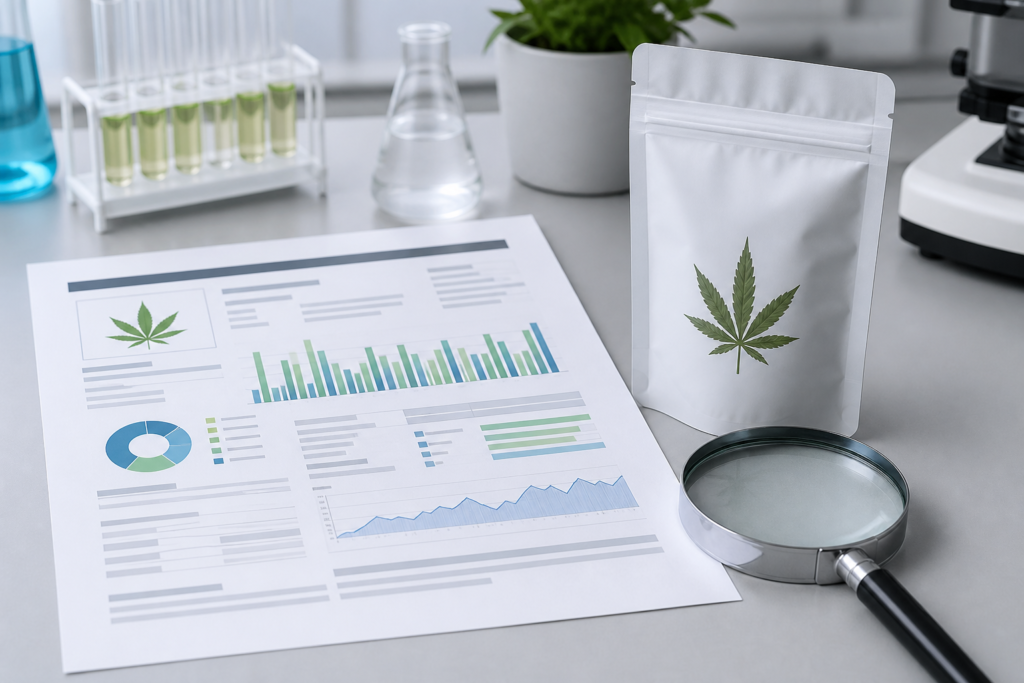


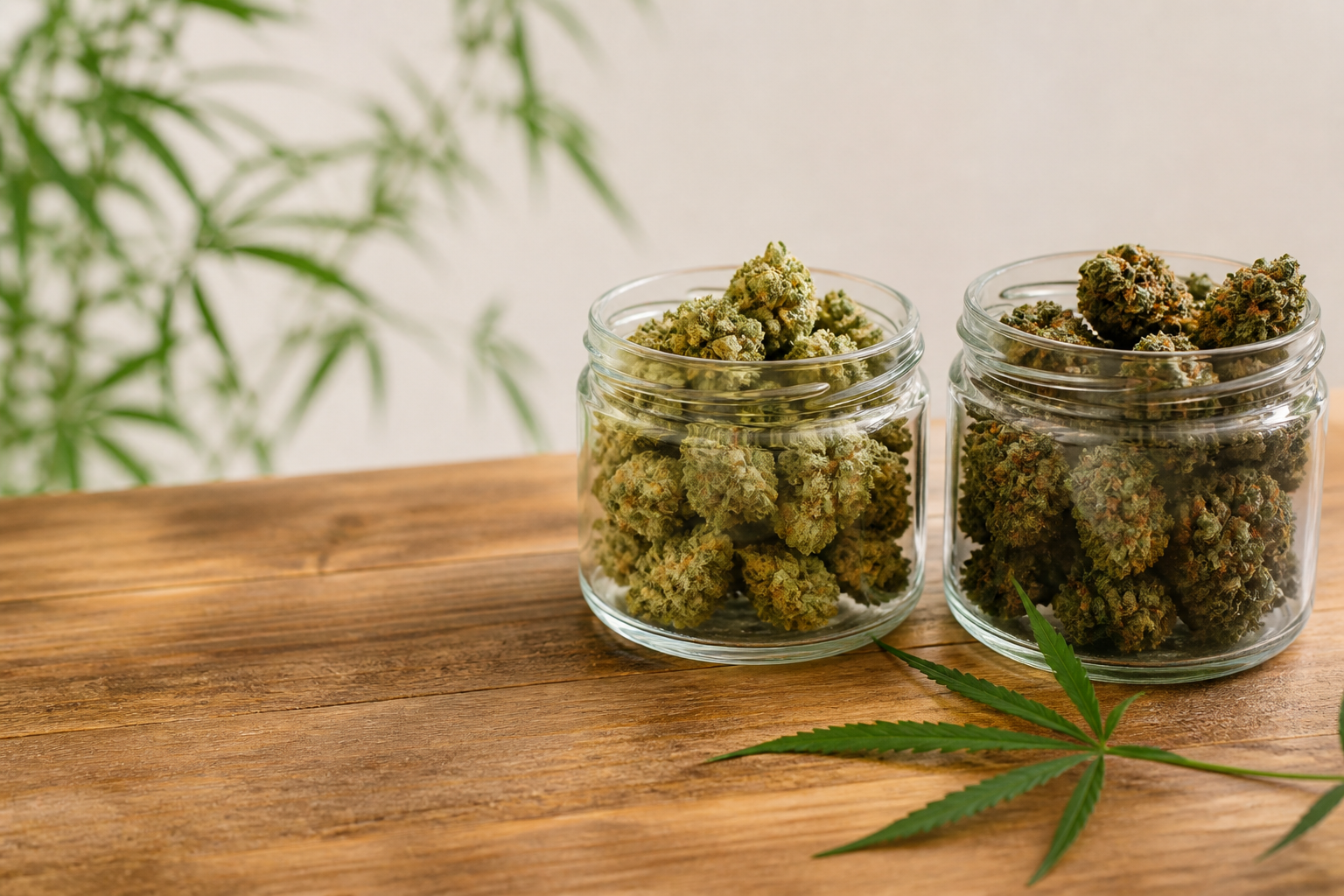
Quick answer: CBD flower and hemp flower are often used as overlapping retail terms, but the words alone do not tell you the complete cannabinoid profile, the tested batch, or whether a product can be legally purchased or shipped to your destination. Compare the product’s actual label, total weight, cannabinoid results, batch number, COA, ingredients, packaging date, and destination policy before making a decision.
People searching for CBD flower vs hemp flower are usually trying to understand whether two listings describe the same type of product. Sometimes they do. Sometimes a seller is using “hemp flower” as a broad source description while “CBD flower” emphasizes a cannabinoid profile. A careful buyer should move past the front-of-package wording and review the evidence attached to the specific product.
What is CBD flower?
CBD flower generally refers to the flowering material of hemp that is marketed as containing a meaningful amount of cannabidiol, or CBD. The flower may also contain other cannabinoids and aromatic compounds. The name does not guarantee a particular CBD percentage, THC amount, harvest date, growing method, or testing standard. Those details should appear in the product listing, package, or current laboratory report.
“CBD flower” is therefore a product description, not a complete quality grade. Two products with the same label can have different weights, cannabinoid profiles, moisture levels, trim quality, packaging, and batch documentation. If the listing does not show enough information to compare those factors, ask the seller before ordering.
What is hemp flower?
Hemp flower usually refers to flower from hemp plants, but sellers may use the phrase to emphasize the plant source rather than one particular cannabinoid. A hemp flower listing may be CBD-dominant, contain several cannabinoids, or be marketed around a different hemp-derived profile. The word “hemp” by itself does not answer how much CBD or THC is in the finished product.
Federal hemp rules and retail rules are not the same thing. The FDA explains that removing hemp from the federal Controlled Substances Act did not remove the agency’s authority over products containing cannabis-derived compounds. State and local rules, product form, labeling, age requirements, and shipping restrictions can also matter. Review the FDA cannabis and CBD regulatory information and the seller’s destination policy rather than treating “hemp” as a universal legal answer.
CBD flower vs hemp flower: the practical comparison
| Comparison point | What the buyer should verify |
|---|---|
| Product name | Does the name match the actual flower and package? |
| Cannabinoids | What are the CBD, THC, and other cannabinoid results? |
| Weight | Is the net weight clear and consistent with the package? |
| Batch identity | Can the lot number be matched to a current COA? |
| Quality panels | Does testing cover the categories relevant to the product? |
| Storage | Does the seller explain protection from heat, light, moisture, children, and pets? |
| Destination | Can the exact product be shipped to the buyer’s location? |
How to read the cannabinoid profile
Start with the laboratory table rather than the strain name. Look for total CBD, total THC, delta-9 THC, and any additional cannabinoids listed for the tested sample. Pay attention to units: a percentage, milligrams per gram, and total milligrams per package describe different quantities. If the product page uses one unit and the COA uses another, convert carefully or ask the seller to explain the calculation.
Do not treat a high CBD number as proof of superior quality. Concentration is only one part of a buying decision. A lower-concentration product with transparent ingredients and a current batch report may be easier to evaluate than a highly promoted product with no readable documentation. Also remember that a cannabinoid result describes the sample tested; it does not prove that every future batch will be identical.
How to match a COA to flower
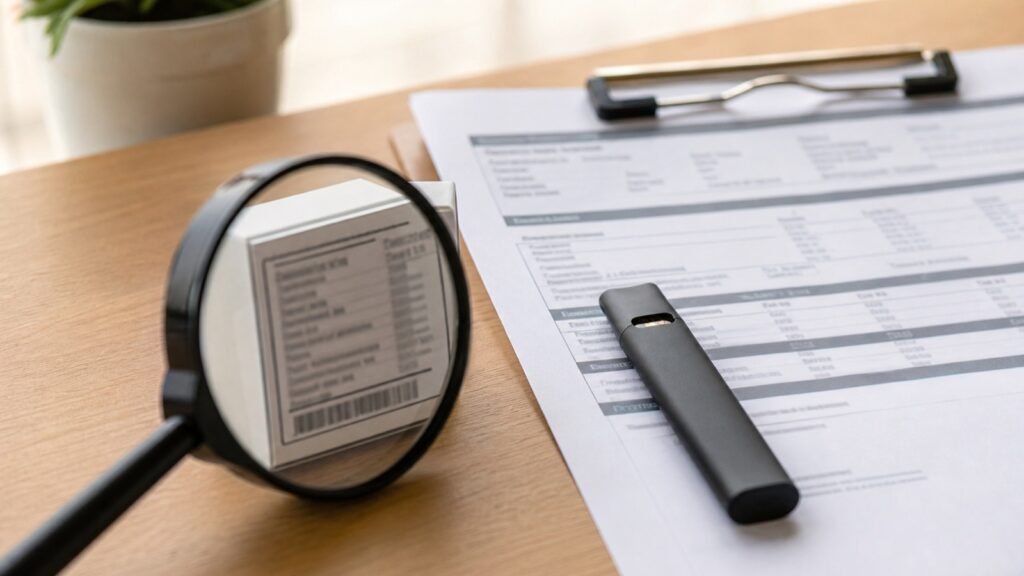
A COA, or certificate of analysis, is most useful when it is traceable to the package in front of you. Confirm these five connections:
- Product identity: the report names the same product or batch family.
- Batch or lot: the identifier matches the package or product page.
- Test date: the report is reasonably current for the item being sold.
- Laboratory identity: the lab is named and the report is readable.
- Relevant panels: the report shows the categories needed for that flower product.
Use the Herbxmind CBD COA comparison guide for a more detailed process. A QR code can make a report easier to access, but the presence of a QR code is not proof that the report is current or authentic. Open it, compare the information, and save a copy for your purchase records.
What the flower’s appearance can—and cannot—tell you
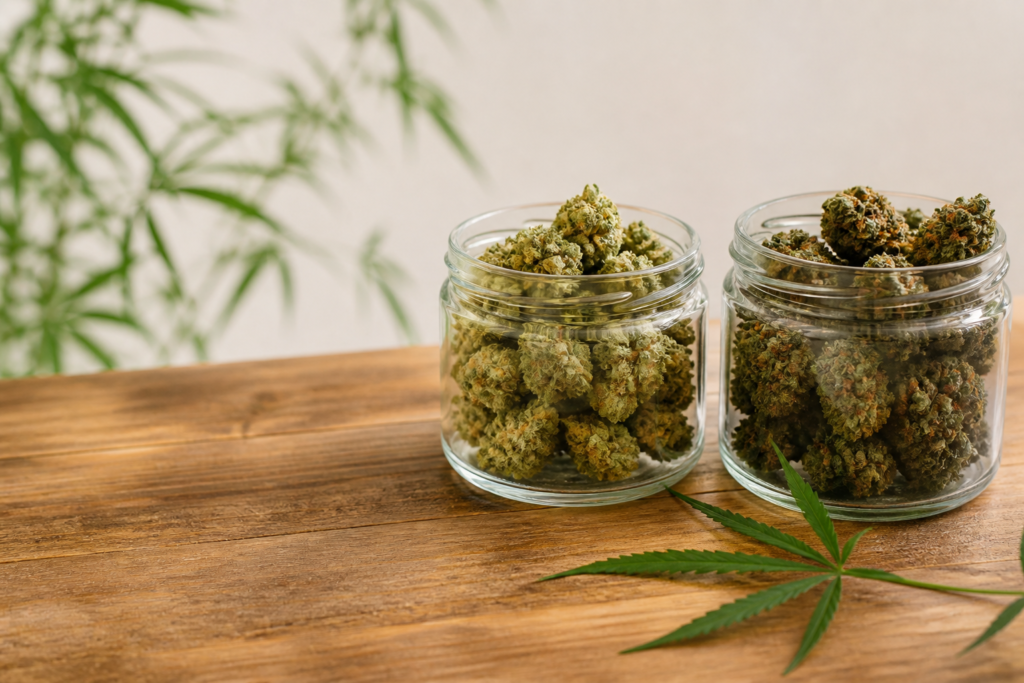
Buyers often compare color, density, visible trichomes, trim, aroma, and dryness. Those observations can help you notice obvious packaging or storage issues, but they are not laboratory confirmation of CBD content, THC content, contamination status, or legal classification. Visual inspection is a first-hand product check, not a replacement for testing.
Flower should arrive in intact packaging with the batch information available. Avoid using a product that is wet, unusually musty, visibly contaminated, leaking packaging moisture, or missing important identity details. Photograph the item and contact the seller when the package arrives damaged or materially different from the listing.
Harvest, packaging, and storage checks
Flower is sensitive to light, heat, moisture, and prolonged air exposure. A responsible listing should explain how the product is packaged and stored. Look for a net weight, package date or batch reference when available, storage directions, and a sealed container. Once received, keep the product in its original package or another appropriate sealed container, away from heat and direct sunlight. Keep all cannabis-derived products away from children and pets.
CBD flower, hemp flower, and product intent
The same flower may be marketed for different consumer interests: cannabinoid education, aroma comparison, collection, or adult-use consumption where permitted. Product intent matters because legal restrictions and safety considerations can differ by use and jurisdiction. Herbxmind content focuses on informed retail comparison, not on diagnosing conditions, treating disease, or promising a particular personal result.
The FDA warns that many consumer CBD questions remain unresolved and that CBD products should not be assumed to be harmless or medically approved. Read the agency’s consumer update on CBD and cannabis-derived products. If you take medication, are pregnant or breastfeeding, have a health condition, or are considering a cannabis-derived product for a minor or pet, speak with an appropriate healthcare professional.
Shipping and destination rules
A product being visible in an online store does not mean it can be shipped everywhere. Rules can depend on the state, local jurisdiction, carrier, product form, cannabinoid profile, age verification, and packaging. Before checkout, review where we ship, the legal disclaimer, and any product-specific notice. Do not rely on a social-media claim or an old blog post when the rule could have changed.
Buyer checklist
- Confirm whether the listing is CBD flower, hemp flower, or a broader hemp-derived product.
- Record the net weight and the complete cannabinoid profile.
- Check the ingredient and packaging information.
- Find the lot or batch number.
- Match the batch to a current COA.
- Review testing categories and evidence boundaries.
- Check storage, age, and destination requirements.
- Save the product page, receipt, package photo, and report.
Common mistakes in CBD flower comparisons
The first mistake is treating “hemp” as a quality certification. It is not. The second is comparing strain names while ignoring cannabinoid results. The third is assuming that a QR code, a lab badge, or the words “third-party tested” automatically prove that the report matches the current product. The fourth is making a medical or legal conclusion from a retail description. A responsible comparison stays close to what the label, report, and applicable policy can actually support.
Frequently asked questions
Is CBD flower the same as hemp flower?
Sometimes sellers use the terms interchangeably, but they are not a substitute for the actual cannabinoid profile, batch report, and product label. Compare the evidence for the specific item.
Does hemp flower contain THC?
It can contain measurable THC or other cannabinoids. Check the current COA and the label rather than assuming that “hemp” means zero THC.
Does appearance prove flower quality?
No. Appearance can reveal some storage or packaging concerns, but it cannot confirm cannabinoid amounts or contaminant results.
Can CBD flower be shipped to every state?
No universal answer is reliable. Check the exact product, destination, current seller policy, and applicable local rules before ordering.
How to document your comparison
Before completing an order, save the product URL, the visible label information, the current COA, and the destination policy. When the package arrives, photograph the batch number and compare it again. This simple record makes it easier to identify a mismatch, ask a precise customer-service question, or decide not to use a product that arrived damaged. It also keeps the comparison based on the exact item you evaluated rather than on a general category name.
Bottom line
When comparing CBD flower vs hemp flower, choose the product you can verify rather than the one with the most persuasive name. Read the label, match the batch to the COA, review storage and destination information, and keep your expectations within the evidence. For more label education, visit the Herbxmind blog, browse hemp flower information, and contact us through customer support when a key detail is missing.
Editorial note: This article is educational content for adults where permitted. It is not medical advice, legal advice, or a guarantee that any product is safe, lawful, or suitable for a particular person.
“CBD flower” and “hemp flower” are often used as if they were two completely separate products, but the words on a listing do not answer every buyer question. In the United States, the practical difference depends on the plant material, cannabinoid profile, product labeling, applicable rules, and the exact batch being sold. A careful buyer should read the package and available laboratory documentation instead of relying on a name, strain label, or broad marketing phrase.
Start with the terms, then check the product
Hemp is a broad term used for cannabis plants and products that meet a defined legal or commercial threshold. CBD describes a cannabinoid and is often used in product names to signal a particular profile or intended comparison. A product marketed as CBD flower may contain naturally occurring CBD-rich cannabinoids, while a product called hemp flower may be presented more generally. The wording alone does not establish the complete cannabinoid content, total THC, harvest method, or compliance status.
For that reason, treat the product name as an index to the page, not as the final answer. Record the exact title, package size, lot or batch, and the cannabinoid claims. Then compare those details with the label and the relevant COA. If the page uses “CBD flower” but the report names a different product or batch, ask for clarification before treating the evidence as a match.
Read the cannabinoid profile
Look for a full or clearly described cannabinoid panel. Depending on the laboratory and product, the report may list CBD, CBDA, THC, THCA, CBG, CBC, or other compounds. Some labels show percentages by weight, while others show milligrams per gram. These numbers can be useful only when the units and measurement basis are clear. Do not compare a percentage on one package with a milligram amount on another without understanding the package weight.
- Identify whether the amount is per gram, per package, or a percentage by weight.
- Check whether the report distinguishes CBD from CBDA and THC from THCA.
- Read qualifiers such as “ND,” “below LOQ,” or “less than” as defined by the report.
- Confirm that the report covers the finished flower product, not only a raw ingredient.
- Match the sample identifier and lot to the package you would receive.
A cannabinoid table does not automatically establish that a product is legal in every destination or appropriate for every person. It describes what the named sample showed under the stated method and reporting limits.
Do not use “strain” as a substitute for evidence
Flower listings often use strain, cultivar, or flavor names to help buyers compare products. Those names can be useful for organization, but they do not replace a product identity, ingredient or cannabinoid panel, or batch record. Two products with similar names may come from different harvests or have different cannabinoid results. A familiar strain name also does not prove that a package contains a particular percentage of CBD or THC.
Ask whether the name refers to a cultivar, a batch label, a flavor profile, or a marketing description. If the seller uses a name that does not appear on the package or COA, treat the relationship as an open question. Clear documentation is more useful than a confident description that cannot be checked.
Compare the package with the COA
A certificate of analysis is most useful when it identifies the same product form and batch as the package. Review the laboratory name, report number, sample name, dates, panel, and lot or batch identifier. If the report is for an earlier harvest, it may provide background but should not be presented as direct proof for a later package. If the seller publishes one report for an entire catalog, ask how that report represents the exact item in your cart.
Look for safety panels as well as cannabinoids. A flower report may include pesticides, heavy metals, microbes, mycotoxins, or other screens, but panels vary. A blank section is not a passing result, and a cannabinoid-only panel does not answer contaminant questions. Read the units and reporting limits instead of treating a large green “pass” graphic as a universal safety claim.
Review package details and freshness information
Flower packaging should provide enough information to identify the product and its lot. Check net weight, packaging or harvest dates when supplied, best-by or expiration language, storage instructions, and the responsible company. Date labels are not all the same, so ask the seller what a date means if the format is unclear. Keep a photograph of the unopened package and record the batch before opening it.
Storage instructions matter because light, heat, moisture, and air can affect the condition of plant material. Follow the package guidance and use a secure location away from children and pets. Avoid making a medical or performance promise from a freshness claim; the purpose of the information is to help you understand handling and traceability.
Understand the legal boundary
Federal, state, and local rules can treat hemp-derived products differently, and rules may change. A label or COA is not a nationwide legal opinion. The destination, product type, cannabinoid profile, amount, packaging, and timing can matter. Shipping policies are also not the same thing as a complete legal determination. Before ordering, check current official information for the destination and read the seller’s current restrictions.
Do not assume that a product labeled “CBD flower” can be carried across state lines or shipped everywhere. Do not assume that a hemp statement removes all THC-related questions. The safest explanation is specific: identify the product and jurisdiction, cite the current source, and acknowledge uncertainty where a rule is unclear.
Ask a seller these questions
- Which exact product and batch are currently available?
- Does the COA match the finished flower package and lot?
- What units are used for CBD, CBDA, THC, and THCA?
- Which safety panels were included, and what were the reporting limits?
- What does the strain or cultivar name represent?
- How should the package be stored, and what do the dates mean?
- Which destinations are currently excluded from shipping?
- What is the process if the label, lot, or received product does not match?
A reliable answer should point to the label, report, policy, or current official source. It should not promise a medical result, universal legality, or guaranteed effect. If a seller cannot explain a basic batch or label question, pause the purchase.
Common mistakes when comparing CBD flower and hemp flower
One common mistake is treating the names as legal categories that answer every question. Another is comparing percentages without checking whether the report uses the same units. Buyers also sometimes assume that a QR code, strain photo, or “lab tested” badge proves the report matches the package. These signals can be helpful, but the decisive details are the product identity, lot, panel, dates, and traceable documentation.
Do not infer that a product with a high CBD number has no THC, or that a product called hemp flower has a uniform cannabinoid profile. Read the actual result. Do not infer that laboratory evidence replaces advice from a qualified healthcare professional if you have health questions, take medication, or are pregnant or breastfeeding.
FAQ
Are CBD flower and hemp flower the same thing?
They can overlap in ordinary retail language, but the names alone do not establish the exact cannabinoid profile, batch, or legal status. Read the label and matching documentation.
Does CBD flower contain THC?
It may contain measurable THC or related cannabinoids depending on the product and batch. Check the current laboratory panel and the applicable rules rather than relying on the product name.
What should I look for in a flower COA?
Look for product and lot identifiers, laboratory identity, dates, cannabinoid units, reporting qualifiers, and any safety panels relevant to the product.
Can the seller guarantee that hemp flower is legal in my state?
A seller can explain its current shipping policy, but location-specific rules can change. Check current official information for the destination.
Conclusion
When comparing CBD flower and hemp flower, begin with the name but finish with evidence. Identify the product, read the cannabinoid units, match the package lot to the COA, review safety panels and storage information, and check current destination rules. This method helps US buyers make a more informed adult-use comparison without turning marketing language into a medical, legal, or guaranteed-effect claim.
Editorial note: Herbxmind publishes adult-use consumer education for US readers. Product formulas, laboratory documents, shipping policies, labeling practices, and regulations can change. This article is not medical or legal advice. Editorial review date: November 2, 2026.
For a final pre-order check, save the product URL, the package details, and the report version you reviewed. If the seller changes the page, a dated record helps you ask a focused question about the current lot rather than relying on an older screenshot. Treat missing information as missing information, not as proof of a problem or proof that everything is acceptable. The goal is a clear, repeatable decision process grounded in the specific item being considered.