

CBD Gummy Strength Per Serving vs. Per Package: How to Compare Labels
Short answer: compare the CBD amount in one serving with the total amount in the entire package, then verify the serving size, number of pieces, ingredient list, lot information, and available lab documentation. A package that says “1,000 mg CBD” does not necessarily contain 1,000 mg in each gummy. Dividing the package total by the number of equal pieces is a useful first check, but it is not a substitute for the manufacturer’s label, batch documentation, or your own careful review.
CBD gummies are popular because the format is portable, familiar, and easy to portion. That convenience can also make labels deceptively easy to misread. The most important distinction is between CBD per serving and CBD per package. Buyers should also separate CBD from the total cannabinoid amount, distinguish the number of pieces from the serving size, and avoid treating a printed number as proof of quality. This guide explains how to read the math, identify inconsistencies, compare products fairly, and document questions before ordering.
What “CBD per serving” and “CBD per package” mean
A serving is the amount the label defines as one use for its nutrition-style panel or supplement facts panel. For gummies, one serving might be one piece, two pieces, or another stated quantity. The package total is the amount represented by the full container or pouch. If a label says 25 mg CBD per gummy and contains 30 gummies, the simple package calculation is 750 mg CBD. If it says 25 mg per serving and the serving is two gummies, each gummy would be represented as 12.5 mg, assuming the serving is evenly divided.
The words “total cannabinoids,” “hemp extract,” “hemp oil,” and “CBD” are not automatically interchangeable. A product may describe a botanical extract by its weight while separately listing the measured CBD content. It may also list other cannabinoids, terpenes, or a blend. For a meaningful comparison, write down the exact field being compared instead of relying on a large number on the front of the package.
Labels vary by brand and product category. Some use a supplement-style panel; others use a front label plus a certificate of analysis. Some state the amount per piece, while others state the amount per container. When a label is unclear, the safest interpretation is the narrowest one supported by the available documentation. Do not assume that a large package number means each piece has the same amount, and do not assume that a “hemp” claim identifies the amount of CBD.
The basic CBD gummy math
Use the following calculation only after confirming that the numbers refer to the same cannabinoid and the same product batch:
Approximate CBD per piece = stated CBD per package ÷ number of pieces.
For example, a package labeled 600 mg CBD with 30 gummies suggests 20 mg per gummy if the pieces are intended to be equal and the total is accurate. If the serving size is two gummies, the label may describe 40 mg per serving. Those are two different numbers describing the same package. A buyer who compares 40 mg per serving with another product’s 20 mg per gummy without checking serving size may think the first product is stronger when the two are actually equivalent.
Math can reveal a question, but it cannot prove uniformity. Gummy manufacturing involves mixing, depositing, setting, and packaging. A responsible product page or lab report should make it possible to connect the label claim to a batch or lot. If the listed package total cannot be reconciled with the piece count, serving size, and supporting documents, pause before purchasing.
How to read the front label without being misled
The front panel is designed for quick recognition, not complete evaluation. Look for the product name, net quantity, total cannabinoid claim, and whether the number is tied to CBD, hemp extract, or a blend. A large “1,000 mg” may describe the entire package, the total hemp extract, or a combined cannabinoid amount. The front panel alone may not answer the question a buyer actually has.
Next, turn to the side or back panel. Find the serving size, servings per container, amount per serving, and total amount if listed. Check whether the panel uses “CBD,” “cannabidiol,” “hemp extract,” or another term. These distinctions matter because a buyer comparing pure CBD quantities should not place a hemp-extract number beside a CBD number as if they were identical measurements.
Also examine the net weight and piece count. A pouch with 20 large gummies and a pouch with 40 small gummies may have the same package total but different amounts per piece. The piece count is not a potency measurement by itself. It becomes useful only when combined with the stated amount and serving size.
Serving size is the most commonly missed field
Many label comparisons fail because the buyer compares the largest number visible rather than the amount represented by one serving. A serving may be one gummy, two gummies, or a measured portion. If two gummies make one serving, the amount per serving must be divided by two to estimate the amount per piece. If the product does not say whether the pieces are equal, avoid presenting that estimate as a guaranteed value.
Serving size also affects price comparisons. Suppose Product A costs $30 and contains 30 gummies at 10 mg CBD each. Product B costs $36 and contains 20 gummies at 20 mg CBD each. Product B has fewer pieces but a larger package total: 400 mg versus 300 mg. Comparing price per gummy would favor Product A, while comparing price per stated milligram would produce a different result. Neither calculation tells you which product is right for an individual buyer, but both help prevent a misleading comparison.
Do not treat a serving size as a medical instruction. It is a labeling unit. Product labels should not be used to diagnose, treat, cure, or prevent disease, and individual responses can vary. People who take medication, are pregnant or breastfeeding, have a medical condition, or are considering cannabinoid products for a health concern should ask a qualified healthcare professional before use.
CBD per gummy, CBD per serving, and total CBD: a comparison table
| Label field | What it describes | What to verify |
|---|---|---|
| CBD per gummy | The amount represented by one piece | Whether the serving is one piece and whether the number is batch-supported |
| CBD per serving | The amount represented by the stated serving size | How many gummies make one serving |
| CBD per package | The amount represented by the full container | Piece count, net quantity, and the definition of the listed cannabinoid |
| Total hemp extract | The weight of an extract or blend | Whether a separate CBD amount is provided |
| Total cannabinoids | A combined amount across listed cannabinoids | Which cannabinoids are included and whether the comparison is appropriate |
How to use a COA to check a CBD gummy claim
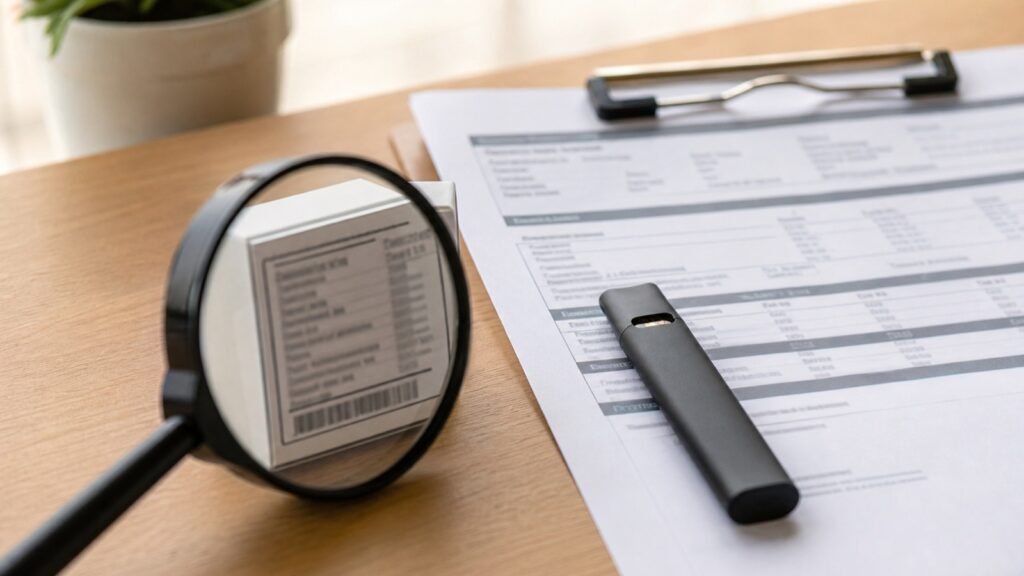
A certificate of analysis can add useful evidence when it is connected to the product and batch being sold. Start with the product name, lot or batch number, testing date, and sample description. A document with no batch connection may be informative about a formula but may not establish what is in the package you are considering. Read our lab results guide for a broader explanation of how to approach testing documents.
Find the cannabinoid table and identify the reported CBD value and unit. A laboratory may report concentration by weight, concentration per gram, or a total amount. Do not copy a number from a laboratory table without checking the unit and sample basis. If the report gives a result per gram, the buyer may need additional information about the finished product weight to compare it with a package claim. If the report lists a total amount for the sample, verify that the sample represents the finished gummies rather than a raw extract.
Review the testing date as context, not as a guarantee. A COA is a report about a particular sample tested at a particular time. It does not prove that every future batch has the same result. A good buyer record includes a screenshot or saved copy of the relevant report, the lot number, the product page date, and any clarification received from the seller. Avoid reports that appear altered, have missing pages, use vague sample descriptions, or cannot be matched to the product.
Look beyond CBD. Depending on the product and jurisdiction, a buyer may need to review cannabinoid identity, THC results, pesticides, heavy metals, microbial testing, residual solvents, and other relevant panels. The appropriate panel depends on the formula and the claims made. A report that shows only one cannabinoid may not answer every safety or compliance question.
Why package totals can be difficult to compare
Two products can use similar words while representing different things. One may list 750 mg CBD per package; another may list 750 mg hemp extract plus a smaller CBD amount. One may use a full-spectrum extract with multiple cannabinoids; another may use an isolate-based formula. The front labels may look similar, but the relevant quantities are not identical.
Some products also include additional active ingredients such as botanical extracts, flavor systems, vitamins, or sweeteners. Those ingredients do not increase the CBD amount, but they can affect the product’s fit for a buyer’s preferences and restrictions. Read the complete ingredient list and allergen statement. A gummy that looks simple from the front may contain gelatin, sugar alcohols, artificial colors, or other ingredients that matter to a particular consumer.
Terminology can also create confusion. “Broad spectrum,” “full spectrum,” and “isolate” describe formulation approaches, but the exact composition depends on the product. A buyer should verify the cannabinoid panel and ingredients rather than infer the complete formula from a marketing term. If the product page and package use different totals, ask the seller which figure is current and why.
A five-minute pre-purchase label check
- Record the exact product name. Similar names can refer to different flavors, strengths, or formulas.
- Find the piece count. Note the number of gummies in the container.
- Find the serving size. Confirm whether one serving is one gummy or multiple gummies.
- Write down the CBD amount and unit. Separate CBD from hemp extract and total cannabinoids.
- Reconcile the math. Divide the package total by the piece count and compare it with the stated per-serving amount.
- Check the lot or batch information. A package without traceability is harder to connect to a COA.
- Open the lab-results page. Look for a report that matches the product and lot.
- Read the full ingredient list. Include allergens, sweeteners, colors, and other added ingredients.
- Review legal and shipping information. Rules differ by location and can change. See the where we ship page and the legal disclaimer before ordering.
- Save questions before checkout. If the numbers do not reconcile, contact the seller rather than guessing.
How to compare value without reducing quality to a number
Price per milligram is a useful screening metric, not a complete quality score. Calculate it by dividing the product price by the stated package CBD amount, after confirming that the amount is actually CBD. Include shipping costs, discounts, and subscription terms if they materially change the final price. A low price per milligram may reflect a different extract definition, older documentation, a smaller serving, or a product with less supporting information.
Compare like with like. CBD gummies should be compared with other CBD gummies when the question is format value. A gummy with a clear per-piece amount, complete ingredients, lot details, and current batch documentation may be more useful to a cautious buyer than a cheaper product with an unexplained front-label number. No calculation can verify a product’s laboratory quality on its own.
A responsible comparison also considers packaging integrity, storage instructions, seller contact information, refund terms, shipping restrictions, and whether the product description matches the package. For return questions, review Herbxmind’s CBD product return policy guide before buying, because opened consumable products may be treated differently from unopened products.
Common label mistakes to avoid
Assuming the biggest number is the CBD amount
A large number may describe extract weight, total cannabinoids, or the entire package. Find the specific CBD field and its unit.
Comparing servings without checking serving size
One product may define a serving as one gummy while another defines it as two. Normalize the comparison to one piece or to a clearly stated total.
Using a generic COA for a different batch
A report should be connected to the product and lot under review. A general report can be a starting point, not conclusive batch evidence.
Treating “hemp” as a potency statement
Hemp identifies a plant source or marketing category; it does not, by itself, tell you how much CBD is in one gummy.
Ignoring the ingredient panel
CBD amount is only one part of a product decision. Allergens, sweeteners, gelatin, colors, and flavor ingredients may be equally important to the buyer.
Using the label as medical advice
A label is not a diagnosis or treatment plan. Avoid guaranteed-effect claims, and consult a qualified healthcare professional about personal medical questions.
What responsible product education can and cannot establish
Label math can help a buyer understand whether two packages are being compared fairly. A COA can provide batch-specific information when the report is authentic and appropriately matched. An ingredient list can reveal allergens or formulation preferences. None of these items can guarantee a personal outcome, establish that a product is appropriate for every person, or replace professional medical advice.
Regulatory treatment also depends on product type, jurisdiction, claims, and time. Federal and state rules can differ, and policies may change after a product page is written. The FDA’s consumer information on cannabis-derived products and the CDC’s cannabis information are useful starting points for general education, but they do not determine whether a particular purchase is permitted in every location. Review current official sources and local requirements before ordering.
Herbxmind’s editorial standard is to separate what a label says, what a laboratory report supports, and what remains uncertain. That boundary is important. A clear explanation is more valuable than an impressive but unsupported number.
Keep a simple buyer record
For products that you may purchase more than once, keep a short record of the product name, flavor, package size, lot number, label date, price, and the link to the relevant lab report. Note whether the label described CBD per gummy, per serving, or per package. This record makes it easier to notice when a formula, package count, or serving definition changes. It also helps you ask a precise question instead of relying on memory.
Save the product page at the time of purchase if the seller provides different information online later. You do not need to create a complicated spreadsheet; a dated note and a screenshot of the label may be enough for ordinary comparison. Avoid recording personal health conclusions as if they were product facts. The record is for traceability and shopping decisions, not for diagnosing a condition or predicting an effect.
If the product arrives with a damaged seal, an unreadable lot code, or packaging that does not match the listing, photograph the package before opening it and contact the seller. Follow the seller’s current return instructions and do not assume every consumable product is eligible for return after opening.
Frequently asked questions
Is 1,000 mg CBD per package the same as 1,000 mg per gummy?
No. “Per package” means the total represented by the container. The amount per gummy depends on the number of pieces and the label’s serving definition. A 1,000 mg package with 20 equal gummies would mathematically suggest 50 mg per gummy, but the label and batch documentation should still be checked.
How do I calculate CBD per gummy?
When the label clearly states a total CBD amount and the number of pieces, divide the package total by the piece count. Then compare that estimate with the stated serving size and any matched COA. Treat the result as a label comparison, not a laboratory guarantee.
What if the COA does not list the same amount as the package?
Check the units, sample basis, test date, and lot number first. A laboratory may report concentration rather than package total. If the difference cannot be explained by units or sampling, ask the seller for clarification and consider postponing the purchase.
Does a higher CBD number mean a better product?
Not necessarily. A higher number may describe the package rather than one piece, or it may use a different extract definition. Quality review should also include ingredients, batch traceability, testing scope, packaging, seller transparency, and location-specific rules.
Can I use the label to choose a product for a medical condition?
No. Product labels are not individualized medical advice. They should not be used to diagnose, treat, cure, or prevent disease. Ask a qualified healthcare professional about personal health questions, medication interactions, pregnancy, breastfeeding, or other concerns.
Why do two products with the same package total have different prices?
They may differ in piece count, ingredients, extract type, testing scope, packaging, shipping, or seller policies. Compare the same measurement, then evaluate the documentation and total cost rather than price alone.
Should I buy if the package has no lot number?
A missing lot number makes it harder to connect the product to a specific COA or manufacturing record. Ask the seller whether the product is traceable. If the answer is unclear, choose a product with stronger documentation.
Conclusion: normalize the numbers before you compare
The practical way to compare CBD gummies is to normalize the information: identify the exact CBD amount, confirm whether it is per piece, per serving, or per package, verify the serving size, divide by the piece count when appropriate, and connect the result to the product’s batch information. Then review ingredients, testing scope, storage, returns, shipping, and local rules.
Good label reading is not about finding the largest number. It is about understanding what the number represents and what evidence supports it. When a product page, package, and COA tell the same story, the buyer has a clearer basis for an informed decision. When they do not, pause, document the discrepancy, and ask before ordering.
Editorial note and sources
This educational article was prepared for adult consumer education and reviewed for clear distinctions between label claims, laboratory evidence, and unresolved questions. It is not medical, legal, or regulatory advice. Information about cannabis-derived products and shipping rules can change. For general background, consult current information from the FDA and CDC, then check applicable state or local requirements.