

A CBD product expiration date, best-by date, packaging date, or lot code can help a buyer understand how a product was labeled and handled, but the terms are not interchangeable. The meaning depends on the product format, the seller’s explanation, the package, storage instructions, and the rules that apply to the product and destination. A careful buyer should read the exact date language, record the lot, compare the package with the product page, and ask the seller when the meaning is unclear.
Start by identifying the date type
Look for words such as manufactured, produced, packaged, tested, best by, use by, expiration, or lot. A manufacturing date describes when a product or batch was made. A packaging date describes when it was placed into its container. A best-by date commonly communicates a seller or manufacturer quality window. An expiration or use-by date may communicate a stronger cutoff, but the exact meaning depends on the product and label.
Do not assume that a date printed near a barcode is an expiration date. It may be a lot code, inventory reference, or packaging identifier. If the label shows only numbers, check the product page, insert, or seller support channel for an explanation. Record the exact characters rather than rewriting the code into a format that might change its meaning.
Why dates matter for different formats
CBD oils, gummies, flower, vapes, capsules, and topicals do not have identical packaging or storage considerations. Oils may need attention to bottle seal, carrier ingredients, light, and heat. Gummies may require attention to texture, flavor, package seal, and child-safe storage. Flower may include harvest, curing, packaging, and best-by information. Vapes combine a formula with hardware and may include separate device or battery guidance. Topicals may have cosmetic ingredient and container information.
- Confirm the exact format before interpreting the date.
- Read the storage instructions next to the date or in the insert.
- Check whether the date refers to manufacture, packaging, testing, or quality.
- Record the lot or batch because two packages can have different dates.
- Ask the seller if the date format is ambiguous.
A date is one evidence point, not a complete conclusion about quality, safety, or medical suitability. Keep the interpretation narrow and connected to the label’s own wording.
Read the package in context
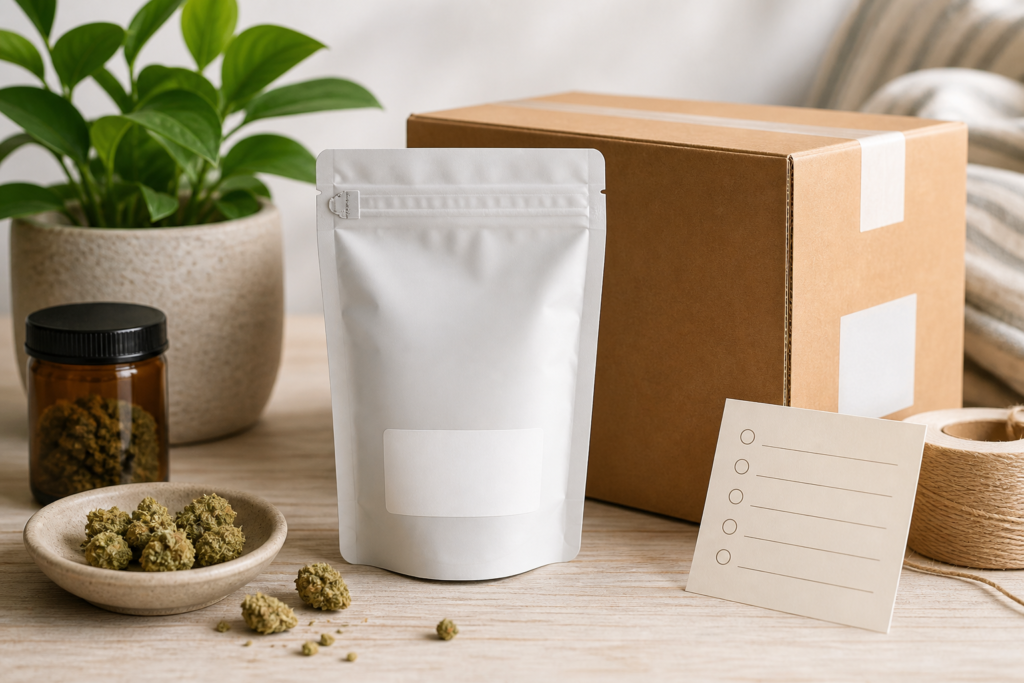
Inspect the front, back, sides, seal, and any insert. Look for the product name, net contents, ingredient list, cannabinoid amounts, responsible company, lot or batch, date type, storage information, warnings, and customer-service contact. A package may show a date without explaining whether it is a best-by date or a production date. The surrounding words and seller’s documentation help establish the intended meaning.
Compare the physical package with the online listing and order confirmation. If the listing says “freshly packaged” but the package carries an older date, ask what the phrase means. If the package shows only a batch code and the website links to a report with another identifier, request an explanation before treating the document as a match.
Understand lot and batch codes
Lot and batch codes connect a package to production records, testing documents, and inventory. They may be printed near a date, barcode, seal, or package edge. The code can include letters, numbers, hyphens, and leading zeros. Write it down exactly and photograph it when practical.
A lot code is not necessarily an expiration date. It may indicate a production run or internal inventory sequence. A buyer should not decode it using an unofficial chart found online unless the seller or manufacturer confirms the method. If the code and date conflict, ask which field controls the seller’s quality or return process.
Compare the date with the COA
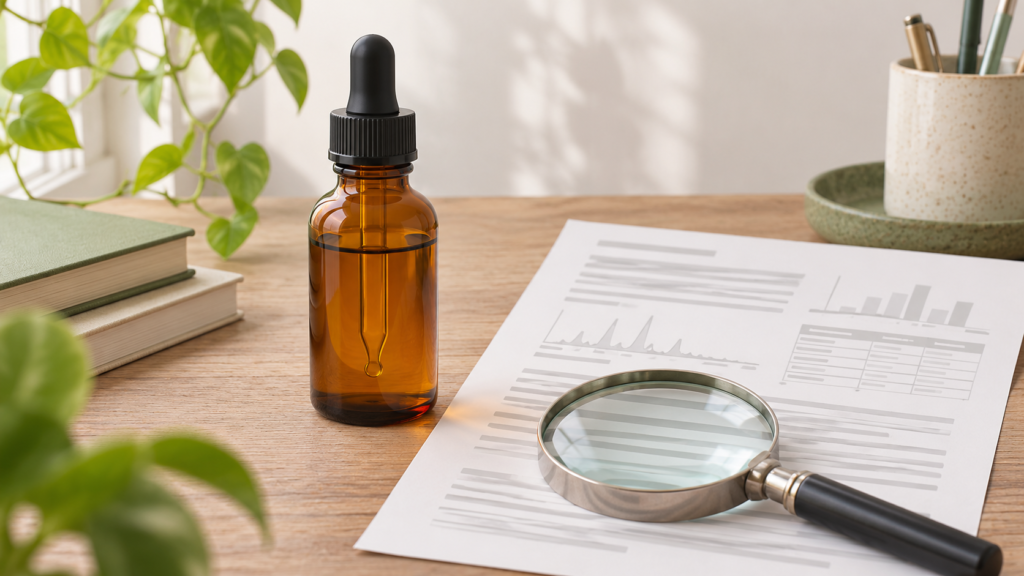
If a certificate of analysis is available, compare its sample received date, analysis date, report date, product name, and batch identifier with the package. A laboratory report can show when a sample was tested, but it does not automatically establish an expiration date for every package in a product line. A report for an earlier lot may be background information rather than direct evidence for a later package.
Look for a relationship between the report and the physical product. If the package lot is missing from the report, ask whether the document is representative or current. If the report is corrected or superseded, confirm which version applies. Save the report URL and access date because online documents can change as inventory changes.
Do not use a COA to make a medical, legal, or universal safety conclusion. A COA describes the named sample and listed panels under stated methods and limits. It does not replace the package date, storage guidance, or current destination rules.
Review storage instructions
Storage instructions help explain how the seller expects the product to be handled before and after delivery. Look for guidance about light, heat, moisture, air, position, refrigeration, charging, or child-safe storage. Follow the instructions for the exact format instead of applying one general rule to every CBD product.
Flower, gummies, oils, vapes, and topicals may respond differently to heat, light, and moisture. A vape may require device-specific storage and battery guidance. An oil may require a closed bottle and protection from light. Gummies may need a sealed package and a secure location away from children and pets. If the package is damaged, leaking, unusually altered, or missing storage information, contact the seller before using it.
Check the date before ordering
Ask whether the seller can identify the current lot and date range before payment when the date is important to your decision. Inventory may include more than one lot, and a product page may not display the exact date of the package that will ship. A seller should be able to explain its rotation or fulfillment approach without promising more than it can verify.
Review the return policy before ordering. Some sellers may require a product to be unopened for a date-related return, while a damaged or mislabeled package may have a different process. Save the return policy and note its deadline. A return policy does not establish the product’s quality or legality; it describes the seller’s process.
Inspect the date when the package arrives
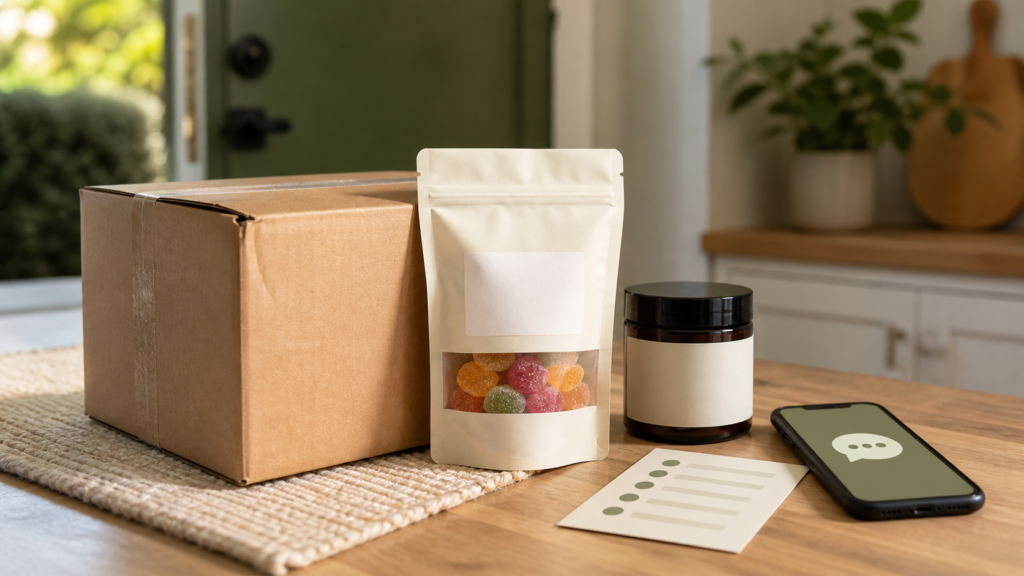
- Check the shipping carton and inner packaging for damage or heat exposure.
- Photograph the label, date, lot, seal, and product name.
- Compare the received item with the order confirmation and listing.
- Read whether the date is manufacture, package, best-by, or expiration.
- Review the ingredient list, cannabinoid amounts, and storage guidance.
- Keep the packaging if the date, lot, or condition is unclear.
If the date is unreadable or appears inconsistent with the listing, contact support with the order number and photographs. Do not alter the package or discard the label before the seller responds.
What a date can and cannot tell you
A printed date can tell you how the seller or manufacturer identifies a time period or production event. It cannot by itself prove potency, freshness, medical suitability, safety, or legality. Those conclusions require other evidence and, for personal health questions, professional advice.
Do not assume that a product is acceptable merely because the date is far away, and do not assume that a product is unusable solely because a date is hard to interpret. Read the label language, storage conditions, package condition, and seller explanation together. A single number without context is weak evidence.
Check ingredients and formula changes
A formula may change while a product name remains similar. Compare ingredients, cannabinoid amounts, serving size, flavor, and package design with the current listing and available report. If the product page contains an older image, the package you receive may show a revised formula or label. Ask the seller whether the date and lot correspond to the current formula.
For gummies and other edibles, compare piece count and total amount. For oils, compare bottle volume and carrier ingredients. For vapes, compare oil formula and hardware details. For flower, compare weight, label, and batch. For topicals, compare the full ingredient list and external-use directions.
Review age, shipping, and destination restrictions
Date interpretation does not resolve destination rules. Product type, cannabinoid profile, amount, location, timing, carrier requirements, and local restrictions can matter. Review the seller’s current shipping policy and check official information for the destination. Do not assume that a date label, COA, or seller decision to ship proves nationwide legality.
If a parcel is delayed, returned, or held, follow the seller’s support and carrier process. Do not try to bypass a restriction by changing the product description or sending it to a different address without authorization. If the question is legal, seek current location-specific information or qualified legal advice.
Questions to ask the seller
- What does the printed date mean for this exact product?
- Is the date a manufacture, package, best-by, use-by, or expiration date?
- Which lot or batch is currently shipping?
- Does the available COA match the current finished product and lot?
- What storage conditions support the date or quality window?
- Has the formula or packaging changed since the report was issued?
- What is the process if the date is missing, unreadable, or inconsistent?
- Which return deadline applies to a date or labeling concern?
Good answers should point to the label, document, policy, or current official source. Be cautious when the seller promises a medical effect, universal safety, or permanent legality based only on a date or report.
Use a date-review worksheet
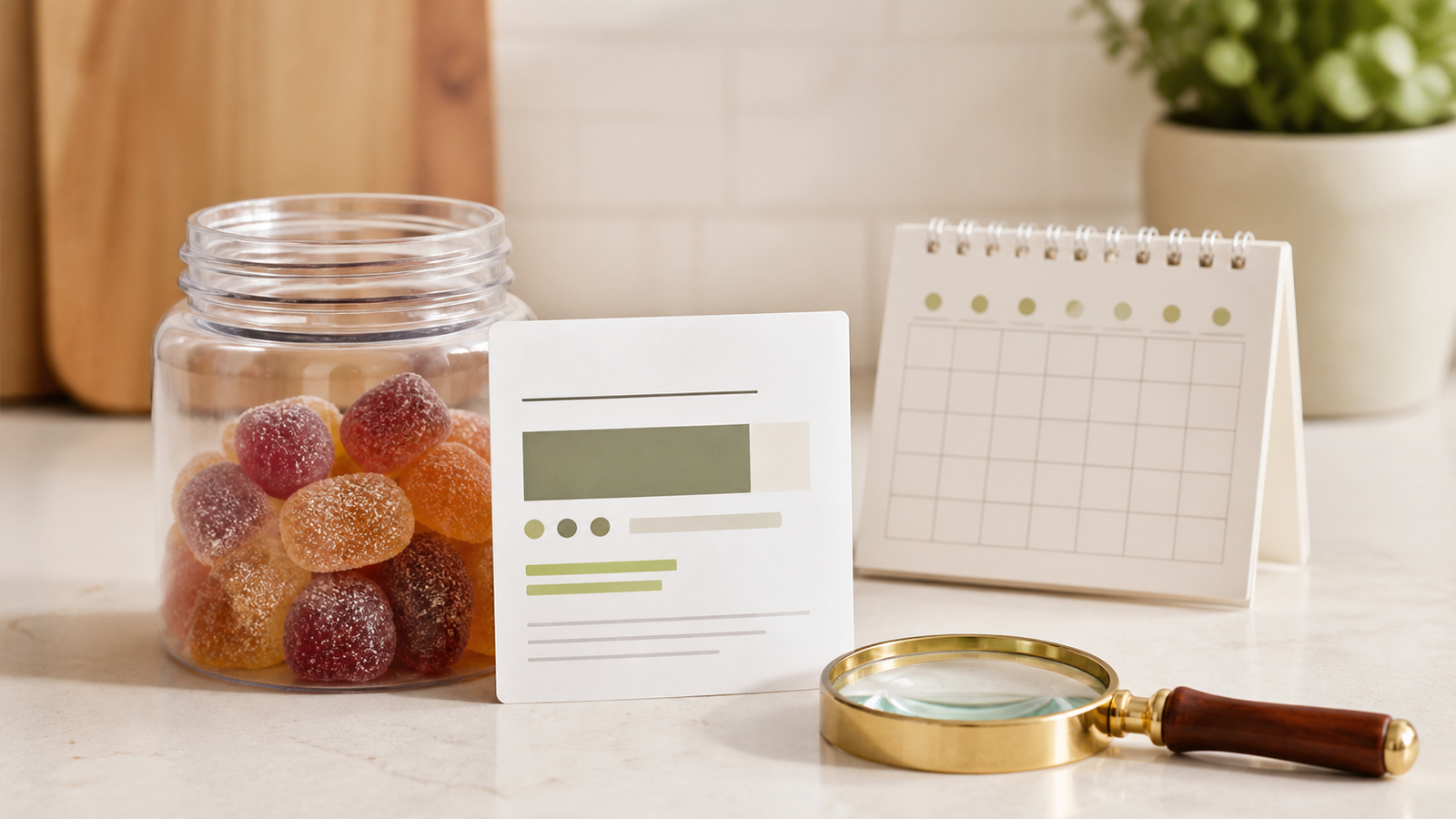
Create a small record with these fields: product format, product name, package size, date exactly as printed, date meaning, lot or batch, product page date, COA date, storage instructions, order date, delivery date, and support response. Mark each field verified, seller-stated, unclear, or not checked. This method prevents an assumption from becoming a fact just because it was written in a spreadsheet or note.
Keep the worksheet with the order confirmation and package photograph. If you buy another batch later, start a new record rather than overwriting the old one. Product formulas, labels, documents, shipping policies, and regulations can change.
Common date-reading mistakes
Common mistakes include treating a lot code as an expiration date, confusing a package date with a manufacture date, assuming every product in a catalog shares one date, and comparing a report date with a package date as if they were the same event. Buyers also sometimes ignore storage instructions or discard the package before checking a mismatch.
Another mistake is using a date to make a medical or legal conclusion. A date cannot diagnose a condition, guarantee an outcome, or prove a product is legal in every state. Keep the conclusion narrow and document-based.
FAQ
Is a CBD product expiration date the same as a best-by date?
Not necessarily. The exact meaning depends on the label, product, seller, and applicable requirements. Ask the seller when the wording is unclear.
Can I decode a CBD lot number myself?
Do not rely on an unofficial decoding chart. Ask the seller or manufacturer to explain the lot and how it connects to the product records.
Does a COA establish an expiration date?
No. A COA reports the named sample and listed tests. It does not automatically establish an expiration date for every package or future batch.
What should I do if the date is unreadable?
Photograph the package, keep the label and order record, and contact the seller before using or discarding the product.
Conclusion
Read a CBD product expiration date in context. Identify the date type, match the lot to the package and COA, follow the storage instructions, compare the formula and listing, and review return and destination policies before ordering. A date is useful evidence, but it is not a medical, safety, quality, or legal guarantee. Keeping a simple, dated record helps adult buyers ask precise questions and make more careful decisions.
Editorial note: Herbxmind publishes adult-use consumer education for US readers. Product formulas, labels, dates, laboratory documents, storage guidance, shipping policies, and regulations can change. This article is not medical or legal advice. Editorial review date: November 9, 2026.
For related checks, review the lab results guide, the where we ship page, the legal disclaimer, the contact page, and the latest buyer education articles.
Format-specific date checks
For flower, check whether the package shows a harvest, curing, packaging, best-by, or other date. Ask how the seller uses each term and whether the lot in stock has a matching laboratory document. Read storage guidance for light, heat, moisture, and air. A strain name does not identify the date or batch by itself.
For gummies, compare the date with the piece count, ingredients, package seal, and storage instructions. A gummy package may show a best-by date while the product page shows a formula or batch from another period. Check whether the date is printed on the pouch, jar, or outer carton and whether the product should remain sealed after delivery.
For oils and tinctures, inspect the bottle, cap, tamper seal, volume, carrier ingredients, and dropper guidance. Ask whether the date applies to the filled bottle or the underlying oil batch. If the bottle is leaking or the seal is broken, document the condition before opening or using it.
For vapes, compare the date, oil batch, cartridge or disposable model, and battery instructions. A device may have a hardware record separate from the oil record. Do not treat a device manufacture date as the same as an oil analysis date. If the product includes a rechargeable battery, follow the storage and charging instructions supplied for that hardware.
For topicals, read the container date together with the full ingredient list and external-use directions. A topical may have cosmetic or skin-care information that is separate from cannabinoid content. Do not interpret a date or topical claim as evidence that the product treats, cures, or diagnoses a condition.
When the date and package condition disagree
A date can look acceptable while the package is damaged, swollen, leaking, unsealed, or materially altered. In that situation, the condition is a separate question. Photograph the package, keep the shipping carton, and contact the seller using the damaged-package process. Do not rely on the date alone to decide that a damaged item is suitable for use.
A date can also appear inconsistent with a listing while the package remains sealed and undamaged. For example, the listing may describe a new harvest while the label shows an older package date. Ask whether inventory is rotated, whether the listing is current, and whether a different batch is available. Avoid opening the package before checking the return policy if the date is important to the purchase.
When the date and COA disagree
A report may be issued after a sample is received, while a package date may describe manufacturing or packaging. These are different events, so a date difference is not automatically an error. The key question is whether the report’s sample identifier and lot connect to the package and whether the seller explains the timeline.
If the COA shows an earlier lot but the package shows a later lot, request the current document or a clear explanation. If the report uses a sample name that does not appear on the package, ask whether it is a raw ingredient, representative product, or prior formula. Do not use a general brand claim to fill a specific documentation gap.
When a seller gives a verbal explanation
Phone or chat support may explain a date more quickly than a product page. Write down the representative’s answer, the date, and any ticket number. Ask the seller to confirm important information in writing, especially when the answer affects a return deadline, batch match, or destination restriction.
Keep the wording exact. A statement that a product was “recently made” is not the same as a documented production date. A statement that a package is “good for a year” is not the same as a label-defined best-by or expiration date. Separate the seller’s explanation from what the physical package actually shows.
How to handle an old or missing date
If the package has no date, an unreadable date, or only a code that the seller cannot explain, mark the information as unresolved. Do not create a date from the order number or a nearby barcode. Ask whether the seller can provide the production or packaging date, current lot, storage window, and applicable return process.
If the seller cannot provide a clear answer, compare a different product with more complete labeling. The absence of information is not proof that a product is unsafe or unlawful, but it reduces the evidence available to a buyer. A careful decision can be to wait or decline.
Keep dates in a product-history record
When buying the same product more than once, create a separate entry for each order. Record the package date, lot, formula, product page version, delivery date, and storage conditions. This helps you notice whether the seller changed a label, ingredients, serving amount, or documentation between batches.
Do not assume that an older purchase is evidence for a new purchase. A prior package can show how a product was labeled at that time, but it does not prove that later inventory has the same formula, lot, or report. Treat each batch as its own documented item unless the seller provides a clear relationship.
How to write a date-related support request
Use a subject such as “Order 1234: date and lot clarification.” Include the order number, product name, delivery date, date exactly as printed, lot or batch, and one focused question. Attach a readable photograph of the label and, if relevant, the product page or report link. Ask whether the date is a manufacture, packaging, best-by, use-by, or expiration date and what return process applies if the information does not match the listing.
A focused message avoids unnecessary conclusions. Do not state that the product has expired unless the seller or applicable source supports that interpretation. Instead, say that the date meaning is unclear and ask for the seller’s documented explanation. A factual request is easier to resolve than a message based on assumptions.
Use a stop-and-wait decision rule
Pause when the date meaning is unclear, the lot cannot be matched, the package is damaged, storage instructions are absent, or the seller cannot explain a material mismatch. Waiting does not mean a problem has been proven. It means the available evidence is not strong enough for the decision you are trying to make.
Do not let a discount, countdown, or limited-stock message override a date review. If the seller provides a current lot, clear date definition, matching documentation, and a workable return process, continue the review. If not, choose a listing with better traceability.