

Quick answer: A CBD vape pen and a disposable CBD vape can both deliver a CBD-containing formula, but they differ in hardware, charging, maintenance, cost, waste, and the amount of information a buyer must manage. A disposable may be simpler for a first purchase, while a rechargeable pen may offer a replaceable cartridge or a longer-term device choice. The right comparison is not “which is stronger?” It is “which format has clear ingredients, batch evidence, safe hardware, and a setup you can use responsibly?”
People searching for CBD vape pen vs disposable are often comparing convenience and value. The words can describe several product designs, so start by reading the exact listing. Some pens are sealed all-in-one devices. Others use a rechargeable battery with a replaceable cartridge. A disposable may be draw-activated, button-activated, rechargeable, or completely single-use. The label and instructions—not the product name alone—should determine the comparison.
What is a CBD vape pen?
A CBD vape pen usually refers to a slim vaporizer format. In retail, the term may mean a reusable battery paired with a cartridge, or a sealed pen that is used until the formula or battery is depleted. A reusable design can separate the battery from the cannabinoid-containing cartridge. That may allow a buyer to replace one part rather than discard the entire device, but it also creates compatibility and cleaning questions.
Before buying, identify whether the pen is rechargeable, whether the cartridge is replaceable, how the device activates, what connector it uses, and whether the manufacturer provides charging and storage instructions. If a listing uses “pen” as a style word but does not explain the device, ask for clarification.
What is a disposable CBD vape?
A disposable CBD vape is typically sold as a ready-to-use unit containing both the formula and the device. The buyer may not need to assemble a battery and cartridge, which can simplify the first-use experience. However, “disposable” does not always mean “non-rechargeable.” Some units include a charging port so the formula can be used before the battery runs down. Check the actual specifications and never assume that two disposable devices have the same capacity or battery design.
Side-by-side comparison
| Factor | CBD vape pen | Disposable CBD vape |
|---|---|---|
| Setup | May require a battery and cartridge connection | Usually ready to use after opening |
| Reuse | Battery may be reusable with compatible cartridges | Most or all of the device is discarded after use |
| Charging | Often rechargeable, but verify the instructions | May be non-rechargeable or USB rechargeable |
| Compatibility | Connector and cartridge fit matter | Compatibility is built into the unit |
| Waste | Potentially less hardware waste over multiple cartridges | More single-use hardware per purchase |
| Best comparison metric | Battery, cartridge, formula, and replacement cost together | Total formula, device capacity, batch evidence, and unit price |
The table is a starting point, not a quality ranking. A well-documented disposable can be a better-informed purchase than a reusable pen with unclear ingredients or no batch documentation.
Compare the formula before the hardware
Hardware should never distract from the formula. For both formats, check total CBD, CBD concentration, THC information, total liquid volume, and the complete ingredient list. Confirm whether the product contains a single cannabinoid or a blend. Compare the same units when possible: total CBD per device, CBD per milliliter, and the product’s labeled serving guidance.
Flavor names are not ingredient lists. A fruit or botanical name may refer to a flavor profile, but it does not tell you which flavoring agents or other ingredients are present. Ask the seller for a complete answer when the label is incomplete. Do not use an oral oil in a vape device unless the manufacturer explicitly states that the product is designed for inhalation.
Batch-matched testing is part of the comparison
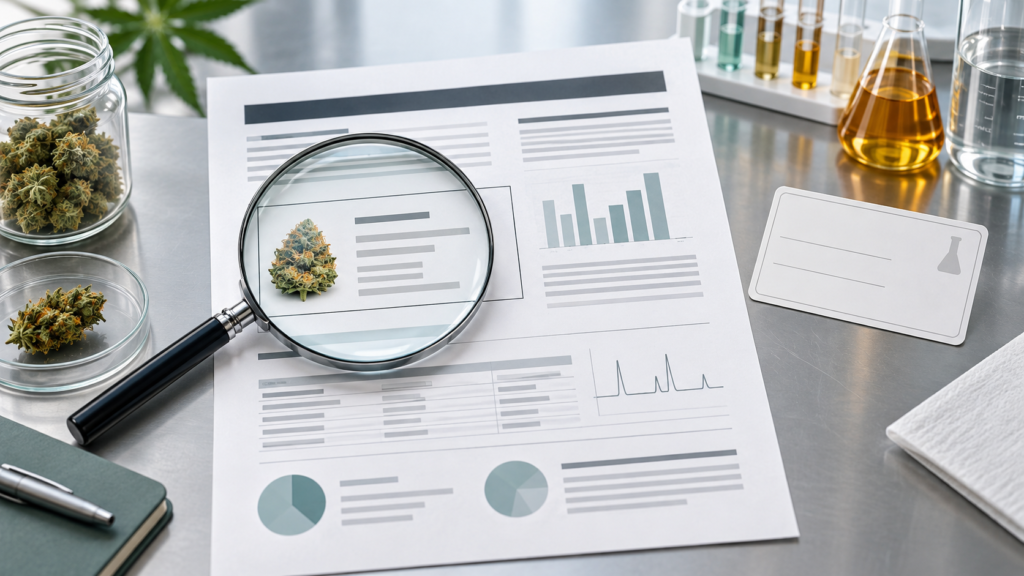
Both a pen cartridge and a disposable should be traceable to a batch or lot. Find the identifier on the package or product page, then compare it with the COA. Check the product name, batch, test date, laboratory identity, cannabinoid results, and available contaminant categories. A generic “lab tested” icon is not the same as a readable report that matches the product in your hand.
Use the COA comparison checklist when reviewing documentation. The FDA has reported concerns about inaccurate CBD amounts and contaminants in some products, so evidence boundaries matter. A report supports conclusions about the sample tested; it does not prove that every future batch is identical or that the product is suitable for every person.
Convenience and control
When a disposable may be simpler
A disposable may suit a buyer who wants a sealed, compact format with no separate battery or cartridge selection. It can be easier to understand when the product page clearly states capacity, battery behavior, ingredients, and disposal guidance. The tradeoff is that a hardware problem can make the whole unit unusable, and a single-use design creates more discarded components.
When a reusable pen may be more flexible
A reusable battery can offer more control over cartridge choice and may reduce the need to discard the battery each time. The tradeoff is a higher learning curve. The buyer must understand connectors, charging, cartridge storage, and compatibility. Reusing a battery does not mean every cartridge is compatible. Do not force parts together or use a charger outside the manufacturer’s instructions.
Battery and device safety
Vape devices contain batteries and should be treated as electrical products. Use the recommended charging cable and power source. Do not leave a device charging unattended or overnight unless the manufacturer specifically provides instructions that address it. Keep the device away from extreme heat, water, children, and pets. Do not use a device that is cracked, swollen, leaking, unusually hot, or producing a burnt smell.
Do not puncture, open, modify, refill, or repair a sealed device. If a product arrives damaged, take photos, stop using it, and contact customer support. Follow local rules for battery and electronic-waste disposal. The device’s end-of-life guidance is part of a responsible product comparison, not an afterthought.
Cost: compare the complete ownership picture
Price per device can be misleading. For a disposable, divide price by the labeled formula amount and consider whether the battery can use the entire contents. For a reusable pen, include the battery, cartridge, replacement frequency, charging accessories, and any shipping cost. Also consider whether the seller provides a replacement policy if the unit arrives defective.
A low initial price is not a bargain if the product has vague ingredients, an outdated COA, or hardware that cannot be used safely. A higher price is not proof of quality either. Make the comparison using transparent information and a product record you can verify.
Which format is better for different buyers?
- Choose based on simplicity: consider a clearly documented disposable if you do not want to manage a separate battery.
- Choose based on reuse: consider a rechargeable pen when the battery, cartridge system, and compatibility instructions are clear.
- Choose based on evidence: select the option with the better batch-matched COA and more complete ingredient disclosure.
- Choose based on storage: select the format you can keep safely away from heat, children, and pets.
- Choose based on destination: confirm the seller can legally ship the exact product to your location.
Questions to ask before checkout
- Is the product intended for adults where permitted?
- What is the total CBD and total liquid amount?
- What are the complete ingredients, including flavor components?
- What THC information appears on the label and COA?
- Where is the batch or lot number?
- Does the COA match this product and current batch?
- Is the pen rechargeable, and what charger is recommended?
- Can the cartridge be replaced, and which cartridges are compatible?
- How should the device be stored and disposed of?
- Can the product be shipped to my state and address?
Health and compliance boundaries
CBD vape content should not make treatment or cure promises. The Centers for Disease Control and Prevention describes health risks associated with cannabis use and notes that risks can exist across different forms of use. The FDA also emphasizes that many CBD safety and quality questions remain under study. Do not vape if the product is not designed for inhalation, and ask a qualified healthcare professional about personal risks, medication interactions, pregnancy, breastfeeding, or a health condition.
Review where we ship and the site’s legal disclaimer before purchase. Rules change, and online availability does not guarantee permission in every jurisdiction.
Frequently asked questions
Is a disposable CBD vape weaker than a vape pen?
Not necessarily. Strength depends on the formula and labeled concentration, not whether the device is disposable. Compare the actual CBD and THC information.
Can I use any cartridge with a rechargeable pen?
No. Connector type, voltage, airflow, and manufacturer compatibility matter. Use only parts the device maker supports.
Is a reusable vape automatically safer?
No. Reuse affects hardware and waste, but formula quality, ingredients, testing, battery condition, and correct use still matter.
What should I do with an empty disposable?
Follow the product’s disposal instructions and local rules for batteries and electronics. Do not burn, puncture, or place a damaged battery in ordinary recycling.
Bottom line
The best CBD vape pen vs disposable decision is evidence-led. Compare the complete formula, batch-matched documentation, device instructions, battery behavior, replacement cost, storage needs, and destination restrictions. For more label education, read the CBD vape guide and visit the Herbxmind blog.
Editorial note: This article is for adult educational use where permitted. It is not medical or legal advice and does not guarantee product safety, legality, or suitability.