

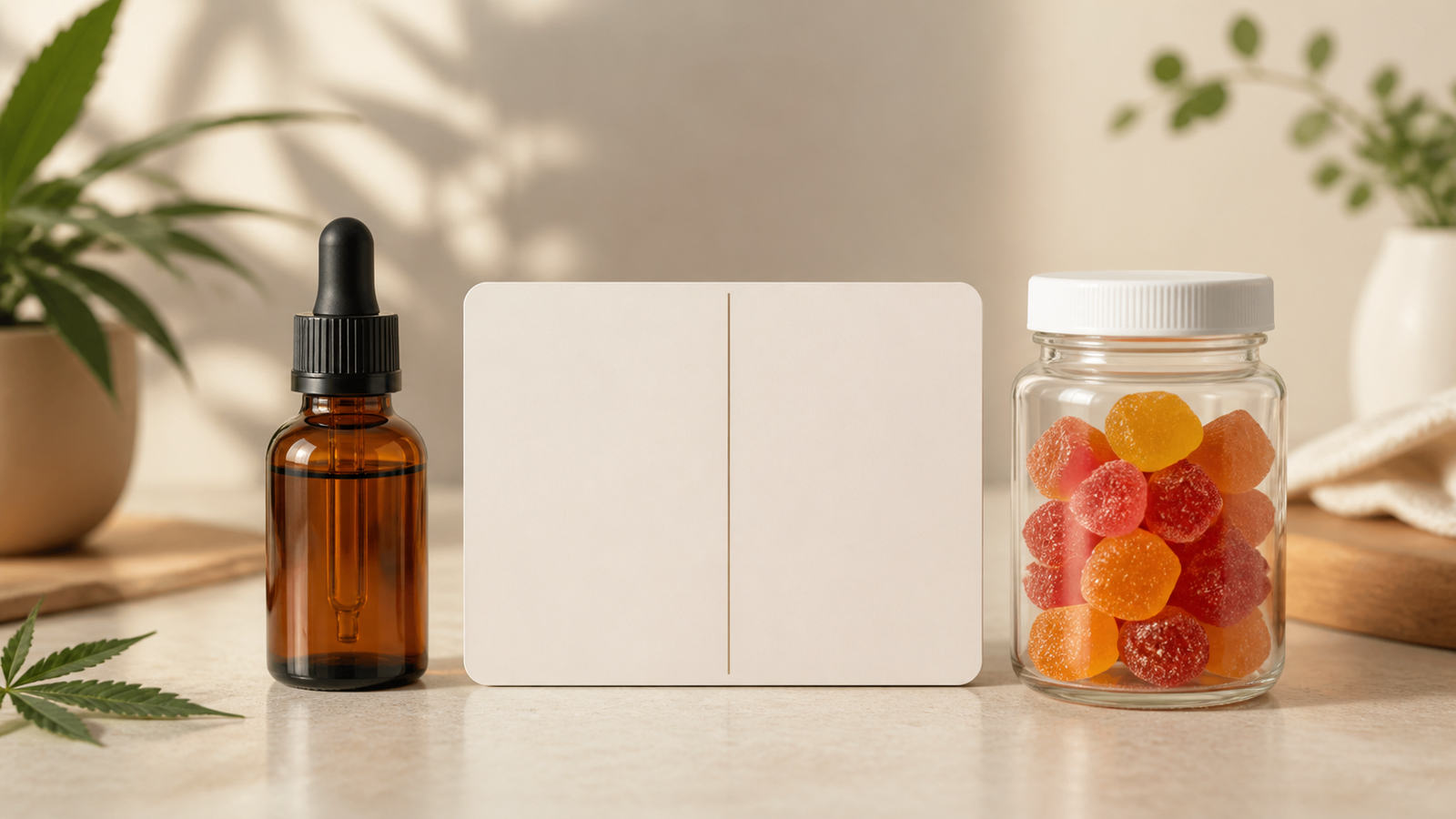
Quick answer: CBD tinctures and gummies differ in format, ingredients, serving units, storage, and packaging. Compare CBD per labeled serving and container, carrier ingredients, sweeteners or flavors, THC information, batch-specific COA, age and shipping policies, and package condition. Neither format is automatically better or a guaranteed treatment.
When shoppers search CBD tinctures vs gummies, they are often comparing a dropper bottle with a chewable product. A tincture may emphasize milliliters and a carrier oil, while a gummy may emphasize pieces, flavor, and a food-style ingredient panel. A useful comparison explains the units and evidence before discussing preference.
CBD tinctures vs gummies at a glance
- Tinctures: typically use a liquid carrier and a dropper or measured serving.
- Gummies: typically use a chewable base with sweeteners, flavors, colors, pectin or gelatin.
- Both: should identify CBD, other cannabinoids, ingredients, batch code, storage, and testing.
Do not compare “one dropper” with “one gummy” unless the labels define those servings. A full dropper may not equal one milliliter, and a gummy serving may include two pieces. Record bottle volume, piece count, serving size, and total CBD.
Read the CBD oil label guide and gummy ingredient guide.
How to compare CBD amounts
Look for CBD per serving, CBD per milliliter or piece, and CBD per container. Confirm that the number refers to CBD rather than total extract. A label saying “600 mg hemp extract” has not necessarily said “600 mg CBD.” Record the exact wording.
For a hypothetical comparison, a 30 mL tincture with a declared total CBD amount and a 30-piece gummy jar may have different per-serving values. The arithmetic can help compare price, but it is not an instruction to use a particular amount. Personal health and medication questions need professional guidance.
Check THC and minor cannabinoids separately. A full-spectrum tincture or gummy may have a different cannabinoid profile from an isolate product. Use the full-spectrum guide and CBG vs CBD guide for terminology.
Ingredient differences
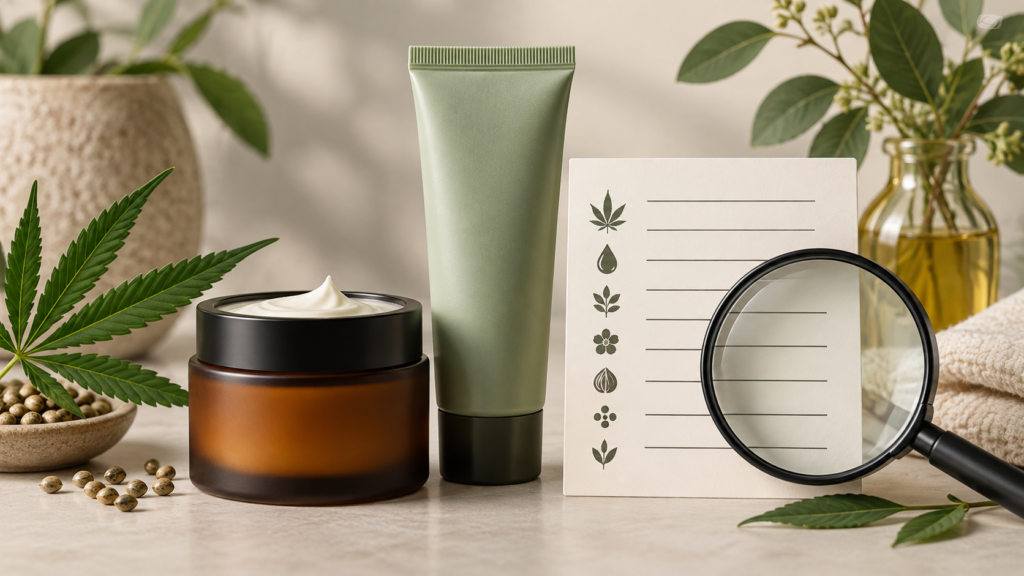
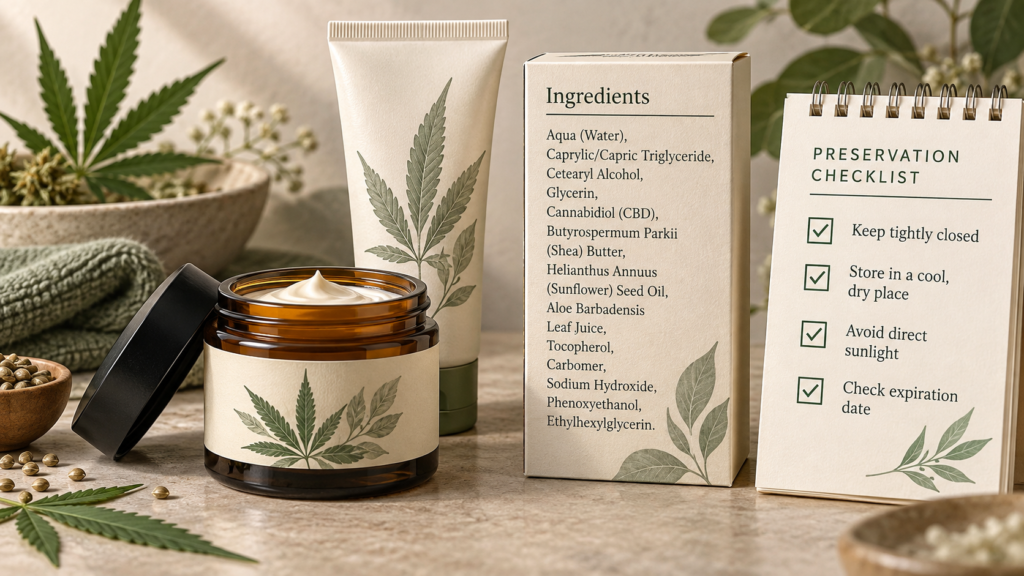
Tinctures may list MCT, olive, hemp seed, or another carrier oil, plus flavors or botanical extracts. Gummies may list sugar, sweeteners, acids, flavorings, colors, gelatin, pectin, and other ingredients. Read the complete list for allergies and dietary preferences.
A product called “natural” still needs an ingredient list. A shorter list is not automatically better, and a longer list is not automatically worse. The relevant question is whether the label is complete enough for your criteria and whether the seller can answer specific questions.
How to match the batch to a COA
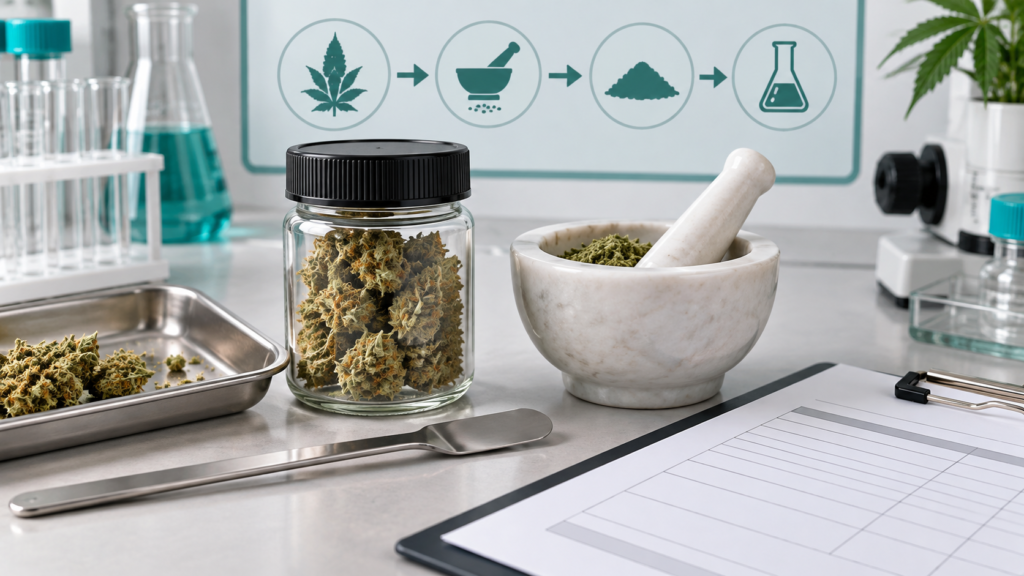
Check laboratory identity, report date, sample date, product description, batch number, units, and relevant panels. The report should identify the finished tincture or gummy. A report for raw extract may not verify the finished product’s flavor, carrier, or final cannabinoid amount.
- Photograph the label and record the batch.
- Open the seller’s official report page.
- Match the code exactly.
- Confirm format and formula.
- Compare CBD and THC units.
- Review reporting limits and available contaminant tests.
- Save the report with the order.
Use the COA guide and batch checklist. A COA describes a tested sample and stated method, not every future bottle or every individual response.
Storage and package condition
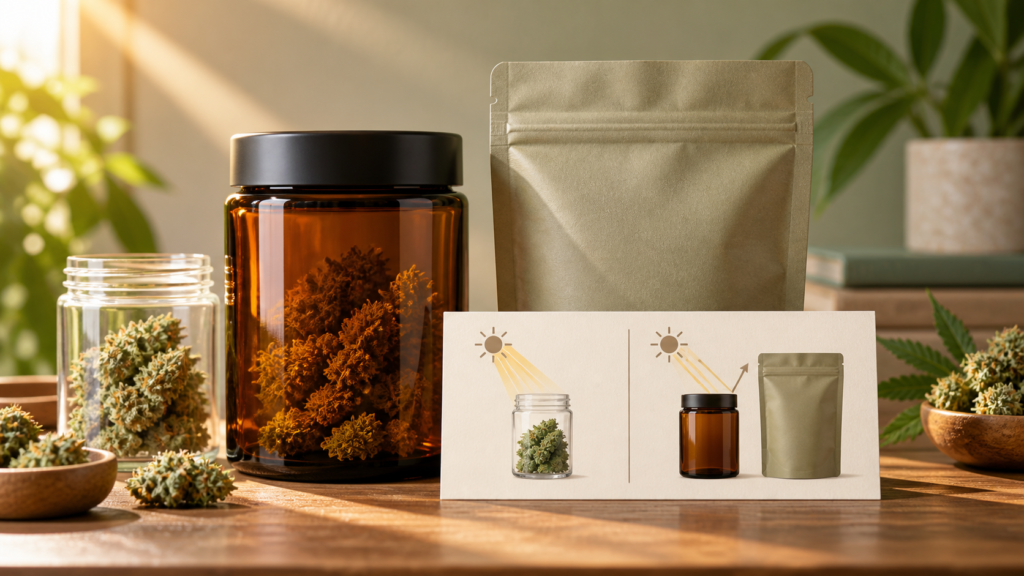
Keep both formats in original labeled containers and follow storage instructions. Protect tinctures from heat, light, and moisture; keep gummy packages closed and away from children and pets. If a seal is broken, the bottle leaks, or the jar is damaged, photograph the package before opening and contact support.
See the CBD oil shelf-life guide and return-policy guide.
Evidence boundaries
The FDA explains that most retail CBD products have not been evaluated as general medicines and that unproven claims and safety questions remain. Read its consumer update. Do not describe a tincture or gummy as treating, curing, preventing, or diagnosing a condition.
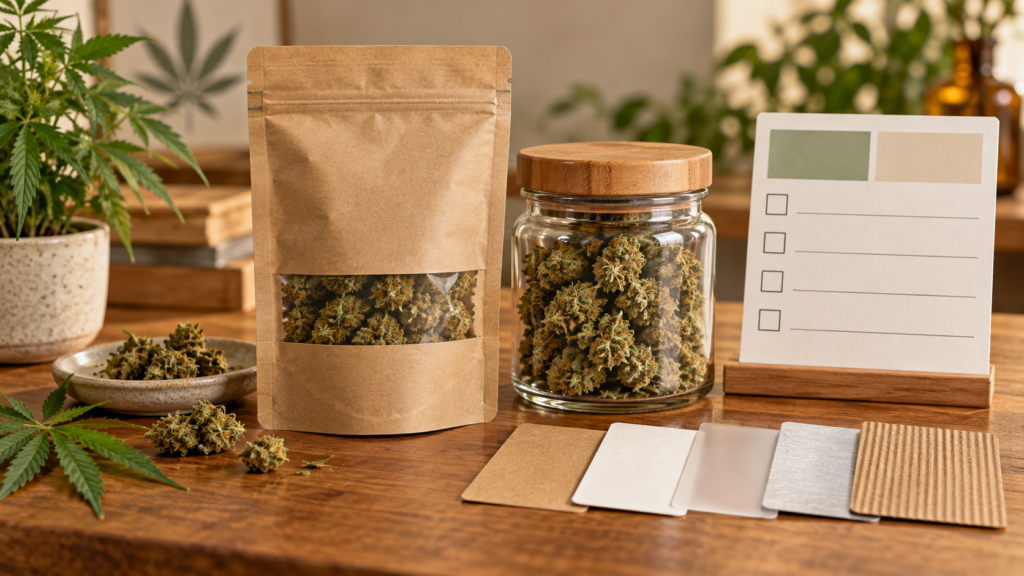
CBD tinctures vs gummies checklist
- Are CBD and total extract separated?
- Are serving units defined?
- Are carrier, sweetener, flavor, and allergen ingredients listed?
- Are THC and other cannabinoids disclosed?
- Does the batch match a current COA?
- Are storage and package instructions clear?
- Are shipping and regional limits explained?
- Does the copy avoid guaranteed medical claims?
Check shipping policy and regional availability.
How to compare a tincture and a gummy fairly
Begin with total container contents, not the serving name. Record the total CBD, number of labeled servings, amount per serving, bottle or jar size, and price. Then record carrier oil, sweeteners, flavors, other cannabinoids, THC information, and batch report access. The purpose is to compare like information, not to turn the numbers into a personal dosing instruction.
A dropper marking can be approximate, and a gummy serving can include multiple pieces. Check the label definition. If the page makes the amount difficult to understand, ask the seller for a plain-language explanation. Do not guess from a photograph or assume that two products with the same front-label milligrams have the same serving structure.
Questions to ask before checkout
- What does the printed milligram number measure?
- How many pieces or milliliters are in one serving?
- Does the COA match the finished formula?
- Are carrier and food-style ingredients disclosed?
- How should the package be stored?
- How are damaged orders handled?
Keep the label, report, product page, and return policy with the order. If the seller changes its formula or serving size, start a new comparison. A familiar product name does not guarantee an unchanged formula.
Evidence boundaries for format comparisons
A format comparison can describe ingredients and label units, but it cannot prove that a tincture or gummy will treat a condition or produce a guaranteed result. Personal medication and health questions require a qualified professional. The CDC provides public-health context, while the FDA explains approval and labeling limits.
Storage and recordkeeping
Keep a tincture or gummy in its original labeled container, close it after use, and follow the product’s storage directions. Protect both formats from heat, light, moisture, children, and pets. Record the purchase date, batch code, COA, and date guidance. If the product changes in smell, appearance, texture, or package condition, do not treat that observation as a laboratory result; contact the seller and preserve the packaging.
Records matter when a product page changes. Save a screenshot or note of the exact formula and serving language you reviewed. If a new order has a different batch or package, repeat the comparison rather than assuming it is identical.
When the label and page disagree
Keep the physical label, photograph the discrepancy, and contact support before using the product. Differences can come from a formula revision, an old product page, a different flavor, a unit conversion, or an incorrect listing. Do not choose the number that gives the most attractive comparison. Ask which information applies to the finished batch and request a current COA when needed.
A tincture and gummy can share a brand name but still have different carriers, flavors, cannabinoid profiles, storage instructions, and shipping rules. Compare the exact format, not the brand slogan. This approach is more useful for adult shoppers who want evidence than a universal claim about which format is “best.”
When the product information is clear, keep a record of the batch and report. When it is unclear, do not make the comparison by guessing. A written seller answer can resolve a unit question, but it cannot replace current official guidance for legal or medical matters.
Keep the label and package until the order question is resolved, especially when the amount or batch code is disputed.
A current batch record is more useful than a general brand promise.
Use it to compare the exact product you receive.
Do not replace a missing batch match with a broad claim about the brand.
Use a current product page and report when the bottle or jar changes. Clear documentation makes support questions easier and prevents old information from becoming a false certainty.
If an ingredient, serving unit, or cannabinoid statement is unclear, ask before checkout. Do not infer the answer from a product photo or a general brand description. A tincture and a gummy may share a brand name but still be separate formulas with separate reports and policies. The exact package and batch are what matter for a careful comparison.
Keep that comparison with the order.
A verified batch record is more useful than an unsupported general promise.
Frequently asked questions
Is a tincture more effective than a gummy?
This guide does not make an effectiveness claim. Compare the exact product and evidence.
Do tinctures always use hemp seed oil?
No. Read the carrier ingredient.
Do gummies have more ingredients?
They may have more food-style ingredients, but the exact list controls.
Can I use these products for a condition?
Ask a qualified professional; this article is not medical advice.
Conclusion
CBD tinctures vs gummies is a comparison of format, units, ingredients, traceability, and policies. Verify what the printed numbers mean, match the batch to a COA, store the product properly, and choose the listing that provides enough information for your own buying criteria.
Editorial note: Herbxmind publishes adult-use consumer education. This article is not medical or legal advice; product formulas and regulations can change.