

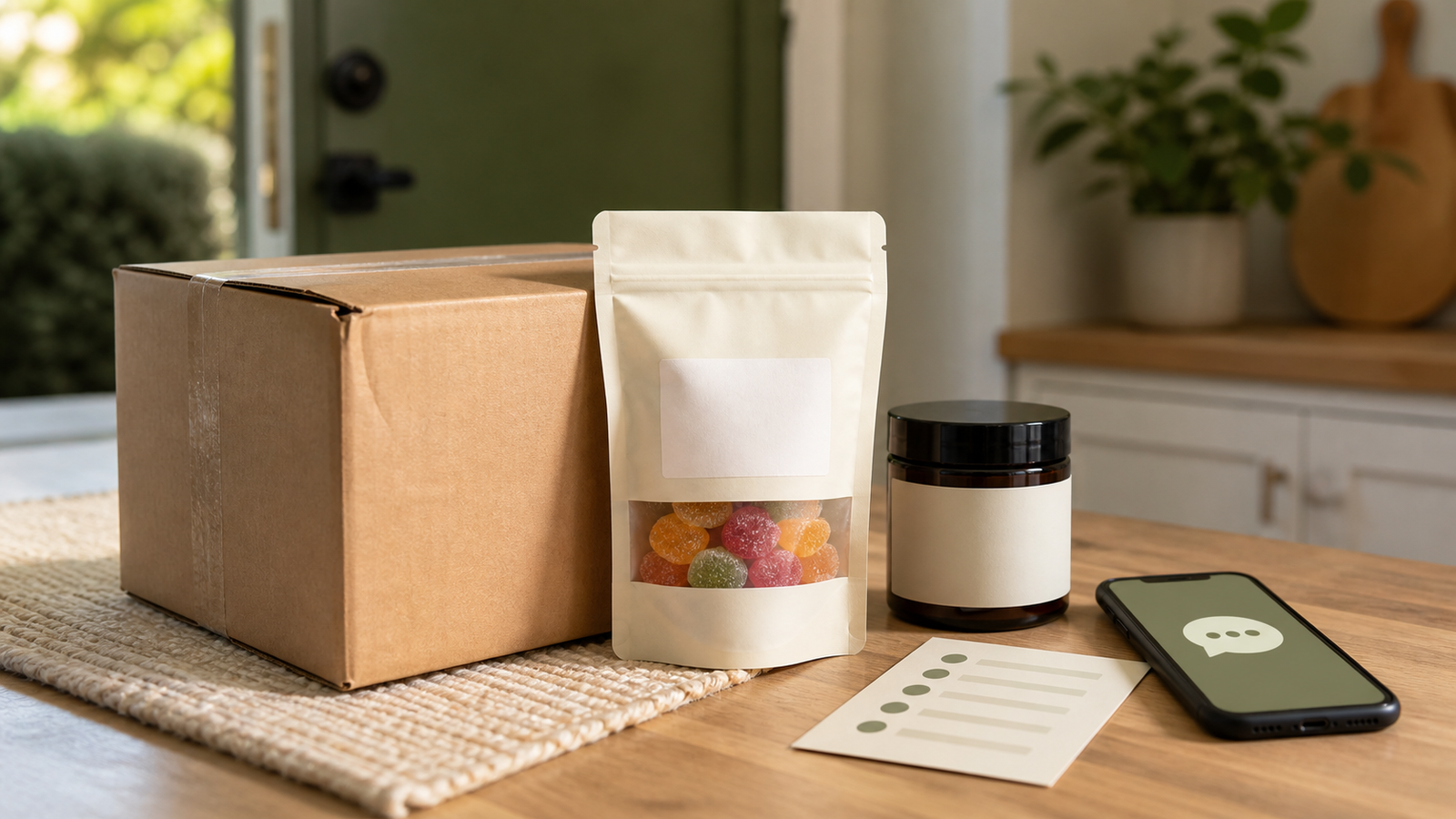
A CBD product return policy explains what a seller will do when an order is damaged, incorrect, incomplete, delayed, or no longer wanted. It is different from a product label, laboratory report, shipping policy, or legal opinion. Before ordering, read the policy together with the product page and destination rules. After delivery, preserve the package and document any mismatch before requesting help. This guide gives US adult buyers a practical way to review return terms without making medical, safety, or universal legal claims.
Why the return policy matters
CBD and hemp-derived product purchases often involve a physical package, a batch or lot, product-specific ingredients, and destination restrictions. If the wrong format arrives, a seal is damaged, the label does not match the listing, or a promised document is missing, the return policy tells you which steps to follow. A clear policy can also explain who pays return shipping, whether unopened items are required, how refunds are issued, and how long a buyer has to report a problem.
A return policy does not prove that a product is high quality or legal in every location. It only describes the seller’s current process. Read it before payment so you know what evidence to save and which deadlines apply. If the policy is vague, ask a specific question before ordering rather than assuming a favorable outcome.
Separate the different policies
Online stores may publish several related policies. Do not treat them as interchangeable.
- Return policy: explains eligibility, deadlines, condition requirements, and refund or replacement steps.
- Shipping policy: explains destinations, delivery methods, age checks, signatures, and restrictions.
- Damaged-package policy: explains what to do when a parcel, seal, container, or device arrives damaged.
- Product disclaimer: explains evidence boundaries and prohibited interpretations of product claims.
- Privacy or payment policy: explains how account, payment, and order information is handled.
A seller may accept an unopened product return while requiring a photo of a damaged package within a shorter period. A shipping policy may exclude a destination even when the return policy is generous. Read each document for the question it answers.
Check who is eligible to return an order
Some policies apply only to the original purchaser, the account holder, or the person listed on the order. Others require proof of purchase, an order number, or confirmation that the item was purchased directly from the seller rather than through a marketplace. Record the email address, order number, and account used at checkout.
Read whether the policy applies to all products or excludes certain formats. Opened ingestible products, opened vapes, clearance items, bundles, customized products, and promotional gifts may have separate rules. Do not assume an item is returnable simply because another item on the same site is.
Check the reporting deadline
Return policies commonly distinguish between a change-of-mind return and a product problem. A seller may allow a longer period for an unopened return but require damage or mismatch to be reported quickly. Identify the exact deadline and whether it is measured from the delivery date, purchase date, or the date the buyer contacts support.
Use the delivery record to establish when the package arrived. If the deadline is unclear, send a written question as soon as you notice the problem and keep the timestamp. Do not wait while trying the product or searching for a perfect explanation. A timely, factual report is easier for a seller to process.
Understand unopened and opened-item rules
For an unopened product, keep the seal, packaging, label, and shipping carton intact until you decide whether the item matches the order. For an opened product, the policy may require a different process or may offer only a replacement when the product is defective or incorrect. These rules can reflect hygiene, product integrity, age-restricted handling, and inventory controls.
Do not open a package just to test whether it can be returned. Read the condition requirement first. If the wrong product arrives, photograph the label and contact the seller before opening it. If a package arrives damaged, document the outer carton, inner package, seal, and visible condition before discarding anything.
Document the order before delivery
Save the product page, order confirmation, selected variation, price, shipping destination, and relevant policy links before or immediately after checkout. Product pages can change when stock or formulas change. A record helps show what was advertised at the time of purchase.
- Save the exact product title and URL.
- Record the format, flavor or cultivar, size, count, and quantity.
- Save the displayed price, discount, and shipping charge.
- Note the order number and date.
- Save the return, shipping, and damaged-package policy versions.
- Record any COA or batch document linked from the product page.
This record does not prove a seller acted improperly. It simply gives both sides a precise reference when a listing or policy changes.
Inspect the package when it arrives
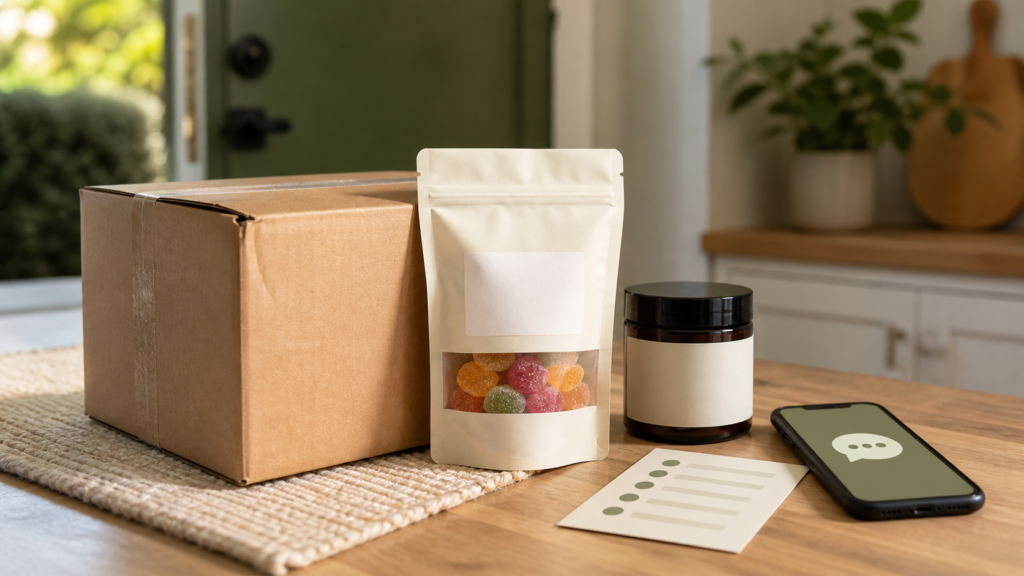
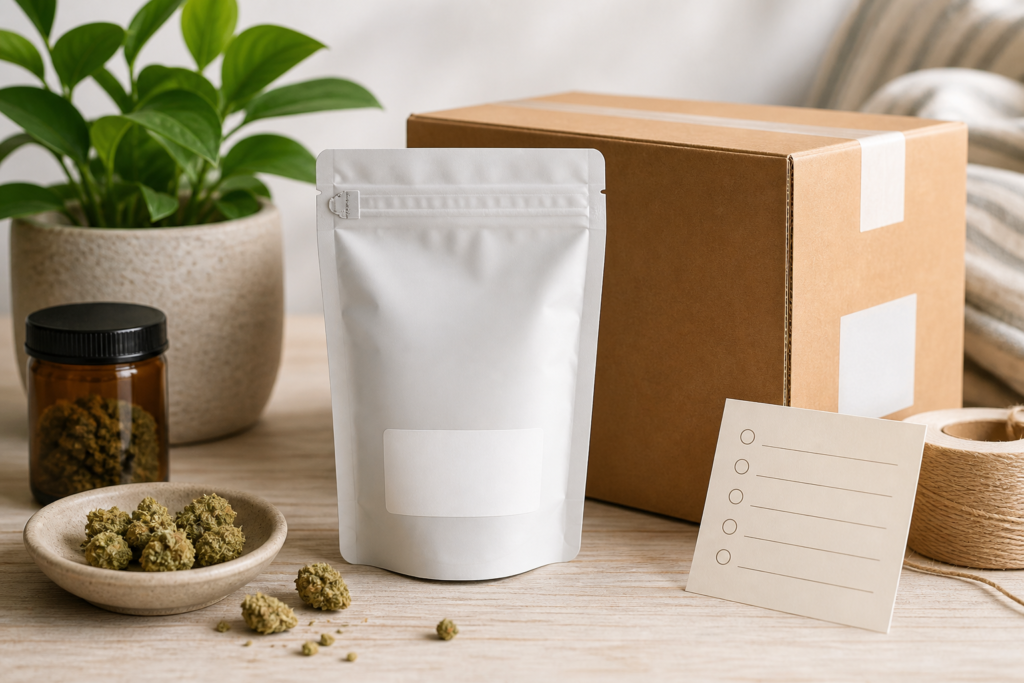
Compare the package with the order before using the product. Check product name, format, flavor, size, count, ingredients, cannabinoid amounts, lot or batch, dates, seal, and visible condition. For vapes or devices, check the hardware type, charging instructions, and package contents. For gummies or oils, check serving and total-package information. For flower, check net weight, label, package seal, and storage instructions.
Keep the shipping carton and packing materials when damage or mismatch is possible. Take clear photographs in good light. Include the label and lot number in at least one image, but do not publish personal shipping information. A factual record is more useful than a message that simply says the package “looks wrong.”
What to document for a damaged package
For a damaged package, photograph the outer carton, shipping label, internal packing, product container, seal, and any visible leak, crack, dent, or broken closure. Note whether the damage was visible before opening the parcel. Do not continue using a product that is leaking, contaminated-looking, missing a seal, or materially different from the listing while waiting for instructions.
Follow the seller’s support process. Some sellers require photographs within a stated number of hours or days. Others may ask for the product to remain available for inspection. Do not throw away the item unless the seller or applicable safety guidance tells you how to dispose of it. Keep the communication thread and any tracking details.
What to document for an incorrect item
If the wrong item arrives, compare the received label with the order confirmation. Record the product title, package size, flavor or cultivar, count, lot, and any SKU or barcode. If the item is unopened, keep it sealed while asking for instructions. If the received product is a different format or ingredient profile, do not assume it is an acceptable substitute.
Ask the seller whether they want a return, photograph, or other verification. Do not ship an age-restricted item to an address not authorized by the seller. Use the method and label provided by support, and keep the tracking number.
What to document for missing items
Compare the packing slip with the contents and check whether the order was split into multiple shipments. Record which items were missing and which items arrived. Review the shipping confirmation and tracking information before reporting a shortage. If a package is missing a document, accessory, charger, or batch information rather than a product, state exactly what is absent.
Do not open a dispute using a broad accusation when a specific inventory question will solve the problem. A concise list of missing items helps support staff compare the order with fulfillment records.
Check refund, replacement, and store-credit options
Policies may offer a refund, replacement, exchange, or store credit depending on the issue. Read whether the original shipping charge is refundable, whether return shipping is deducted, and how the refund is sent. The policy may state a processing period after the seller receives the returned item.
Ask for clarification when the policy uses terms such as defective, unacceptable, unopened, or damaged without defining them. Do not assume a replacement is available if a batch or flavor is out of stock. Request the outcome in writing and keep the seller’s response.
Understand payment and chargeback limits
A return policy may explain what the seller will do, while a payment provider has separate rules. Contact the seller first when practical and provide the requested information. If the issue remains unresolved, review the payment provider’s current dispute process and deadlines. Do not misrepresent the transaction or claim a problem that did not occur.
Keep receipts, photographs, support messages, tracking information, and policy copies together. A clear chronology makes it easier to explain what happened and what response was requested.
Review return-shipping instructions
Check whether the seller provides a prepaid label, requires a specific carrier, or asks the buyer to pay return shipping. Follow the stated instructions for packaging and tracking. Do not send a product to an address found through a search engine if the seller has provided a different authorized address.
Age-restricted, liquid, battery-containing, or other regulated items may have carrier or destination restrictions. The seller should tell you how to proceed. If the instructions are unclear, ask before shipping. Preserve the receipt and tracking number until the matter is complete.
Check destination and legal boundaries
A return policy does not decide whether a product can be shipped, possessed, or transported in every jurisdiction. Product type, cannabinoid profile, amount, destination, timing, and local rules can matter. Check current official information for the location involved and read the seller’s current shipping restrictions.
Do not assume that returning a product makes an otherwise restricted shipment acceptable. Do not cross state lines with a product merely because it was delivered to you. If you need legal advice, consult a qualified professional in the relevant location.
Questions to ask before ordering
- Which product formats are excluded from returns?
- What is the reporting deadline for damage, mismatch, or missing items?
- Must products remain unopened and sealed?
- Who pays return shipping in each situation?
- Is the outcome a refund, replacement, exchange, or store credit?
- How long does refund processing take after receipt?
- What documents and photos should a buyer provide?
- Which carrier and return address should be used?
- What happens if a product is restricted at the destination?
Ask these questions before checkout when the product is expensive, age-restricted, fragile, or subject to destination limitations. A seller that answers clearly gives you a better basis for an informed purchase.
Common mistakes
Common return mistakes include opening an item before reading the policy, discarding the packaging, waiting past the reporting deadline, using a different return address, and failing to photograph a damaged seal. Buyers also sometimes compare the return policy with a different seller’s policy or assume a product page is permanent.
Another mistake is treating a return approval as proof that the original product was unsafe, illegal, or medically ineffective. A return may simply address a fulfillment error or a policy-based change of mind. Keep the description factual and avoid making claims that the available evidence cannot support.
FAQ
Can I return an opened CBD product?
It depends on the seller and product format. Many policies distinguish unopened returns from damaged, defective, or incorrect items. Read the exact current policy and ask before opening the package.
What should I do if a CBD package arrives damaged?
Photograph the outer carton, inner package, seal, label, and visible damage; preserve the materials; stop using the affected product; and contact the seller within the stated deadline.
Does a return policy prove a product is legal?
No. A return policy describes a seller’s process. Shipping and legal rules depend on the product, destination, timing, and applicable requirements.
Should I keep the package after requesting a refund?
Usually keep the product, label, packing, and tracking information until the seller confirms the next step, unless official safety guidance requires another action.
Conclusion
Review a CBD product return policy before ordering, then document the product and package after delivery. Separate return terms from shipping rules, labels, COAs, and legal questions. Record the exact item, preserve packaging, report problems promptly, follow the authorized return process, and keep a clear chronology. This approach helps adult buyers resolve ordinary fulfillment issues without turning a seller policy into a guarantee about medical outcomes, product quality, or nationwide legality.
Editorial note: Herbxmind publishes adult-use consumer education for US readers. Product formulas, packaging, return policies, shipping requirements, laboratory documents, and regulations can change. This article is not medical or legal advice. Editorial review date: November 8, 2026.
Build a pre-order return-policy checklist
Before payment, use a short checklist that can be completed from the seller’s website. First, locate the return policy and confirm that it is accessible without creating an account. Second, identify exclusions for product format, opened packaging, sale items, bundles, and age-restricted goods. Third, record the reporting deadline for a wrong, damaged, incomplete, or missing item. Fourth, note whether the seller offers a refund, exchange, replacement, or store credit. Fifth, check who pays return shipping and whether a restocking or processing charge applies.
Then check the support channel. A policy may be clear but difficult to use if no email, form, phone number, or response-time expectation is provided. Save the support address and the order requirements. If the policy directs you to an account dashboard, confirm that you can access the dashboard and locate the order after payment.
Finally, compare the policy with the product page. If the listing promises a document, accessory, flavor, size, or device feature that the policy does not address, ask how a mismatch will be handled. A good pre-order question is narrow: “If the ordered batch or product format is not available, will the seller contact me before shipping, offer a replacement, or issue a refund?” A written answer gives you a clearer record than an assumption.
Use an evidence ladder for return requests
Start with the strongest direct evidence. The order confirmation identifies what was purchased. The package label identifies what arrived. Photographs show visible damage or mismatch. The shipping record establishes delivery timing. The product page and policy show what was represented and which procedure applies. A seller response explains the proposed resolution. Keep these items in that order when writing to support.
- Order record: order number, date, product variation, quantity, and amount paid.
- Physical record: label, lot, seal, size, contents, damage, and package condition.
- Delivery record: carrier, delivery date, tracking number, and any signature.
- Policy record: current return, shipping, and damage terms.
- Communication record: the question asked, date sent, and response received.
This ladder keeps the request focused. You do not need to make a broad conclusion when a photograph and order number can show the specific problem.
Write a clear support message
A useful message is short, chronological, and specific. State the order number and delivery date. Name the product ordered and the product received. Describe the visible difference or damage. List the photographs and documents attached. Quote the relevant policy section in your own words without exaggerating it. Ask for one clear next step, such as a replacement label, return authorization, or refund instruction.
Avoid statements that cannot be verified, such as claiming that a product is fraudulent, contaminated, illegal everywhere, or medically harmful solely because the package is different. If the concern is a missing batch number or COA, say that the identifier or document is missing. If the product is damaged, describe the seal, container, and outer carton. Specific language helps support staff route the issue correctly.
When a product page changes
Retail pages may change as inventory, formulas, images, and shipping destinations change. That is why saving the page and date is useful. A screenshot should include the product title, selected variation, price, ingredients or package information, and the URL if possible. Do not rely on a screenshot without the order record; the two records work together.
If a page is updated after purchase, ask the seller whether the change affects the item already ordered. A changed image does not automatically prove a different product was shipped. Compare the physical label, order confirmation, and batch information. Keep the conclusion limited to what the records show.
When a product is restricted after purchase
Rules or seller policies can change after an order is placed. If a carrier, destination, or seller tells you that delivery is restricted, do not attempt to bypass the restriction. Ask the seller how the order will be handled and whether a refund or return process applies. Check current official information for the destination when the question involves legal status.
A return request does not itself resolve the legal issue. Follow instructions from the seller and carrier, preserve the order record, and seek qualified legal advice when necessary. Do not transport the product across a jurisdiction merely to complete a return unless you have current, location-specific guidance.
When customer support does not respond
Send one concise follow-up that includes the original order number and the date of the first message. Use the official support channel listed in the policy and retain proof of submission. If the policy provides a time frame, reference that time frame without threatening or exaggerating. If the seller still does not respond, review the payment provider’s current dispute process and any consumer-protection resources available in the relevant jurisdiction.
Keep your description consistent. Do not submit different explanations to different channels simply to obtain a faster outcome. A consistent record is easier to evaluate and reduces confusion about what happened.
After the case is resolved
Save the final response, refund confirmation, replacement tracking, or store-credit record. If a replacement arrives, inspect it again against the new order or support agreement. If a refund is promised, check the payment method and expected processing period. Keep the case open in your records until the money or replacement is actually received.
Use the experience to improve future purchases. If the seller answered clearly and the policy matched the process, note that. If the product page, COA link, label, and return terms conflicted, choose a listing with clearer documentation next time. A return experience can reveal process quality, but it should not be presented as proof about every product the seller offers.
For related buyer education, review the lab results guide, browse the Herbxmind blog, read the legal disclaimer, use the where we ship page, and contact customer support when a policy question remains unresolved.