

Quick answer: Delta-8 THC and delta-9 THC are different cannabinoids, and a product label should identify the cannabinoid, amount, serving units, ingredients, batch code, and testing information. Do not assume that “hemp-derived” makes a product legal everywhere or that a similar package means the same formula. Check current official guidance and destination rules.
Searches for delta-8 vs delta-9 labels usually come from an adult shopper comparing product names, potency units, or shipping eligibility. The most useful comparison is not a marketing debate. It is a careful reading of the exact product, batch report, THC statement, and seller policy. This guide explains what to look for while avoiding medical, legal, or guaranteed-effect claims.
Delta-8 vs delta-9: what to identify first
Start with the cannabinoid named on the front and facts panel. Delta-8 THC and delta-9 THC are not interchangeable label terms. A product may also list CBD, CBG, other cannabinoids, terpenes, or a broader hemp extract. Record the exact names and amounts rather than reducing the label to the word THC.
Check whether the amount is per piece, per serving, per gram, per milliliter, or per container. A package can display total milligrams prominently while the serving size is defined in smaller text. Write down the number of pieces and servings before comparing two products.
Review the Delta-9 label guide and hemp-derived THC explanation for related label checks.
How to read THC units
Separate total THC in the container from THC per serving. A hypothetical jar with 300 mg total and 30 pieces would average 10 mg per piece only if the label actually distributes the total evenly. Do not infer uniformity when a product contains a blend or uses a different serving definition.
Check whether the report uses milligrams, milligrams per gram, percentage by weight, or another unit. Convert only when the product type and sample basis are clear. A number without a unit is not useful evidence. Also check whether the label reports delta-8 and delta-9 separately or combines them under total THC.
How to match a COA
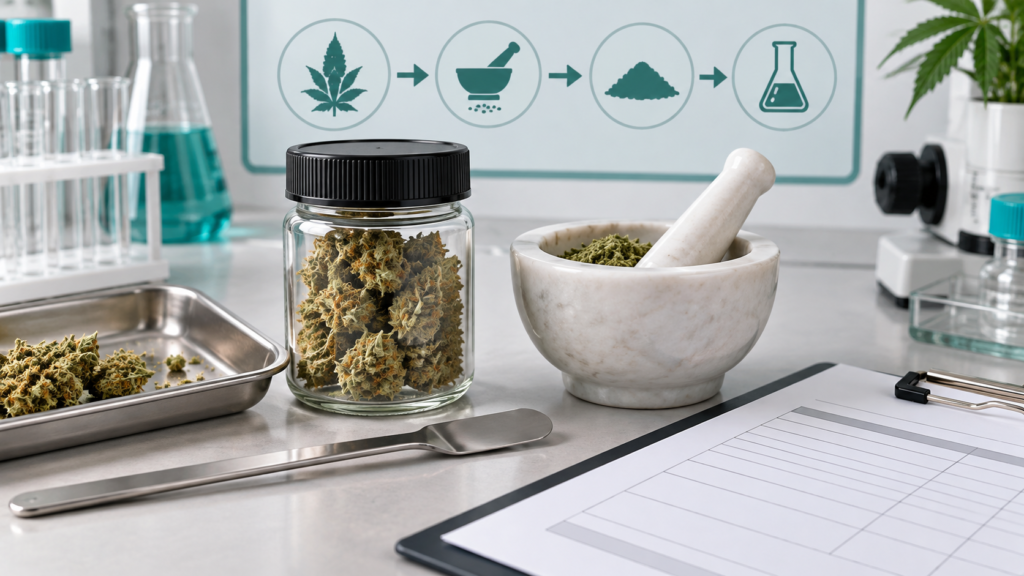
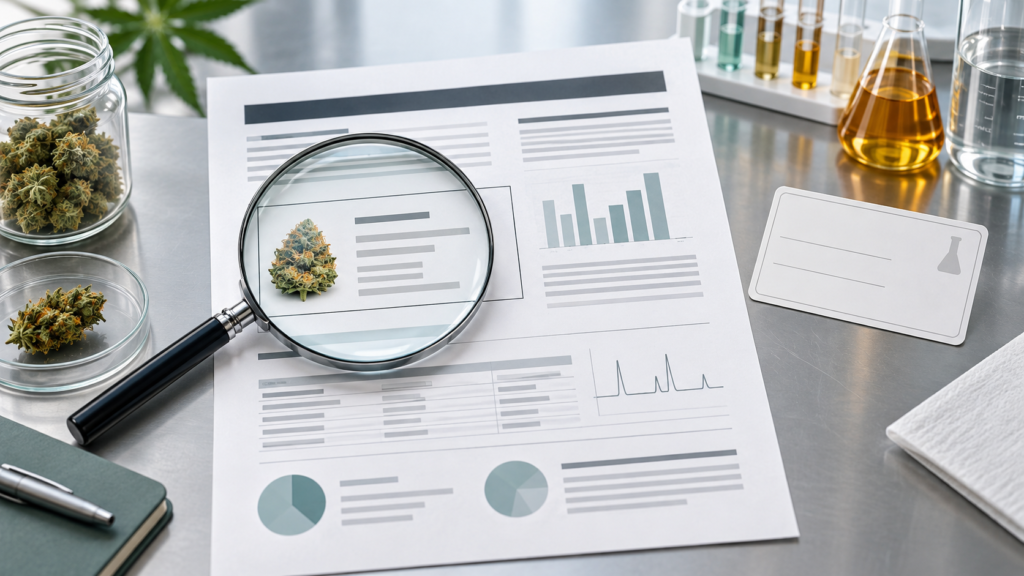
A current, product-specific COA can show the laboratory’s reported cannabinoid profile for a submitted sample. Confirm the laboratory, report date, sample date, product description, batch code, units, and relevant panels. If the report is for raw distillate but the package is a finished gummy or vape, ask whether the report represents the finished product.
- Record the lot or batch number.
- Find the current report through the seller’s official page.
- Match the code exactly.
- Confirm the format and product description.
- Compare delta-8, delta-9, CBD, and other reported cannabinoids.
- Review detection limits and units.
- Save the report with the label and order record.
Use the COA guide and batch checklist. A COA does not prove that every future batch is identical or that a product is lawful in every destination.
Why “hemp-derived” is not a complete answer
“Hemp-derived” describes a source or marketing position, but it does not answer every question about product composition, state law, shipping, age requirements, or carrier rules. The FDA and CDC describe cannabis products as an evolving public-health and regulatory area. Read the FDA consumer update and CDC FAQ.
Review the site’s shipping policy and regional availability guide. Rules can differ by product and destination and can change. Do not rely on “ships everywhere” language as a legal conclusion.
Ingredients, packaging, and adult-use checks
Read the complete ingredient list for gummies, capsules, vapes, oils, or flower products. Check carrier oils, sweeteners, flavors, colorants, device ingredients, allergens, and storage directions. For vapes, review the vape-ingredients guide and packaging information.
Age gates and delivery checks are separate from product legality. The online age-verification guide explains why a seller may verify adult eligibility, while the return-policy guide explains what records to keep if an order is wrong or damaged.
Evidence and health boundaries
Do not treat a delta-8 or delta-9 label as medical advice. The CDC notes that cannabis products and routes of use can carry different risks, and the FDA warns about unapproved products and unproven claims. Avoid copy that says either cannabinoid will treat, cure, prevent, or diagnose a condition. Ask a qualified professional about medication, pregnancy, age, or personal health questions.
Delta-8 vs delta-9 label checklist
- Are delta-8 and delta-9 named separately?
- Are total and per-serving amounts clear?
- Are units and serving counts stated?
- Does the batch code match a current COA?
- Does the report cover the finished product?
- Are other cannabinoids and ingredients disclosed?
- Are age, shipping, and destination limits explained?
- Does the copy avoid legal and medical absolutes?
How to handle conflicting label information
If the product page, package, and COA disagree, stop the comparison and record the differences. Check for a unit conversion, a formula revision, a different batch, or a raw-material report. Do not choose the number that looks most favorable. Ask the seller which document applies to the finished product and request the answer in writing.
If a product has a new package but an old report, ask whether the package change was only visual or whether the formula changed. If the report names delta-8 but the page advertises delta-9, do not assume the terms were used casually. Cannabinoid identity is a material label detail.
Questions to ask a seller
- Which cannabinoid amounts are in the finished product?
- What is the batch or lot code?
- What units does the COA use?
- What is the detection limit for the THC result?
- Which destinations are currently excluded?
- What age and delivery checks apply?
Keep the response with your order record. A careful seller should be able to explain its own product and shipping information without promising that the product is legal or appropriate everywhere.
Why current verification matters
Product pages, carrier policies, and state requirements can change. Recheck the exact page when reordering instead of relying on an old screenshot. If a product is shipped to a different address or purchased in a different format, repeat the label and eligibility checks. A previous successful order does not automatically establish that a later transaction has the same conditions.
Keep the comparison factual
Use neutral notes such as “the label lists delta-8 at this unit” or “the COA reports delta-9 for this batch.” Avoid rewriting a product description as a promise about how a person will feel. Avoid stating that a product is legal everywhere or safe for everyone. Clear factual notes are easier to update when a seller changes a formula, a carrier changes a rule, or an official source publishes new guidance.
If a product does not provide enough information to answer the comparison, that is itself a buying result. You can request clarification or choose a listing with better traceability. A lower price does not compensate for a missing cannabinoid identity or an unmatched batch report.
Record the date of your check because official and seller guidance may later change.
Use the current notice, label, and report when making the final comparison.
Build a product record
Save the product page, label photograph, batch code, COA, order date, and shipping destination in one record. If the formula or destination changes, create a new entry instead of overwriting the old one. This makes it easier to explain a discrepancy to support and prevents an older label from being treated as current evidence.
That record is a shopping aid, not a legal determination or medical record.
Use it to keep current product facts separate from assumptions about effects or legality.
Label questions that deserve a pause
Pause when a product uses “total THC” without identifying the cannabinoids, when the COA has no batch code, when the product page and package use different formulas, or when a seller promises universal legality. Pause when a report describes a raw ingredient but the product is a finished edible or vape. These gaps do not automatically prove wrongdoing, but they prevent a reliable comparison.
Ask for a current written answer and verify the source. If the answer remains vague, choose a product with clearer traceability. Responsible adult-use buying is partly the ability to stop when the evidence is not enough.
Keep the final answer with the exact batch and destination you checked.
This helps avoid relying on an older label or a different product format.
Keep that note with the exact report and order.
Frequently asked questions
Are delta-8 and delta-9 the same?
No. They are different cannabinoid labels. Review the exact product and report.
Does hemp-derived mean no THC?
No. Check the label and batch report for the cannabinoid profile.
Can I ship delta products anywhere?
Do not assume so. Check current seller, carrier, federal, state, and destination requirements.
Is this a recommendation to use delta products?
No. It is product-label education and does not provide medical or legal advice.
Conclusion
Delta-8 vs delta-9 labels should be compared by cannabinoid identity, units, ingredients, batch-specific testing, age verification, and destination rules. A clear COA and careful label can reduce confusion, but neither replaces current official guidance or professional advice for personal questions.
Editorial note: Herbxmind publishes adult-use consumer education. Product formulas, shipping practices, and regulations can change; verify current information before ordering.