

Quick answer: To evaluate a CBD brand website, check whether it clearly identifies the seller, product ingredients, CBD and THC amounts, batch codes, current COAs, shipping restrictions, return terms, contact information, and realistic evidence boundaries. A polished design is not proof of quality. The strongest trust signals are specific, current, and verifiable.
People searching how to evaluate a CBD brand website are often trying to avoid vague labels, broken lab links, exaggerated claims, or unclear shipping terms. A website review can be practical: verify what the page says, match it to the product and report, and record what is still unknown. This guide is a consumer-education checklist, not a certification.
Start with seller identity
Look for a business name, contact route, customer-support email or form, physical or mailing information where provided, and clear policies. A domain with attractive photography but no accountable seller identity is difficult to evaluate. Check whether the contact route works and whether the answer addresses the exact question.
Review the contact page, shipping policy, and return policy. Save the versions you read before payment because policies and product pages can change.
Check product-page transparency
- Exact product format and net contents.
- CBD amount separated from total hemp extract.
- Serving size and units.
- THC and other cannabinoid information.
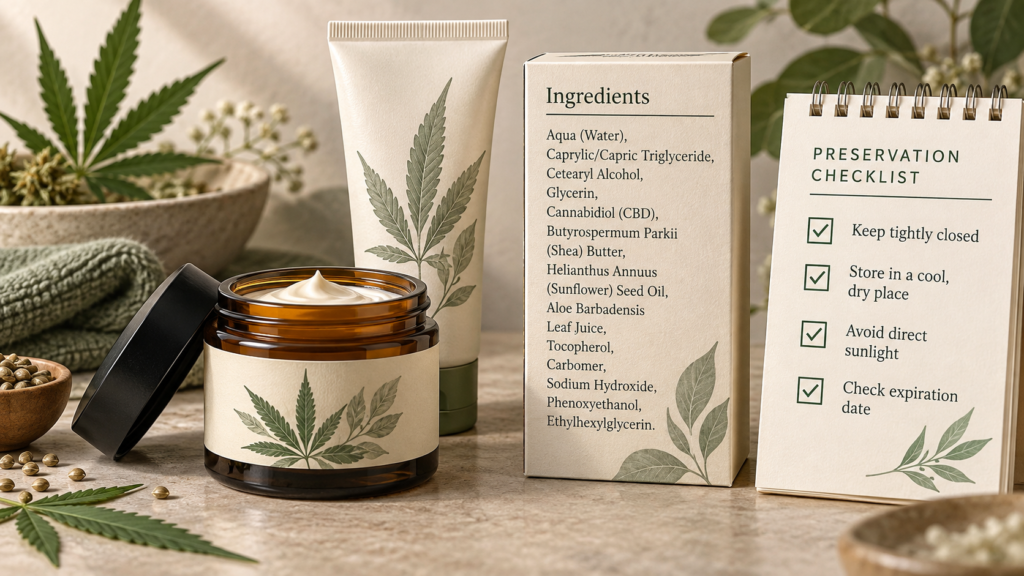
- Complete ingredient list.
- Batch or lot identification.
- Storage and age information.
- Current COA access.
Be cautious when a page uses only broad phrases such as “hemp oil,” “premium extract,” or “full plant power” without a cannabinoid amount. The CBD label checklist explains why container volume, extract amount, and CBD amount should be distinguished.
Evaluate the COA system
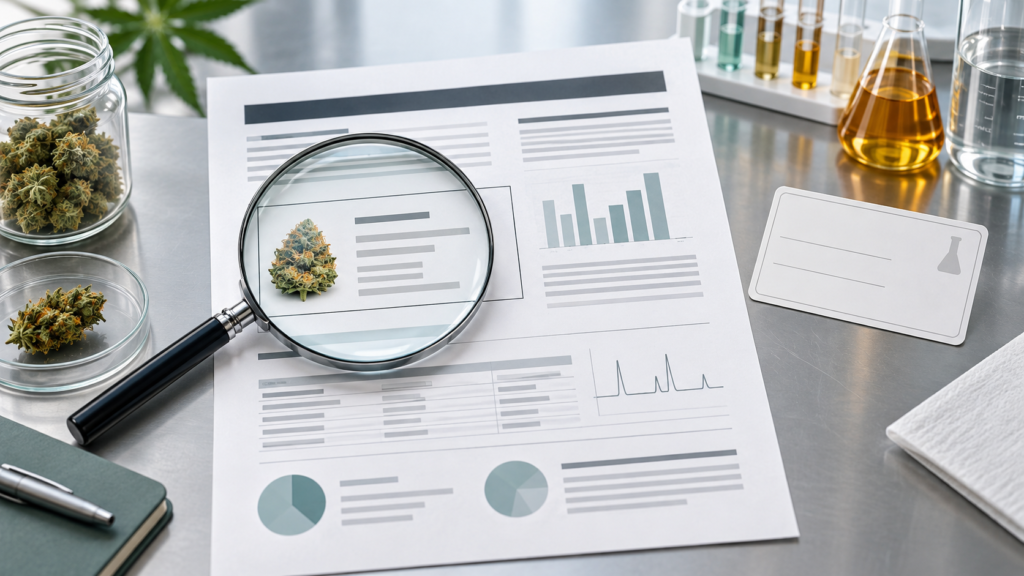
A trustworthy lab-results system lets you match the product’s batch or lot to a report that identifies laboratory, dates, sample, product description, units, and relevant panels. A general report with no batch connection is weaker evidence. A QR code should lead to a verifiable report, not just a homepage.
- Find the code on the package or product page.
- Open the current testing page.
- Confirm the report is accessible.
- Match the code exactly.
- Confirm the finished product and units.
- Check report date and relevant panels.
- Save the report with your purchase record.
Use the COA reading guide, batch checklist, and QR-code verification guide. A COA supports only what the submitted sample and method establish.
Look for realistic language
Responsible pages distinguish product education from medical advice. Warning signs include claims to cure, treat, prevent, diagnose, replace medication, or guarantee a result. The FDA says many retail CBD products have not been approved as general medicines and that unproven claims create consumer risk. Read the FDA approval facts and FDA consumer update.
A strong page can be persuasive without pretending that every adult will have the same response. It should explain evidence boundaries and point to current official sources for rules and health context.
Check shipping, age, and returns
Read the destination list and product exclusions. “Ships everywhere” is not a reliable legal conclusion. Review age verification, delivery signature, carrier limitations, and return steps. The age-verification guide and regional availability guide explain why a checkout age gate does not answer every product or destination question.
CBD brand website evaluation checklist
- Is the seller identifiable and contactable?
- Are product amounts and units clear?
- Are ingredients and THC information disclosed?
- Can a batch-specific COA be opened?
- Does the report match the finished product?
- Are claims realistic and non-medical?
- Are shipping, age, privacy, and return policies accessible?
- Are pages current and free of broken links?
- Can customer support answer a specific question?
A five-minute website review
- Open the About or Contact page and identify the accountable seller.
- Open one product page and record format, amount, ingredients, THC, and batch information.
- Open the lab-results or COA page and test a report link.
- Read shipping, age-verification, privacy, and return policies.
- Search the page for medical guarantees and universal legal claims.
- Ask one precise support question and save the answer.
This routine does not certify a brand. It shows whether the website gives you enough information to make a measured buying decision. A site can look polished and still fail the traceability test if reports are generic, links are broken, or product units are unclear.
What transparent brands make easy
A transparent website makes it easy to identify the seller, understand the finished product, find ingredients, match a batch, read current policies, and contact support. It distinguishes CBD from total hemp extract, identifies THC language, and avoids promising that every adult will have the same experience. It also acknowledges that rules and product formulas may change.
Keep a private record of the product page, report, date, and batch code. When you reorder, repeat the review. Do not assume that a new flavor, package, or shipping destination has the same eligibility or testing evidence.
Website red flags
- No seller identity or working contact route.
- Medical claims without evidence boundaries.
- “Legal everywhere” or “safe for everyone” language.
- Generic COAs with no batch match.
- Broken lab links or unexplained units.
- Policies that omit damaged or restricted orders.
A red flag is a reason to ask a question or pause, not proof of misconduct. Choose the source with the clearest verifiable information.
How to document a website review
Record the domain, product URL, date accessed, product format, label amount, batch code, report URL, shipping page, return page, and support response. Do not save unnecessary identity documents or payment information. This record lets you distinguish what the website said at the time from what a later version says.
If an important page is unavailable, do not fill the gap with a guess. Ask support for the current document or choose a product with accessible information. A transparent site should help you verify the finished product, not simply repeat a broad quality slogan.
What website evidence cannot prove
A website review cannot prove that a product will work for a particular person, that every future batch matches an old report, or that a product is legal in every location. It can show whether the seller makes its evidence and policies accessible. Use official government information for current rules and qualified professionals for personal health questions.
Website review questions for support
Ask: Does the COA cover the finished product? What does the reported unit mean? Where is the batch code? Has the formula changed? Which destinations are excluded? How is a damaged order handled? What information is retained during age verification? These questions test whether the business can explain its own process without making universal promises.
Keep the response with the product record. If the answer is vague, contradictory, or impossible to verify, pause the purchase. The goal of a website review is not to label a company publicly; it is to decide whether the information is sufficient for a responsible buying decision.
Recheck the website when reordering because products, reports, carrier policies, and regulations can change. A previous order is not proof that a later listing has the same formula or destination eligibility.
A useful final question is simple: can another careful shopper reproduce my verification from the page, package, batch code, and report? If not, the website has not provided enough evidence yet. Save the pages you checked and revisit the decision when the missing information is available.
That standard favors clarity over design and traceability over slogans.
Before payment, make sure you can identify the seller, product, ingredients, cannabinoid amount, batch report, policies, and support route. If one of those basic fields is missing, write down the gap rather than treating the website’s overall appearance as proof. This is particularly important for products described with broad terms such as premium, natural, full plant, or laboratory tested. Those phrases may be meaningful only when the page defines them and connects them to a current finished-product report.
A reproducible review is a stronger trust signal than a polished homepage.
It helps future shoppers understand what was actually checked and what remains uncertain.
Keep only the product information needed for the review and avoid storing unnecessary personal data. Recheck the source at reorder time because a report, formula, shipping policy, or destination rule may change.
Frequently asked questions
Does a professional website mean the CBD is high quality?
No. Design is not evidence. Verify labels, reports, seller identity, and policies.
Is a third-party COA enough?
It is useful evidence when current and batch-matched, but it does not verify every claim or future batch.
What if the lab link is broken?
Ask the seller for the current report and pause if the batch cannot be verified.
Are legal claims on a brand site reliable?
Use current official federal and state sources; seller copy is not legal advice.
Conclusion
To evaluate a CBD brand website, follow the evidence trail from seller identity to product label, batch code, COA, ingredients, policies, and claims. Trust is earned through details that can be checked. If a page asks you to fill in too many gaps, choose a more transparent source.
Editorial note: Herbxmind publishes adult-use consumer education. This article is not medical, legal, or certification advice. Product information and regulations can change.