

Quick answer: CBD gummies and capsules differ mainly in format, ingredients, serving units, packaging, and how the label communicates the cannabinoid amount. Compare total CBD per container, CBD per piece or capsule, the full ingredient list, batch-specific COA, THC information, storage, and seller policies. Neither format is universally better or a guaranteed health solution.
The search CBD gummies vs capsules reflects a shopping comparison, not a simple winner. Gummies may include a flavored food base, while capsules may use a shell, powder, oil, or other excipients. The format can change how you calculate value and what ingredients matter. This guide helps adult shoppers compare the evidence on the package.
CBD gummies vs capsules at a glance
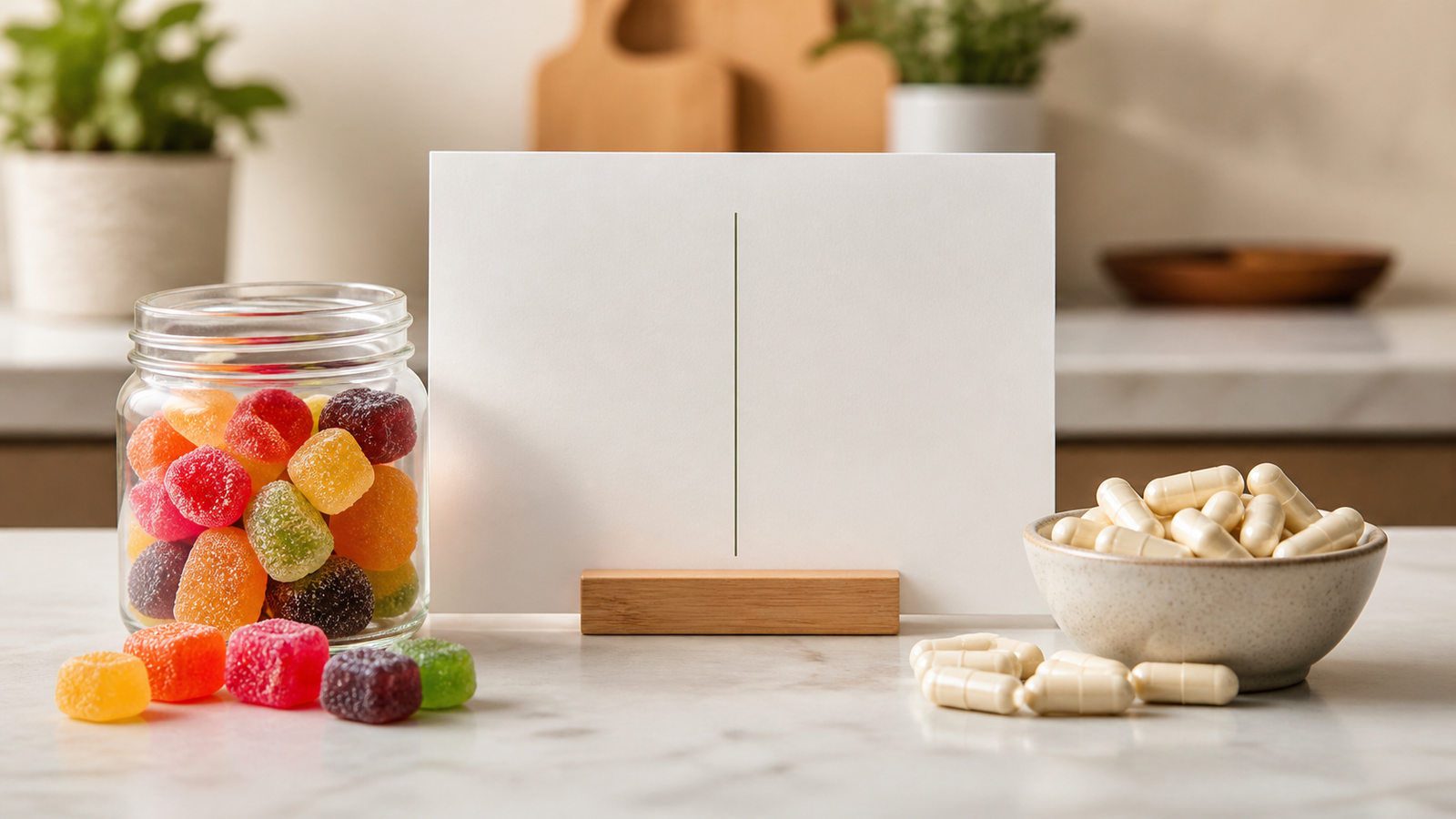
- Gummies: often include a sweetener, flavor, color, pectin or gelatin, and a stated amount per piece.
- Capsules: often include a capsule shell, carrier oil or powder, and a stated amount per capsule.
- Both: should disclose total CBD, serving information, ingredients, batch code, and testing access.
Do not compare only the number on the front. A jar claiming 750 mg may contain 30 gummies at 25 mg each, while a bottle claiming 750 mg may contain 60 capsules at 12.5 mg each. Those products are not equivalent per piece. Write down container size, number of pieces, and unit amount.
Use the CBD gummy ingredient guide and CBD label checklist to examine the label structure.
How to compare serving units
Find whether the label reports CBD per gummy, per capsule, per serving, or per container. Confirm how many pieces make one serving. Some labels define a serving as more than one gummy or capsule, so the per-piece number may not equal the serving number.
Check whether the printed milligrams refer to CBD or total hemp extract. “Hemp extract” and “CBD” are not interchangeable. If the product contains CBG, THC, or another cannabinoid, record each amount separately. For a broader comparison, read CBG vs CBD.
Cost-per-milligram can be a useful shopping calculation only after the units are clear. It does not measure product quality, personal suitability, or evidence strength. Keep those decisions separate.
Ingredient differences to review
Gummies can contain sugars, sugar alternatives, pectin, gelatin, acids, flavorings, and colors. Capsules can contain gelatin or plant-based shells, oils, powders, fillers, and other excipients. A shopper with an allergy, dietary preference, or sensitivity should read the complete list and packaging statements.
“Natural flavors,” “proprietary blend,” or “hemp blend” may require a question to customer support. A clear list helps you compare products, but a familiar ingredient is not automatically suitable for everyone. Ask a qualified professional about personal health or interaction questions.
How to verify the product with a COA
Find the batch or lot code on the jar or bottle and match it to a current COA. The report should identify laboratory, dates, product description, sample, units, and relevant cannabinoid panels. A report for a tincture or raw extract may not verify the finished gummy or capsule.
- Photograph the label and code.
- Open the seller’s report page.
- Match the code exactly.
- Confirm product format and formulation.
- Compare CBD and THC units.
- Review the reporting limit and available contaminant panels.
- Save the report with your order.
Review the COA guide and batch checklist. A COA supports a claim about the submitted sample; it does not guarantee a future batch or an individual effect.
Storage and package condition
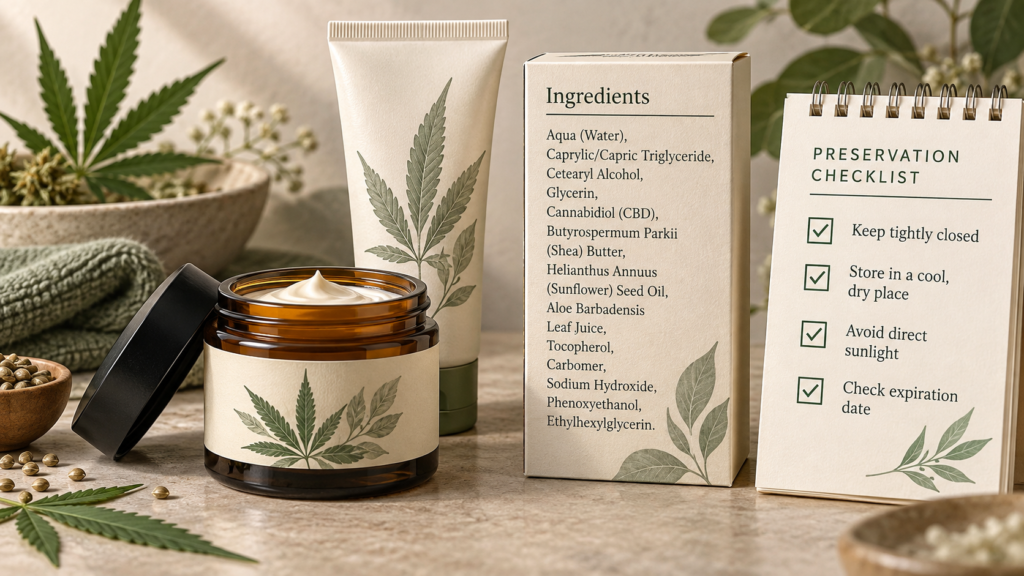
Keep gummies and capsules in their original, labeled containers. Follow the product’s storage instructions and avoid heat, direct sunlight, moisture, children, and pets. Gummies can change texture, while capsules can be affected by moisture or damaged packaging. Appearance alone is not a laboratory test.
If a seal is broken, a package leaks, a label is missing, or a product arrives damaged, photograph it and contact support before opening or using it. See the return-policy guide for records to keep.
Evidence and compliance boundaries
The FDA states that many CBD products have not been approved or evaluated as general medicines and that safety and labeling questions remain. Read its approval facts and consumer update. Avoid claims that a gummy or capsule treats, cures, prevents, or diagnoses a condition.
The CDC provides general public-health context in its FAQ. For medication, pregnancy, age, or health concerns, consult a qualified professional.
CBD gummies vs capsules checklist
- Is CBD separated from total hemp extract?
- How many pieces are in the container?
- What is CBD per piece and per labeled serving?
- What other cannabinoids are listed?
- Are sweeteners, shell materials, oils, and allergens disclosed?
- Does the batch match a current COA?
- Are THC information and storage directions clear?
- Does the copy avoid medical promises?
- Are shipping and return policies accessible?
Review shipping policy and regional availability before checkout.
How to make a fair price comparison
First calculate the labeled CBD per piece and the number of pieces. Then calculate the total labeled CBD in the container and compare the price per labeled milligram only among products with comparable information. Record whether the number is CBD, total cannabinoids, or hemp extract. A lower price per printed milligram is not proof of better value when the number cannot be verified.
Next compare the evidence package. Does each product have a current, batch-specific COA? Are the ingredients complete? Is the serving definition clear? Is the container sealed and easy to store? These details do not create a single objective score, but they explain why two products with similar front-label numbers may not be equally easy to evaluate.
Questions to ask before checkout
- How many pieces make one serving?
- Is the printed amount CBD or total hemp extract?
- Does the report cover the finished gummy or capsule?
- Are sweeteners, shell materials, and allergens disclosed?
- What should I do if the package arrives damaged?
Save the product page and the return policy with your order. If a formula or serving size changes later, you will have a clear record of what you compared. Do not combine products or change a personal regimen based on this shopping arithmetic.
Format preference is not evidence of effect
A shopper may prefer gummies because they are flavored or capsules because they have a simpler routine. That preference is valid, but it does not establish that one format is medically better. Keep taste, texture, dietary requirements, ingredients, price, and evidence as separate comparison fields.
Keep a record for repeat purchases
Save the product page, label photo, batch code, COA, and date purchased. When you reorder, compare the new label and report rather than assuming the formula is unchanged. A new flavor, serving size, package count, or extract description may change the comparison. This record is useful for customer support and helps keep shopping facts separate from personal health decisions.
If a package arrives damaged, do not open or consume it while waiting for instructions. Photograph the seal and shipping box, then use the seller’s official support route. The same recordkeeping habit supports a clear return or replacement request.
Keep the original container until the question is resolved so the seller can inspect the product identity and batch information.
A complete record also makes future comparisons faster and more consistent.
Questions about dietary and packaging preferences
If you avoid gelatin, sugar, particular oils, or certain flavorings, check the exact ingredient list and any seller allergen statement. Do not infer dietary suitability from a product photograph. Check whether the package is child-resistant where applicable, keep it closed, and store it away from children and pets. These are practical handling checks, not a guarantee about product safety.
When a preference is important, ask for a clear written answer before payment.
For every format, the most useful basics remain the same: product identity, serving units, ingredients, batch traceability, and current seller information. A clear comparison should state what is known, what is unknown, and what question remains. This is more reliable than choosing based on flavor, package color, or an isolated front-label number.
It is also worth checking whether the package count and serving count make sense together. If a jar contains 30 pieces but the serving size is two pieces, the container has 15 labeled servings, not 30. Record the difference before comparing prices. A capsule bottle may use the same logic, even when the presentation looks more standardized.
Frequently asked questions
Are gummies stronger than capsules?
There is no universal answer. Compare the labeled amount per piece or capsule and the complete formula.
Do capsules contain fewer ingredients?
Not necessarily. Read the shell, carrier, filler, and cannabinoid ingredients.
Do gummies always contain THC?
Not always, but read the exact label and COA rather than assuming from the format.
Can I choose a format for medical treatment?
This article does not provide medical recommendations. Ask a qualified professional.
Conclusion
CBD gummies vs capsules is a format, label, ingredient, and evidence comparison. Normalize the units, inspect the full formula, match the batch to a COA, and check storage and seller policies. Choose the product whose information is clear enough for your own criteria.
Editorial note: Herbxmind publishes adult-use consumer education. This article is not medical or legal advice, and product formulas and regulations can change.