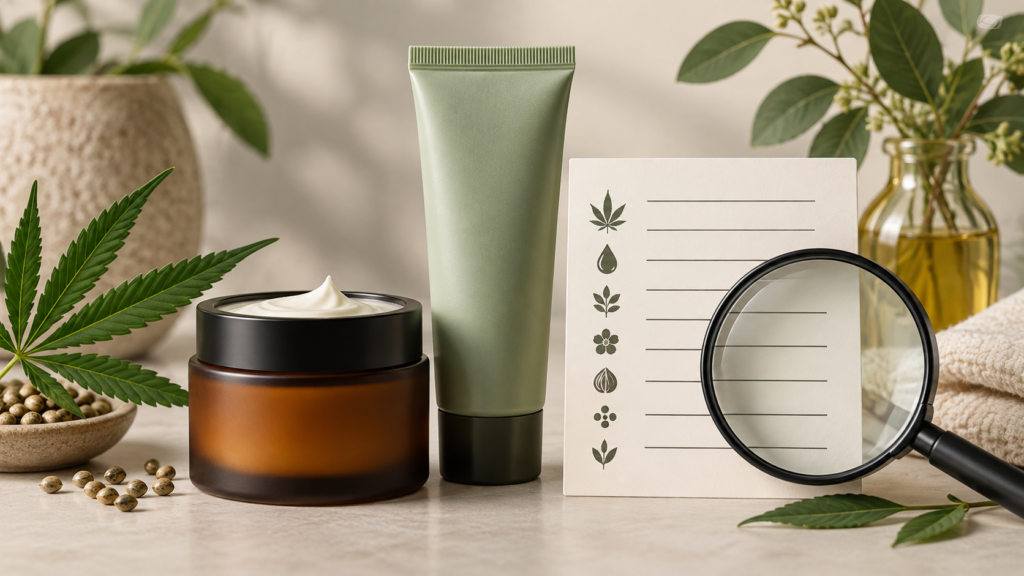


Quick answer: To read a CBD topical ingredients list, identify the product type, CBD amount or extract description, carrier ingredients, fragrance, preservatives, allergens, and any THC statement. Then match the product and batch to a current COA when available. A topical label can describe the formula, but it cannot guarantee a medical result or tell you that the product is suitable for every person.
Searching for CBD topical ingredients usually means a shopper wants to know what is in a cream, balm, lotion, salve, or roll-on before buying. The front label may emphasize CBD, hemp, botanicals, or a cooling sensation, while the ingredient list provides the more useful detail. This guide offers a practical U.S. consumer method for reading that list and checking evidence boundaries.
Start with the product identity
First identify the format: balm, cream, lotion, salve, stick, roll-on, or another topical. The format affects texture, packaging, and the way the product is described. Then find the net contents, total CBD amount, extract amount, directions, storage information, batch code, and seller contact details.
Do not assume that “hemp” means a specific CBD amount. A product can contain hemp seed oil, hemp extract, or a named cannabinoid, and those terms are not interchangeable. Look for a clear distinction between the amount of CBD and the amount of total extract. If the label gives only a broad botanical phrase, ask the seller what it means.
Use the CBD label-reading checklist for total amount and unit comparisons. If the topical includes several cannabinoids, the CBG vs CBD guide can help separate compound names from product claims.
How to read CBD topical ingredients
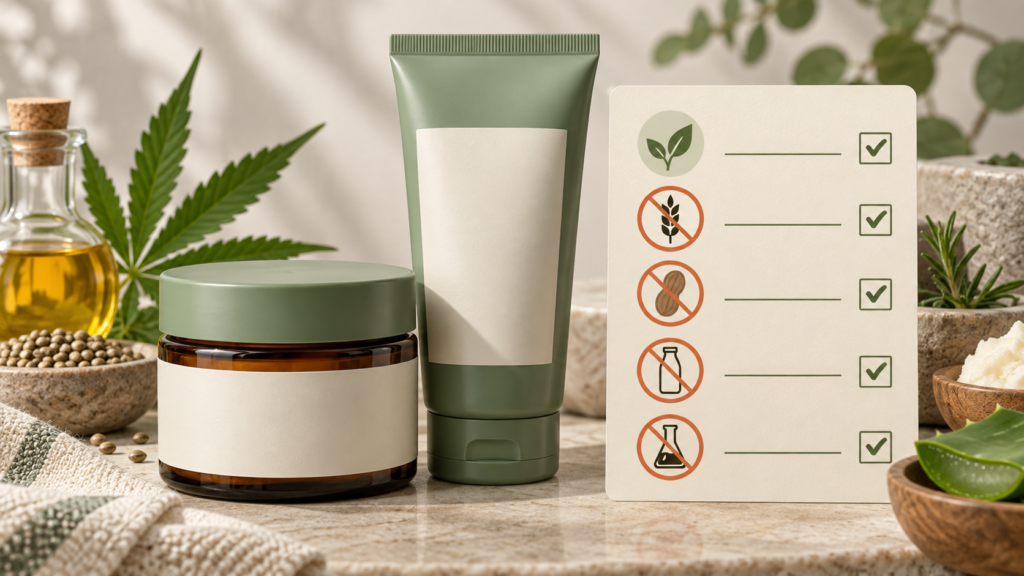
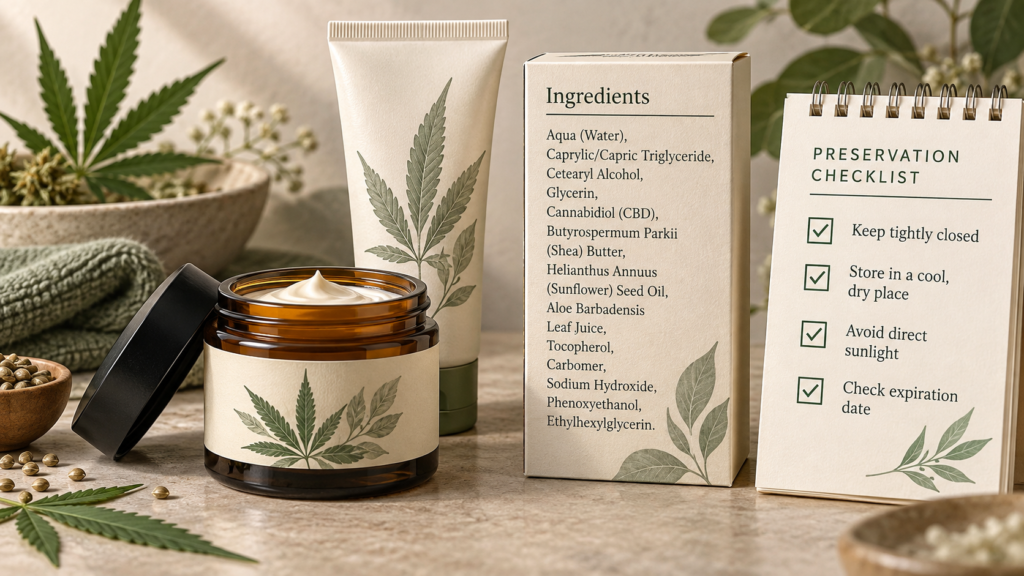
Ingredient lists typically identify the base first and smaller amounts later, although local labeling rules and formulation practices can vary. Common categories may include carrier oils, waxes, butters, water, emulsifiers, humectants, botanical extracts, fragrance, preservatives, and the cannabinoid ingredient or extract.
- Base and texture: oils, waxes, butters, water, or emulsifiers influence how the product feels.
- Botanicals: plant extracts may be present even when the front label focuses on CBD.
- Fragrance: essential oils or fragrance blends may matter to people with sensitivities.
- Preservatives: water-based products may require preservation; the exact system should be disclosed.
- Allergens: check the full list if you have known sensitivities.
- Active cannabinoid information: CBD, CBG, THC, or a broader hemp extract should be described clearly.
A familiar ingredient is not automatically appropriate for every individual. Patch testing, allergy precautions, and professional advice may be relevant, but this article does not provide individualized medical directions. Stop and ask a qualified professional if you have a personal safety concern.
CBD amount and COA checks
Topical labels can report CBD per container, per gram, or as a concentration. Write down the unit before comparing products. “500 mg hemp extract” is not automatically “500 mg CBD.” If a product page gives one number and the package gives another, ask the seller to reconcile them.
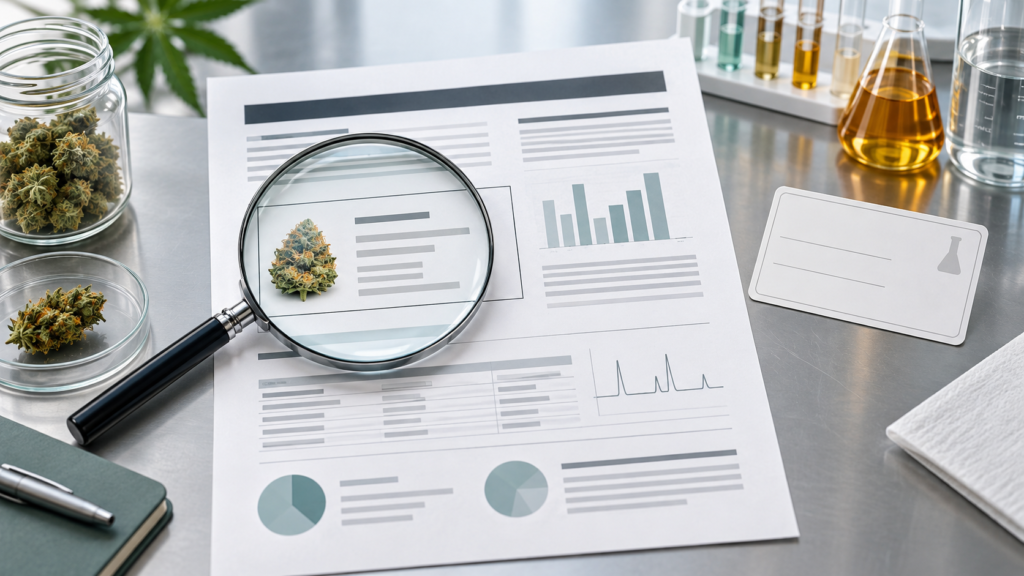
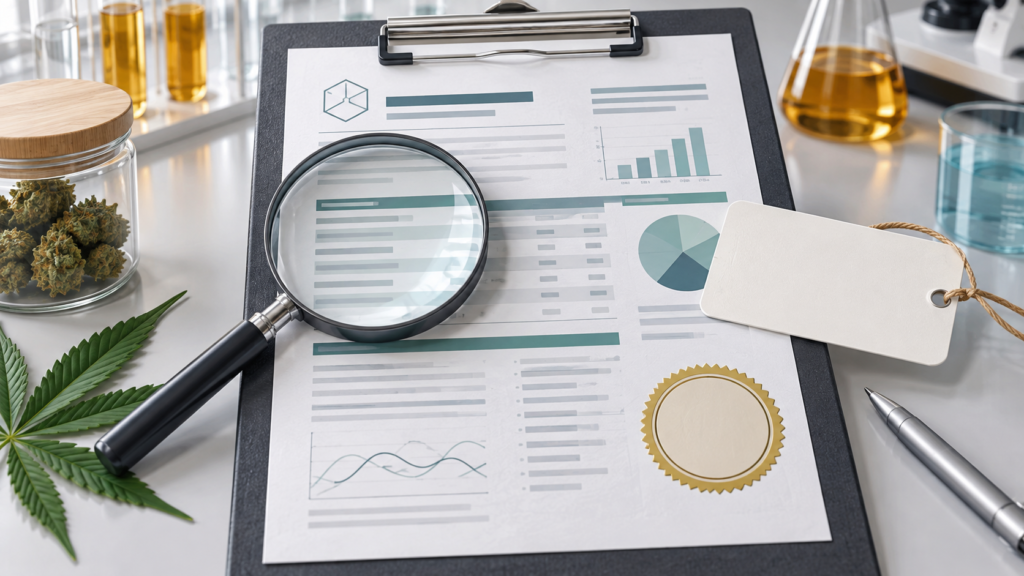
A COA should identify the lab, report date, sample date, product description, batch code, units, and relevant testing panels. Match the code on the jar or carton to the report. For a finished topical, a report for raw extract may not answer every question about the finished formulation. Review the COA guide and batch-number guide.
- Photograph the label and record the batch code.
- Find the product-specific COA.
- Confirm the product description and sample type.
- Compare the CBD and THC units.
- Review relevant contaminant panels where provided.
- Save the report with the purchase record.
Evidence has limits. A COA describes the submitted sample and stated method; it does not certify every future container, prove that a person will respond a certain way, or make an unapproved medical claim valid.
THC and marketing language
If the product is described as full-spectrum or a broad hemp extract, look for THC information. A topical category name does not answer whether THC is present or whether the product is eligible for a specific destination. Do not assume “hemp” means “zero THC.” The batch report and current product label are better evidence.
Be skeptical of words such as “detox,” “heals,” “pain cure,” “anti-inflammatory treatment,” or “guaranteed relief.” The FDA explains that many retail CBD products have not been evaluated as general therapeutic products and that unproven claims create consumer risk. Read the FDA CBD regulation overview and its approval facts.
Packaging, storage, and practical checks
Check whether the jar, tube, or roll-on is sealed and whether the package includes storage instructions. Keep the product in its original container, close it after use, and store it away from heat, light, moisture, children, and pets. Do not transfer a cannabinoid product into an unmarked container.
If the package is leaking, cracked, tampered with, or missing its batch code, photograph it before opening and contact the seller. Use the return-policy guide to understand what records to keep. A changed color or texture may have several explanations, so do not treat appearance alone as a laboratory test.
CBD topical ingredients buying checklist
- Is the product format clear?
- Are CBD and total extract amounts separated?
- Are all carrier, botanical, fragrance, and preservative ingredients listed?
- Are allergens easy to identify?
- Is THC information present when relevant?
- Does the batch code match a current COA?
- Does the COA describe the finished product?
- Are storage, age, and seller-contact directions visible?
- Does the copy avoid diagnosis, cure, treatment, and guaranteed-result language?
Review shipping information and regional availability. Requirements can change by product and destination.
How to compare two topical ingredient lists
Put the two lists side by side and mark the ingredients that are identical, different, or missing. Next to each product, record the CBD amount, container size, batch code, COA date, fragrance statement, and seller contact. This makes a “natural” or “clean” claim less important than the actual formula. It also highlights when one seller provides evidence that the other does not.
Do not infer that a longer list is worse or that a shorter list is better. A water-based lotion may need different supporting ingredients from an oil-based balm. A botanical extract may be relevant to one shopper and unwanted by another. The useful question is whether the label gives enough information for your own criteria and whether the seller can answer a specific question.
If you have an allergy, skin condition, medication question, or concern about a particular ingredient, pause the purchase and consult an appropriate professional. A product label is a transparency tool, not a personalized safety assessment.
Questions to ask a topical seller
Ask whether the listed CBD amount refers to the finished container, what the batch code means, whether a COA covers the finished topical, and how the seller updates reports when a formula changes. Ask where fragrance, allergens, and storage instructions appear. A seller should be able to explain its own units without asking you to guess from a front-label phrase.
Keep the product in its original package while you evaluate it. If the ingredients on the jar differ from the web page, photograph both and request clarification. Do not scrape off a label, combine products, or rely on an old screenshot when a current formula is available.
A transparent answer should identify the exact product and batch rather than make a broad promise about every topical.
That level of specificity is the practical difference between reading a label and repeating an advertisement.
Before purchase, save the ingredient list and the current product page. A later formula change should prompt a new comparison rather than an assumption that the old information still applies.
This is especially important when a seller changes packaging or updates a botanical blend without changing the product name.
Keep those notes separate from medical records and share only the minimum information needed for a product question.
Frequently asked questions
Does a CBD topical contain only CBD?
Not necessarily. It may contain a carrier base, botanicals, fragrance, preservatives, other cannabinoids, or no clearly stated CBD amount. Read the complete ingredient list and COA.
Are essential oils safe in every CBD topical?
No ingredient is automatically suitable for every person. Review the exact formula and seek professional guidance for personal allergy or safety questions.
Can a topical CBD product treat pain or skin disease?
This guide does not make treatment claims. The FDA distinguishes product information from approved medical use. Ask a qualified professional about a condition.
Should I trust a “natural” label?
“Natural” is not a substitute for an ingredient list, batch report, or clear seller identity. Evaluate the actual evidence.
Conclusion
Reading CBD topical ingredients means looking past the front label. Identify the format, separate CBD from total extract, review the base and added ingredients, check THC information, match the batch to a COA, and keep realistic expectations about evidence. A transparent label helps you make a better comparison, but it cannot promise that a topical is right for every individual.
Editorial note: Herbxmind publishes adult-use consumer education. This article is not medical or legal advice and does not promise a product effect. Ingredients, formulas, reports, and regulations may change; verify current information before purchase or use.