

Quick answer: When deciding how to dispose of disposable vapes, do not assume the device belongs in a household trash or curbside recycling bin. A disposable vape can combine an electronic device, a rechargeable battery, and residual product material. First stop using or charging a damaged device, keep it away from heat and flammable materials, then check the current instructions of a local battery, e-waste, or household-waste collection program. Accepted items and preparation rules vary by location.
This guide is general adult-use product education. It does not tell you that a particular device is accepted by a particular program, and it does not replace the instructions on the actual product or the rules set by your local waste authority. If the vape contains an intoxicating cannabinoid, follow all applicable local rules and keep it away from children and pets while you arrange proper disposal.
Why disposable vape disposal needs a separate check
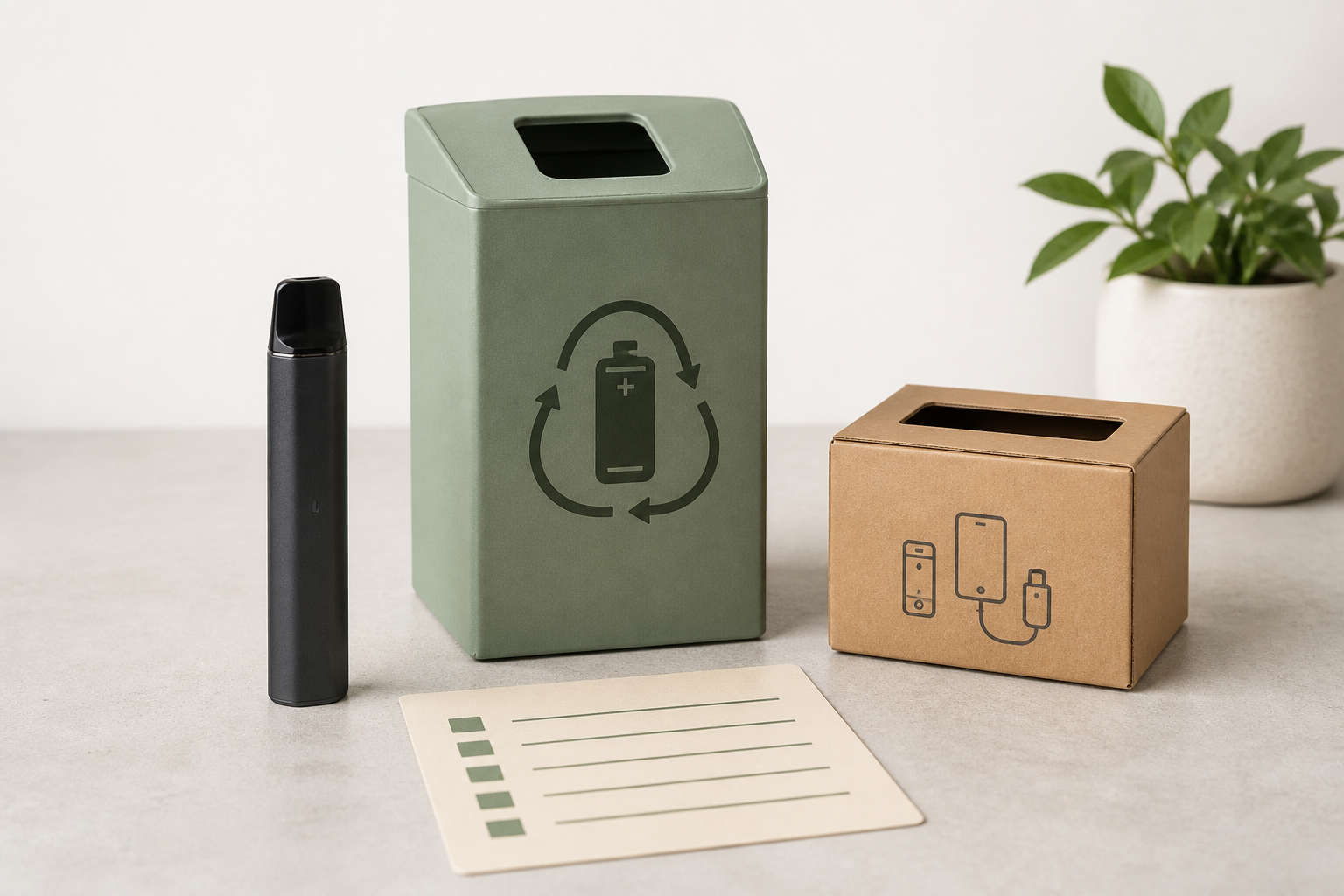
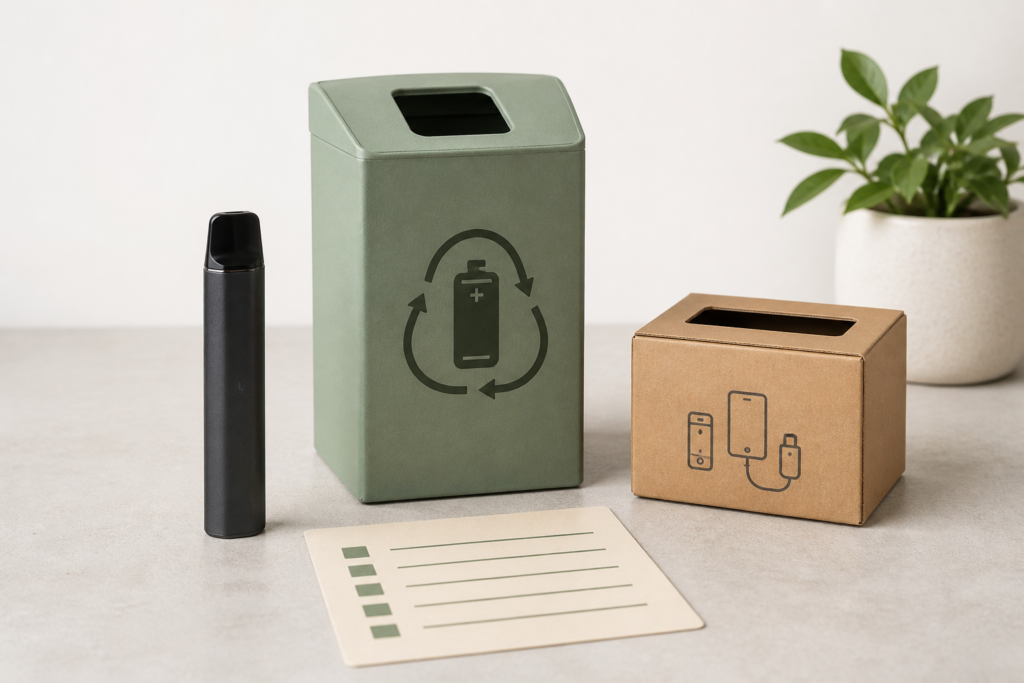
A disposable vape is more than an empty container. It may include a lithium-ion battery, wiring, a heating component, and a reservoir or cartridge. Those components create different handling questions from an ordinary cardboard or plastic package. Crushing, puncturing, dismantling, or exposing a battery device to heat can create hazards, and a generic recycling symbol is not enough to establish that a local program accepts the item.
The U.S. Environmental Protection Agency explains that many batteries should be handled through an appropriate recycling or collection route rather than being treated as ordinary recyclables. Read its guidance on used lithium-ion batteries and then confirm what your local program currently accepts. State, county, city, retailer, and waste-provider policies can differ.
Use this five-step disposal checklist
- Stop using the device. Do not keep trying to use a device that is empty, leaking, cracked, unusually hot, swollen, or otherwise damaged.
- Do not recharge a questionable device. If the hardware looks damaged or behaves unexpectedly, do not connect it to power while you decide what the local program requires.
- Keep it stable and away from heat. Store it temporarily where children, pets, moisture, direct sun, and flammable materials cannot reach it.
- Check a current collection route. Search the local solid-waste authority, household hazardous-waste program, battery recycler, or e-waste program for disposable-vape or battery-device instructions.
- Follow that program’s preparation rules. Do not tape, bag, separate, drain, disassemble, or place the device in a collection container unless the accepting program specifically instructs you to do so.
The fifth step matters because guidance can be program-specific. A collection site may ask for terminals to be protected on certain loose batteries, while a sealed device can require a different route. Do not improvise by opening a disposable vape to remove parts. Use the instructions provided by the program that will actually receive the item.
What not to do before you get local instructions
Do not puncture, crush, burn, bend, take apart, refill, or try to drain a disposable vape. Do not put it in a microwave, freezer, or water, and do not leave it in a hot vehicle or on a charger to “finish” it. These actions can damage the electronics or battery and can make it harder for an accepting program to handle the device. A device that appears small is still an electronic product with handling limits.
Do not place a disposable device in a curbside recycling bin because it is made partly of metal or plastic. Recycling systems are not designed to sort every battery-containing product safely, and collection rules differ. Similarly, do not assume that a store drop box for a particular type of battery accepts every vape device. Read the program’s accepted-material list or ask its staff before transport.
Keep the device isolated from loose metal items such as keys or coins while you arrange disposal, especially if its condition is uncertain. If you need to transport it to an accepted collection site, follow the site’s current instructions and avoid leaving it unattended in a car. This is basic damage prevention, not a substitute for the local program’s directions or for emergency services when there is a fire, smoke, or immediate danger.
Do not rely on a device’s appearance
An empty-looking device may still contain an active battery or remaining material. Likewise, a device that no longer produces vapor is not automatically safe to throw into a recycling bin. The device can still be electrically active, and the absence of a visible liquid level does not establish what is inside. Treat the product as a small electronic device until a qualified collection program provides a different instruction.
If the device arrived defective, preserve the order details, product name, and photos of the issue before disposal. Contact the seller for product support or disposal information. The disposable vape battery checklist covers warning signs and basic handling boundaries; it does not replace an emergency response or local waste-program guidance.
What to do with a damaged, leaking, or hot vape
Do not continue using, charging, puncturing, or attempting to repair a device that is leaking, hot, swollen, smoking, or visibly broken. Keep it away from people, children, pets, and flammable materials. Consult local emergency guidance if there is an immediate safety concern, and seek instructions from the manufacturer or an appropriate local waste authority for the next safe handling step.
A damaged device is not a reason to pour, drain, or transfer remaining material into another container. That can expose you to a formulation you cannot verify, may damage the device further, and can conflict with local requirements. Do not use a generic online workaround in place of the receiving program’s directions.
Separate product facts from disposal facts
Before buying a disposable, review the product page for hardware, capacity, charging behavior, and any disposal guidance. Product descriptions are not a substitute for community recycling rules, but clear manufacturer information makes it easier to ask informed questions. You can explore relevant categories at CBD vapes and delta-9 products only where permitted.
For a vape product, a COA may describe a tested sample or selected lab results. It does not tell you where the electronic hardware can be recycled. Use lab results for product-documentation questions and a local waste authority for disposal acceptance. Keeping those evidence categories separate prevents a common mistake: treating product testing as proof of municipal collection eligibility.
Questions to ask a local collection program
- Do you accept sealed disposable vape or e-cigarette devices with built-in batteries?
- Should the device be brought to a battery, e-waste, or household hazardous-waste stream?
- Do you have different instructions for a leaking, damaged, or swollen device?
- Do you require an appointment, a specific drop-off site, or a quantity limit?
- What preparation is required, and what actions should I avoid before drop-off?
Ask the program that serves your address, not a generic online forum. Procedures can change with vendor contracts, safety requirements, and local rules. If you cannot obtain a clear answer, do not claim an item is recyclable or put it into a bin based solely on a search snippet.
Buying with end-of-life in mind
End-of-life handling is one factor in an adult purchasing decision. Before ordering, compare the product’s complete ingredient disclosure, device instructions, batch information, customer-support path, and availability at your destination. The CBD vape pen vs. disposable comparison can help you distinguish a single-use device from a reusable battery-and-cartridge setup, but it does not make one option universally better.
Review where Herbxmind ships and the legal disclaimer before checkout. Product availability, adult eligibility, carrier rules, and regional requirements can change. A product being visible online does not establish that it can be purchased, shipped, used, or discarded the same way in every place.
Frequently asked questions
Can I put a disposable vape in normal household recycling?
Do not assume so. A disposable vape can contain a battery and electronic components. Check the current rules for the specific local recycling or household-waste program before placing it in a bin.
What should I do if a disposable vape is damaged or hot?
Stop using or charging it. Keep it away from flammable materials, follow local emergency or waste-program instructions, and ask the product maker or local collection program for the appropriate next step.
Why are local rules important for vape disposal?
Battery, e-waste, household hazardous waste, and product-residue rules are handled differently by local programs. Their accepted items and preparation instructions can change.
Bottom line
Responsible disposable-vape disposal begins by recognizing that the device may contain a battery and electronics. Do not disassemble it or guess at a bin. Stabilize it, keep it away from heat and access by children or pets, and get current instructions from the local program that will receive it. For a product or order question, contact Herbxmind; for disposal acceptance, rely on the local collection authority.
Editorial note, reviewed August 14, 2026: Herbxmind checked this guide against the linked EPA battery information. It is general product-handling education, not emergency guidance, legal advice, local recycling authorization, or a guarantee that a collection program accepts a particular device.