

Quick answer: A cannabinoid serving size is the amount a product label defines as one serving, while the package total is the amount in the whole container. To compare CBD or THC products responsibly, identify the cannabinoid amount in milligrams (mg), the stated serving size, the number of servings per container, and the total amount. Then check the ingredients, batch information, and current destination rules. A large number on the front of a package is not enough by itself.
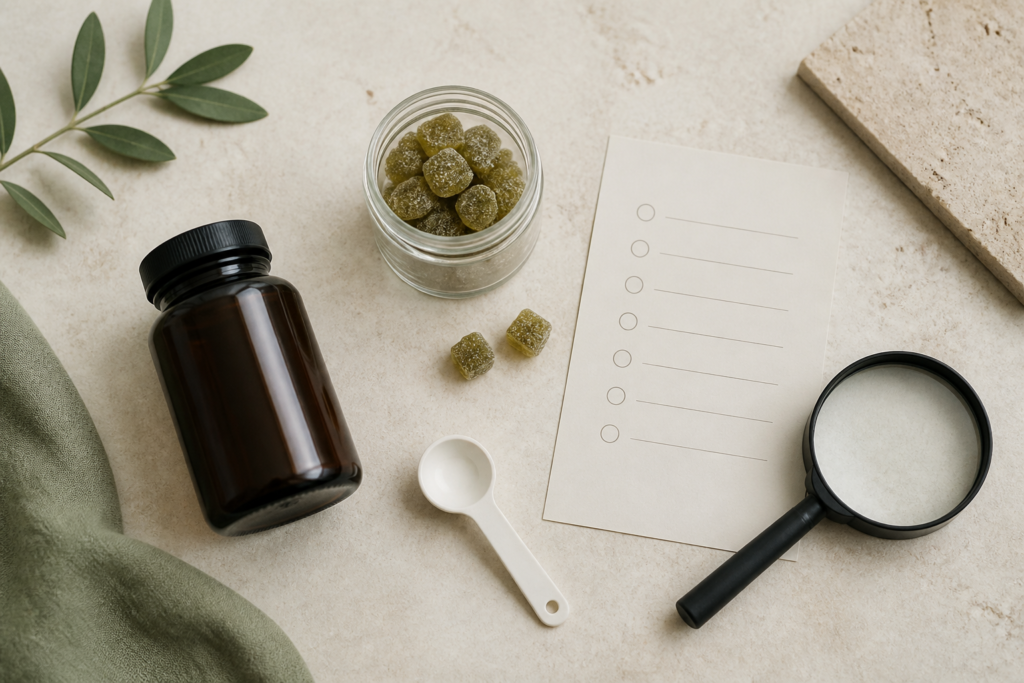
Label math can look simple until a product mixes several units: milligrams, grams, milliliters, pieces, and servings. Those numbers answer different questions. This guide gives eligible adult shoppers a repeatable way to read them without turning retail information into a health recommendation. It is about product comparison, not dosing advice, medical advice, or a statement that any product is legal in a particular place.
Start by finding the four numbers that matter
Before comparing prices or flavors, find these four items on the product page or package:
- The cannabinoid named on the label. Confirm whether the number refers to CBD, delta-9 THC, another cannabinoid, or a blend.
- The amount per serving. This is commonly written as a number of milligrams per piece, dropper, capsule, or measured volume.
- The serving size itself. It may be one gummy, two gummies, one milliliter, or another specified portion.
- The total amount and servings per container. These should make sense together when multiplied.
A product can contain a substantial package total while listing a much smaller amount per serving. Neither number is automatically the “right” one. The total helps compare the whole package; the serving figure helps you understand what the manufacturer has defined as one portion. If a label does not make both clear, pause and ask the seller rather than filling in the gap with assumptions.
Milligrams, grams, milliliters, and pieces are not interchangeable
Milligrams (mg): the cannabinoid amount
Milligrams are usually used for the stated amount of a cannabinoid. For example, an edible may state a number of milligrams of CBD or THC per piece. A number in mg does not by itself identify the full formula, the product’s quality, or whether it is appropriate for a particular person. It is one label fact to compare alongside ingredients, warnings, and documentation.
Grams (g): product weight
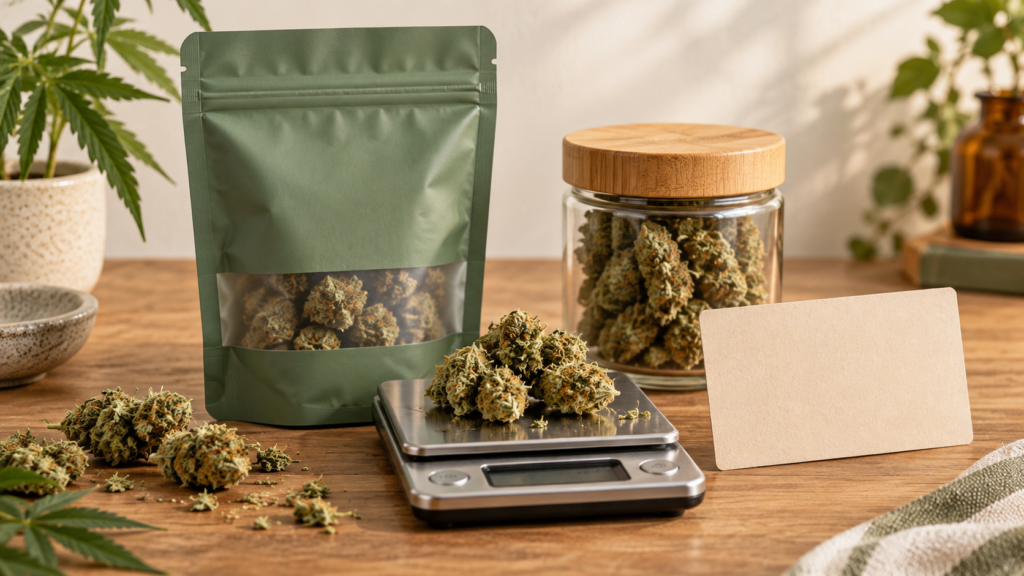
Grams commonly describe the weight of flower or the net weight of a package. One gram equals 1,000 milligrams by weight, but that conversion does not mean one gram of finished product contains 1,000 mg of a cannabinoid. The ingredient or cannabinoid panel is needed to know what the number actually refers to.
Milliliters (mL): liquid volume
Milliliters measure liquid volume. A tincture-style bottle or vape product may list its volume in mL and its cannabinoid amount in mg. Those labels are complementary, not competing. To compare two liquids, note both the total mg and total mL, then use the manufacturer’s stated serving guidance. For broader format comparisons, visit CBD products and the CBD vapes collection only where permitted.
Pieces and servings: the label’s portion language
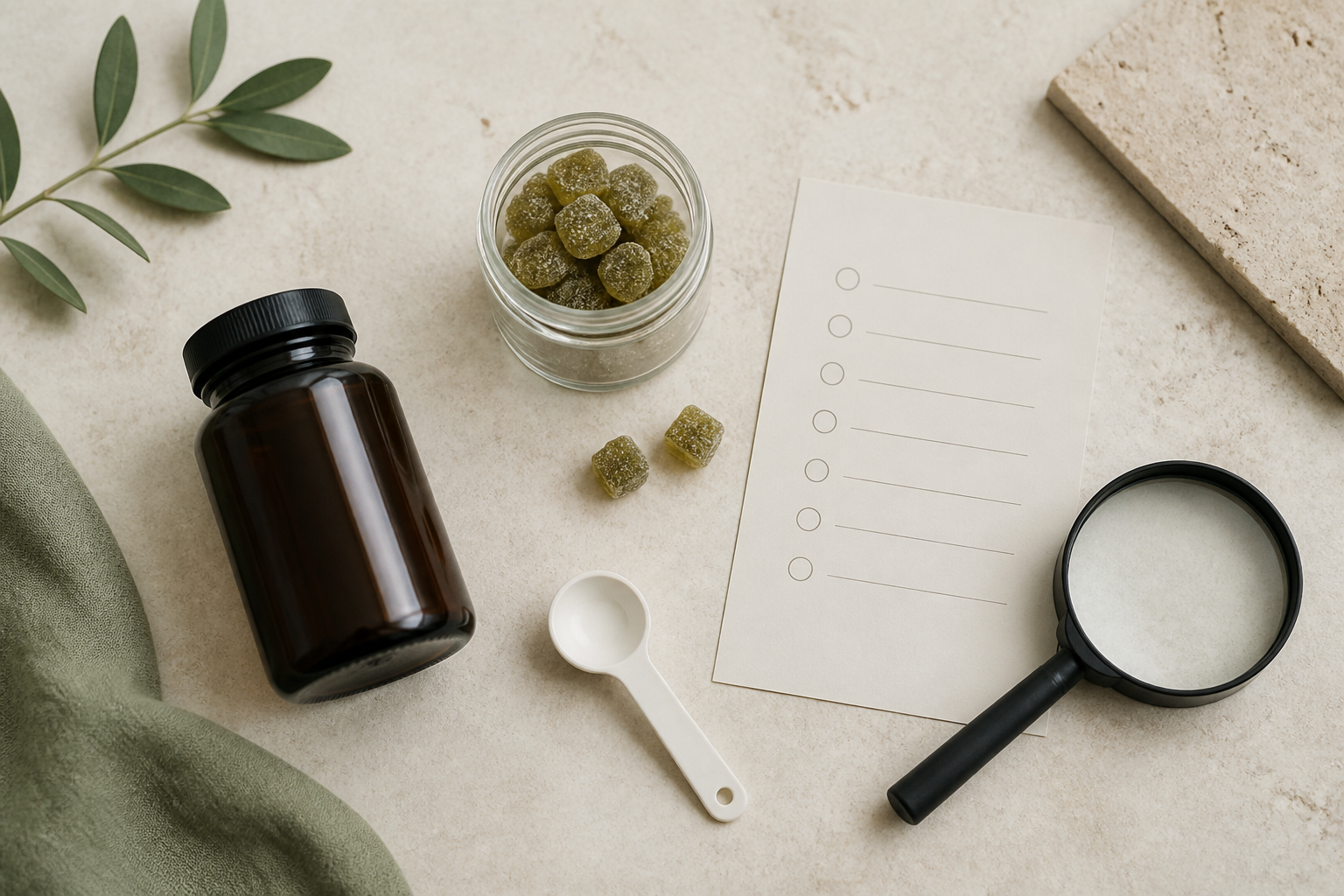
For gummies and capsules, a piece is easy to see, but it is not always identical to one serving. A label may define one serving as one piece, two pieces, or a measured portion. Count the pieces in the container and compare that count with the stated servings. If they do not line up, look for an explanation in the directions or ask customer support.
A simple label-math method
Use the following sequence every time you compare a cannabinoid product:
- Write down the total cannabinoid amount shown for the full package.
- Write down the servings per container.
- Divide the package total by the number of servings only when the label uses the same cannabinoid and unit for both figures.
- Compare the result with the label’s stated amount per serving. A mismatch may be a rounding issue, a blend, or a reason to seek clarification.
- Check whether the serving is one piece, a partial piece, a dropper, or a measured liquid volume.
Here is a hypothetical example, not a product recommendation: a container says it contains 300 mg of CBD total and 30 servings. The straightforward comparison is 10 mg of CBD per stated serving. If the serving is two gummies, that does not mean each gummy is 10 mg; it means the label is defining the two-gummy portion as 10 mg. Read the serving line before making a per-piece comparison.
When the arithmetic does not answer the buying question
Correct arithmetic is useful, but it is not a quality score or an instruction to choose the product with the largest number. Two packages can show the same amount per serving and still differ in their complete ingredients, format, directions, batch traceability, product condition, and availability. A liquid product may need a clear volume measure; a gummy may need allergen and piece-count information; a vape requires both formula and hardware details. Compare like with like before comparing the numbers.
It is also worth separating an amount printed on a retail label from a personal decision about use. A label cannot account for medication interactions, pregnancy, breastfeeding, a health condition, impairment, or the changing rules at a destination. Do not turn a per-serving figure into a medical recommendation or an assurance about effects. If the purpose of your question is health-related, bring the actual product information to an appropriate qualified professional instead of relying on a marketing claim or a calculator.
Finally, check whether the price comparison uses the same denominator. Price per package, price per piece, price per mL, and price per stated serving are all different comparisons. A product with more pieces may have a smaller amount per piece; a larger bottle may contain a lower stated cannabinoid concentration. Write down the unit before deciding which comparison is meaningful for the product format you are considering.
Read blends with extra care
Some packages list several cannabinoids. A front-panel number may be a total for a blend rather than the amount of a single named cannabinoid. Find the detailed panel and note each line separately. Do not combine or compare CBD and THC numbers as if they were the same ingredient, and do not assume a product labeled “hemp” tells you the amount of any specific cannabinoid.
For delta-9 products, make sure the label, product page, and any available documentation all identify the relevant cannabinoid in the same units. The delta-9 products page can help you locate the appropriate product category, while the adult buyer guide to delta-9 THC explains broader product-language questions. Availability, age eligibility, and applicable rules can differ by destination and may change.
Use the label, product page, and COA together
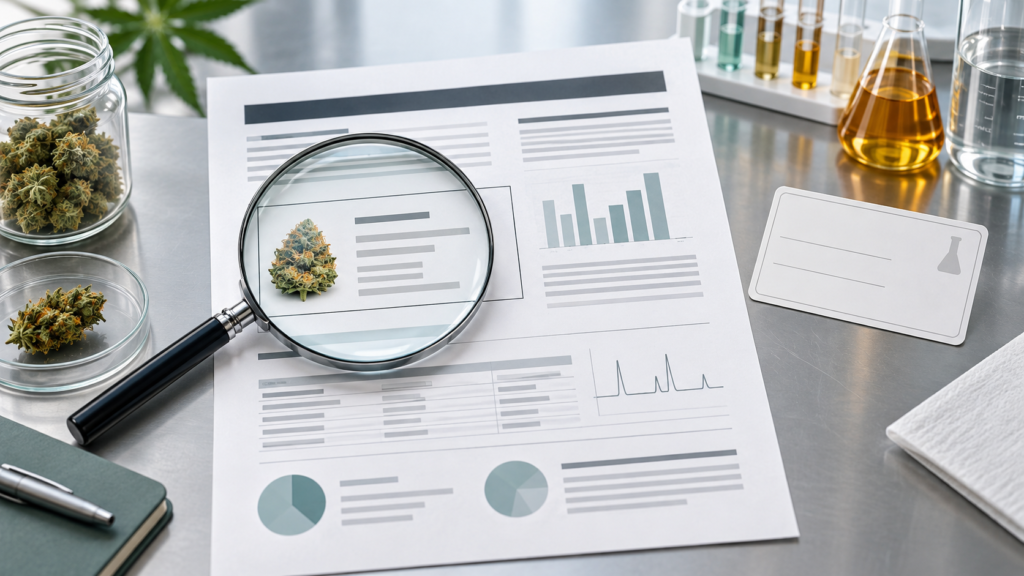
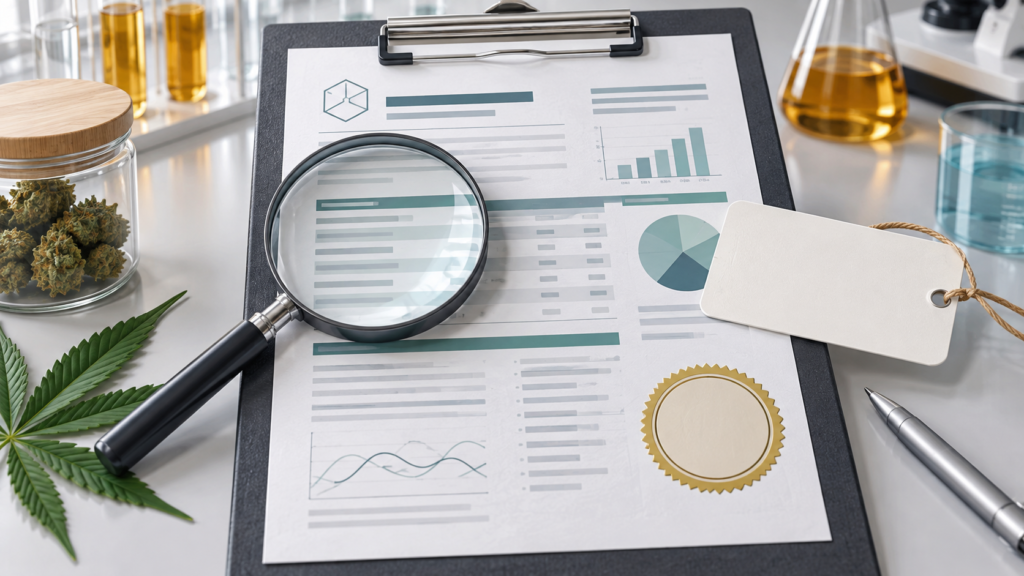
A Certificate of Analysis (COA) is evidence about a sample tested by a laboratory. It can help you check whether a listed cannabinoid amount and product identity are supported for that sample. It is not a promise that every unit or future batch is identical, and it does not decide whether a product is legal, safe for an individual, or suitable for a medical purpose.
When a COA is available, compare the product name, form or matrix, batch or lot number, report date, units, and testing scope. Start at lab results, then use the site’s CBD COA comparison guide to keep the check specific. A generic “lab tested” claim with no readable, batch-linked report should not be treated as complete evidence.
Questions to ask before checkout
- Which cannabinoid does the highlighted number describe?
- Is the number per serving, per piece, per mL, or per package?
- How many servings and pieces are in the container?
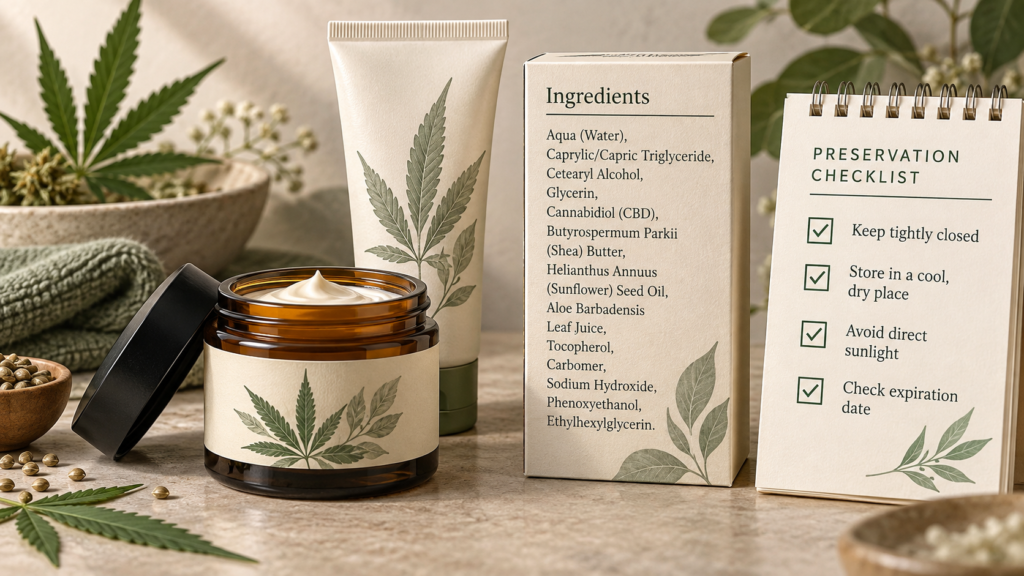
- Are ingredients, allergens, warnings, and storage directions easy to find?
- Is there a batch or lot identifier that can be compared with the available report?
- Can the seller confirm the current availability of the exact product at the destination?
The U.S. Food and Drug Administration notes that many questions about CBD product safety and quality remain unresolved and advises consumers to consider product information carefully. Read the agency’s consumer information on cannabis and cannabis-derived products when making health-related assumptions. If you have a personal health question, use medications, are pregnant or breastfeeding, or are considering a product for a child or pet, consult an appropriate qualified professional.
Frequently asked questions
Is a package total the same as a cannabinoid serving size?
No. The package total is the amount stated for the whole container, while a serving is the portion the label defines. Read both before comparing products.
Why do milligrams and milliliters both appear on some labels?
Milligrams usually describe the amount of a cannabinoid, while milliliters describe liquid volume. They measure different things and should not be treated as interchangeable.
Does a higher number on the front label mean a better product?
No. It may be a package total rather than an amount per serving. Ingredients, batch information, product format, and destination eligibility still matter.
Bottom line
Responsible cannabinoid label math separates the amount per serving from the amount in the entire package. Read the units, count the servings, compare the same cannabinoid in the same unit, and then verify ingredients and batch information. Before ordering, check where Herbxmind ships and the legal disclaimer; online visibility is not a guarantee of availability in every jurisdiction.
Editorial note, reviewed August 14, 2026: Herbxmind reviewed this guide against the linked FDA consumer information. This is product-label education for adults where permitted, not medical or legal advice, a dose recommendation, or a guarantee of product suitability, testing, legality, or delivery.