

Quick answer: CBN and CBD are different cannabinoids, so “CBN vs CBD” is a comparison of compound identity, product formulation, and label evidence—not a universal better-or-worse choice. Check the exact cannabinoid amounts, ingredients, THC information, batch-specific COA, serving units, and seller policies. Do not treat a label comparison as medical advice.
Adults often search CBN vs CBD after seeing one cannabinoid highlighted on a product page while another appears in the lab report. The useful response is to separate the compound name from the finished product. Oils, gummies, capsules, vapes, and flower can use different units and ingredients. This guide provides a practical way to compare the information without turning a marketing claim into a promise.
CBN vs CBD at a glance
- CBD: cannabidiol, a cannabinoid commonly highlighted in hemp-derived products.
- CBN: cannabinol, a different cannabinoid that may appear as a featured or minor component.
- Both: can appear alongside other cannabinoids, terpenes, carrier ingredients, flavors, or extracts.
A product name does not establish the amount of either compound. “Hemp extract” is not the same as a declared CBD or CBN amount. Find the facts panel, serving definition, container size, batch code, and full ingredient list.
For related terminology, read the CBG vs CBD guide and the full-spectrum CBD guide.
How to read CBD and CBN amounts
Record whether the label reports CBD or CBN per serving, per piece, per milliliter, per gram, or per container. A 500 mg total claim is not automatically 500 mg of a named cannabinoid. A product can list total hemp extract, total cannabinoids, CBD, CBN, or a combination of those fields.
Check whether one serving equals one gummy, one capsule, a dropper, or a different amount. A serving is a label unit, not a universal personal recommendation. Compare like units before judging price or concentration.
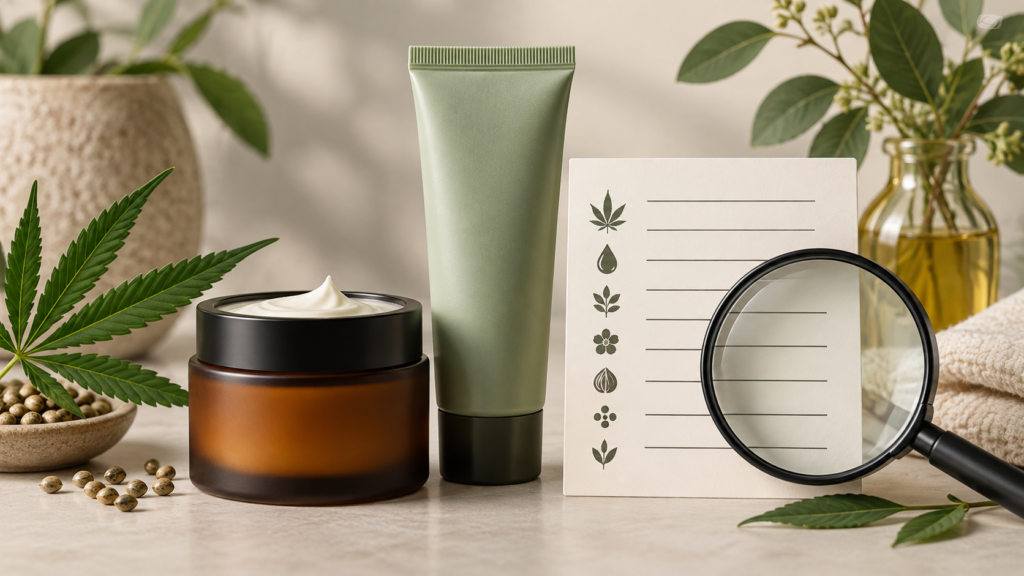
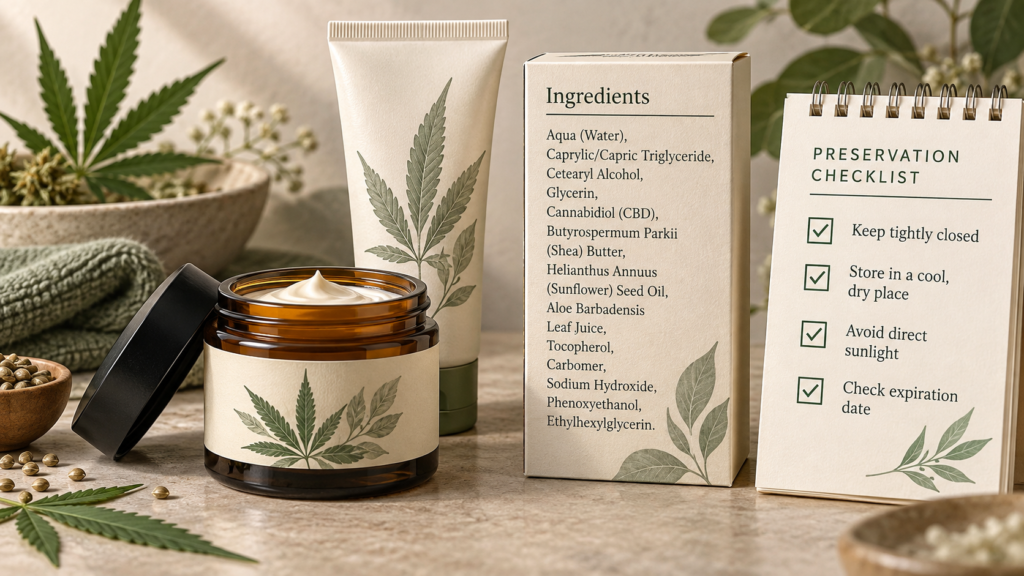
Read the complete ingredients. A CBN or CBD product may contain a carrier oil, sweeteners, flavors, botanicals, gelatin, pectin, or other excipients. The CBD oil label checklist explains how to separate container volume, extract, and CBD amounts.
How to verify the profile with a COA
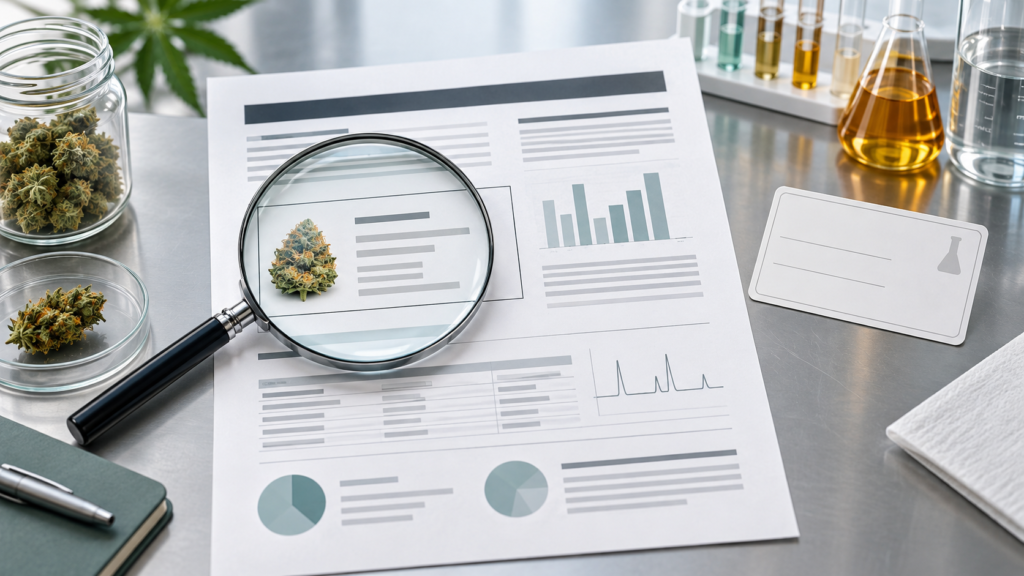
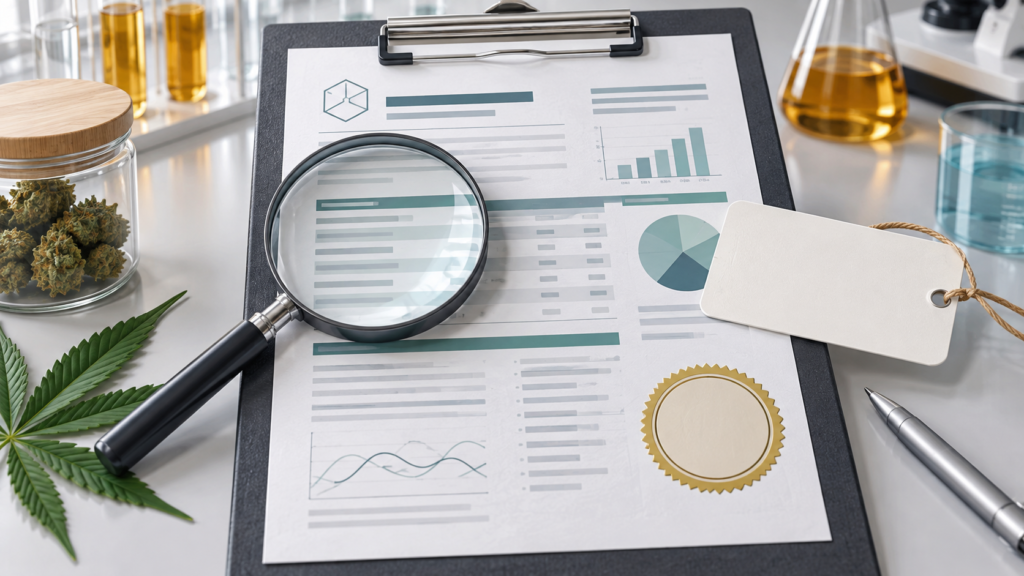
A certificate of analysis is useful when it identifies the laboratory, report date, sample date, product description, batch number, units, and relevant panels. Match the report to the finished product in your possession. A raw extract report may not verify the final gummy, tincture, or vape.
- Photograph the package and record the batch or lot code.
- Open the seller’s current report page.
- Match the code exactly.
- Confirm the product format and formula.
- Compare CBD, CBN, THC, and other cannabinoid units.
- Review reporting limits and relevant contaminant panels.
- Save the report with the order record.
Use the COA guide and batch checklist. A COA supports a claim about a submitted sample and method; it does not prove every future batch or an individual response.
What marketing language cannot prove
Words such as “nighttime,” “calm,” “recovery,” or “deep rest” may describe a marketing position, but they do not establish that CBN or CBD will produce a particular result. Avoid claims that either cannabinoid treats, cures, prevents, or diagnoses a condition.
The FDA says many retail CBD products have not been evaluated as general medicines and that safety, quality, and labeling questions remain. Read the FDA approval facts and FDA consumer update. The CDC provides public-health context in its cannabis FAQ.
CBN vs CBD buying checklist
- Are CBD and CBN identified separately?
- Are amounts and serving units clear?
- Is THC information present?
- Does the batch match a current COA?
- Does the report cover the finished product?
- Are carrier, flavor, sweetener, and allergen ingredients listed?
- Does the copy avoid medical guarantees?
- Are shipping and destination restrictions visible?
Review shipping information and regional availability before checkout.
How to compare a CBN product page fairly
Open the product page, label photograph, and COA at the same time. Record the exact product format, net contents, CBD amount, CBN amount, serving size, number of servings, THC statement, other cannabinoids, ingredient list, batch code, report date, and seller contact. If a field is missing, mark it as unknown rather than filling it with an assumption.
Be especially careful with products that use a broad “hemp extract” number. That number may describe the extract rather than a specific cannabinoid. Ask whether the listed milligrams refer to CBD, CBN, total cannabinoids, or the entire extract. Ask whether the COA tests the finished product or a raw material.
Compare like formats. A tincture may use milligrams per milliliter, a gummy may use milligrams per piece, and a capsule may use milligrams per capsule. A flower or vape report may use a weight or concentration basis. Unit differences can make two products look more different or more similar than they really are.
Questions to ask the seller
- What does the printed CBN amount represent?
- Is CBD reported separately?
- Does the current report match this batch?
- What detection limit applies to THC?
- Has the formula changed since the report?
- Where are new reports posted?
Keep written answers with your purchase record. A responsible seller should explain its own labels without making a universal health promise. If the answer is vague, choose a product with clearer traceability.
Evidence boundaries for CBN and CBD
Product education can describe cannabinoid identity and label evidence. It cannot establish that CBN or CBD will produce the same response for every adult. The FDA and CDC explain that evidence, safety, and product quality questions remain for many retail cannabis-derived products. Do not use this article to change medication, treat a condition, or make a personal health decision.
Keep the comparison factual and current. Recheck the product page and report when reordering because formulas, batches, seller policies, and regulations can change. A familiar brand name does not guarantee an unchanged product.
When comparing two products, make a table rather than relying on memory. Write the product format, container size, named cannabinoids, amounts, units, ingredients, batch code, report date, and shipping limits. Mark any unknown field. This avoids treating a plant image, a color, or a broad “premium” phrase as proof.
Ask support whether the report belongs to the finished product. Ask whether the printed amount is per serving or per container. If THC avoidance matters, ask about the reporting limit. If a product page promises a specific outcome, ask what evidence supports that wording and keep personal medical questions with a qualified professional.
Keep the package and report together until you have finished evaluating the order. If a label or package changes, begin a new comparison. This is especially important for cannabinoid products because product formulas and seller policies can change over time.
A useful shopping decision does not need to be absolute. You can decide that the information is sufficient, request clarification, or pause. The important part is that the decision follows verifiable product facts rather than an unsupported promise.
For a repeatable review, save the current product page with the report and label photograph. Note the date and the exact batch. If the seller changes the formula, amount, or report link, do not assume the old review still applies.
Clear information is itself a useful buying signal. A page that separates CBN, CBD, total extract, ingredients, units, and batch evidence gives the shopper a better basis for comparison.
Do not choose a product because a single cannabinoid word sounds more advanced. Verify the complete formula and the report that belongs to the package. If the evidence is not enough, waiting for a clearer report is a reasonable consumer decision.
Keep a private record of the product name, batch, report date, label amount, and seller response. This record makes a future comparison easier and prevents a general marketing phrase from replacing a current product fact. If the product changes, repeat the review from the beginning.
Clear records support a measured decision without promising an effect.
When comparing CBN and CBD, keep compound identity, product format, label units, ingredients, batch evidence, and current policy in separate notes. This prevents a familiar cannabinoid name from silently becoming a claim about quality or suitability. If the seller changes the formula or report, start a new record instead of editing the old one.
Frequently asked questions
Is CBN stronger than CBD?
“Stronger” is not a reliable universal label comparison. Compare the actual amounts, units, ingredients, and report.
Can a product contain both?
Yes, some products list multiple cannabinoids. Verify the amount of each and the matching batch report.
Does CBN contain THC?
CBN and THC are different cannabinoids, but a finished hemp extract product can contain multiple cannabinoids. Read the exact report.
Can I use CBN or CBD for a condition?
This article does not provide medical recommendations. Consult a qualified professional about personal questions.
Conclusion
CBN vs CBD is most useful as a label and evidence comparison. Identify each cannabinoid, normalize units, inspect ingredients, match the batch to a COA, check THC information, and review current policies. Choose the product whose information is clear enough for your own criteria.
Editorial note: Herbxmind publishes adult-use consumer education. This article is not medical or legal advice, and formulas, reports, and rules can change.