

Quick answer: Full-spectrum CBD describes a hemp extract intended to retain multiple naturally occurring cannabinoids and other hemp compounds, rather than isolating CBD alone. The label does not tell you the exact profile by itself. Check the ingredients, declared cannabinoid amounts, batch number, recent COA, THC information, seller policies, and current destination rules before buying.
Many shoppers search for full-spectrum CBD because they want to understand what an extract contains beyond cannabidiol. The term sounds precise, but commercial formulas can vary. One product may emphasize CBD and minor cannabinoids; another may list a broader extract and a small amount of THC. A careful comparison starts with the label and ends with batch-specific evidence, not with a slogan about an “entourage effect.”
What full-spectrum CBD means on a label
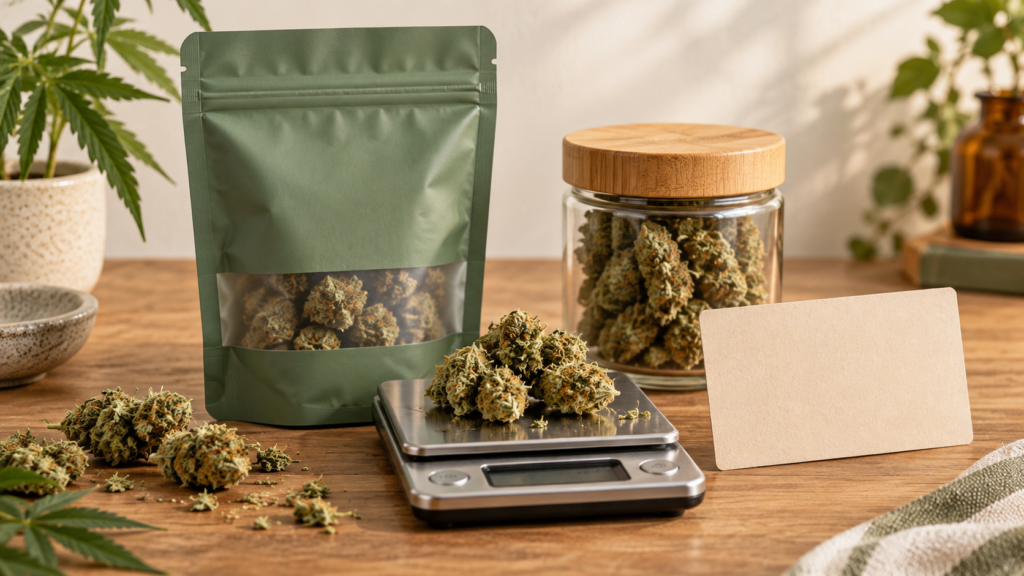
Full-spectrum is generally used for an extract that preserves several compounds from the hemp plant. Those may include CBD, minor cannabinoids, aromatic compounds, and a small amount of THC, depending on the source material and processing. The exact profile is not universal, so shoppers should treat the term as a formulation description rather than a guaranteed concentration or outcome.
Compare it with two other common labels:
- CBD isolate: a formulation centered on isolated cannabidiol, with fewer naturally occurring compounds from the original extract.
- Broad-spectrum CBD: commonly used for a multi-compound extract marketed without detectable THC, subject to the product’s stated method and test limit.
- Full-spectrum CBD: commonly used for a broader extract that may retain THC and other hemp compounds.
These are useful shopping categories, not a substitute for the ingredient list. For a closer product-label method, read how to read a CBD oil label and compare the COA reading guide.
What to verify before buying full-spectrum CBD
Begin with the declared total CBD and bottle size. Then find the total THC amount or the product’s THC statement. “Hemp-derived” does not by itself answer how much THC is present. Check whether the number is per serving, per container, or per milliliter. A product that lists only “hemp extract” has not clearly told you the amount of CBD.
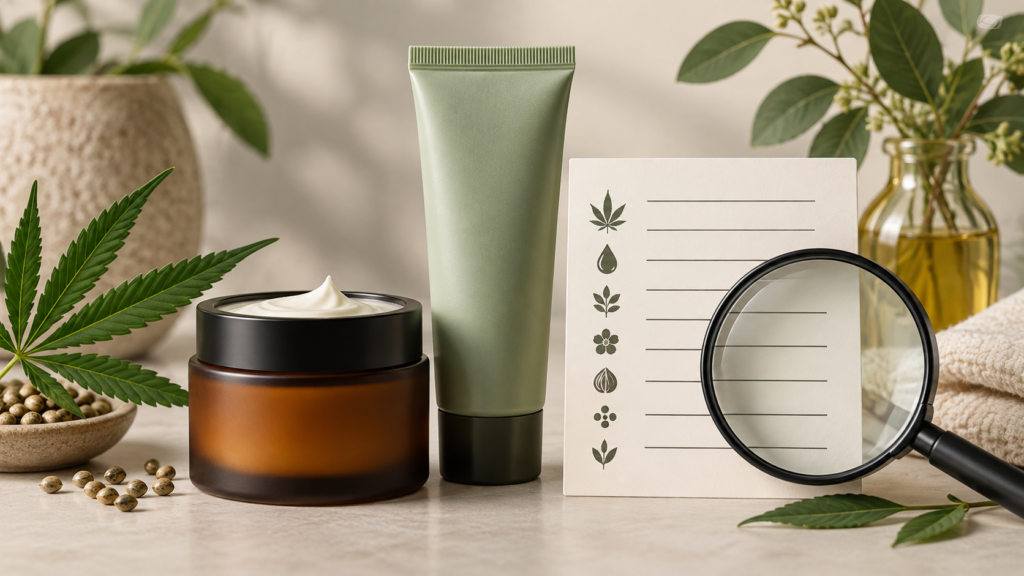
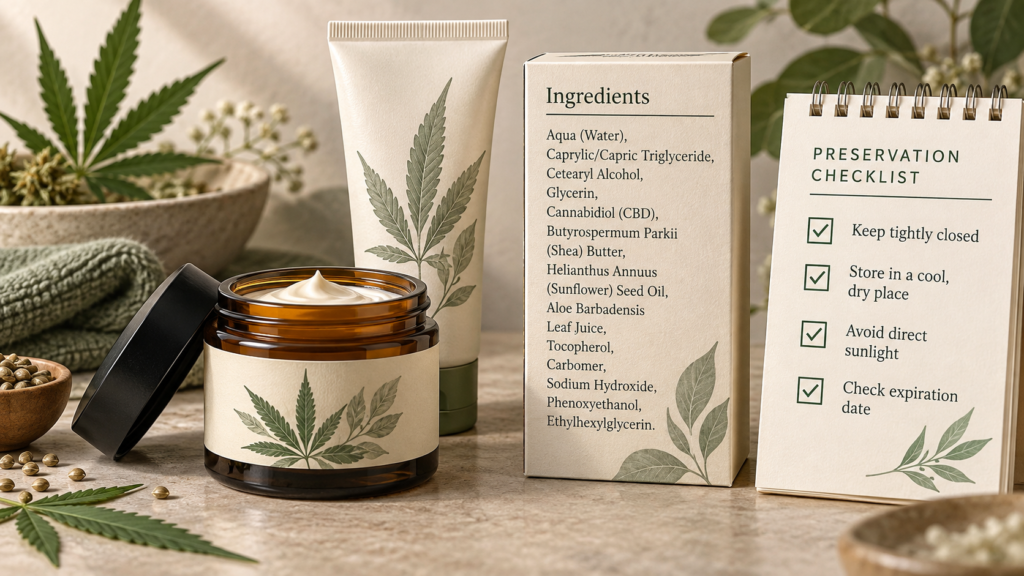
Next, inspect the ingredient panel. A full-spectrum product may be blended with a carrier oil, flavorings, or other ingredients. Look for the manufacturer or seller identity, contact route, lot or batch code, storage directions, and date information where provided. A transparent label makes it possible to ask a useful question when a report or product page is unclear.
How to use a COA to confirm the formula
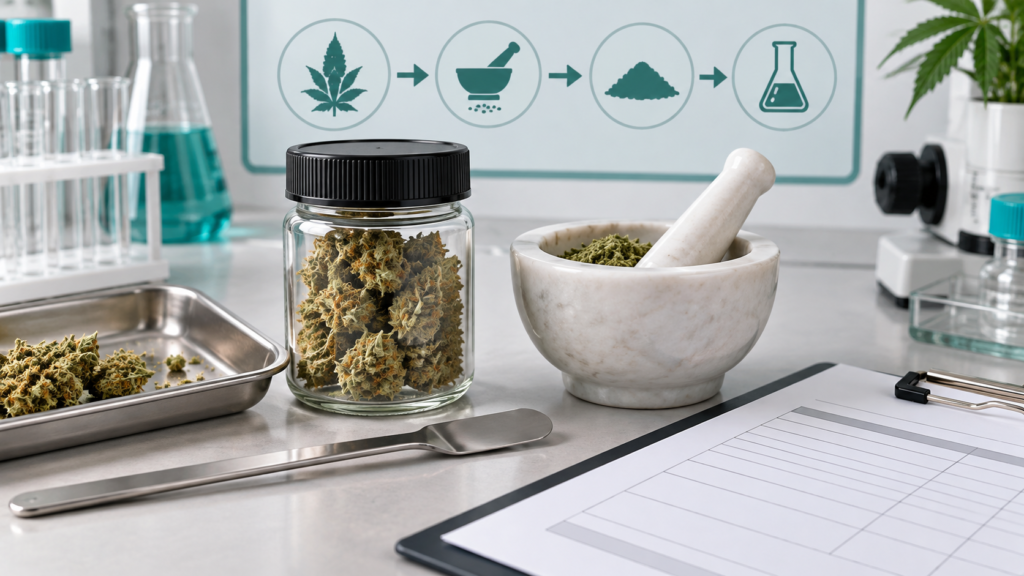
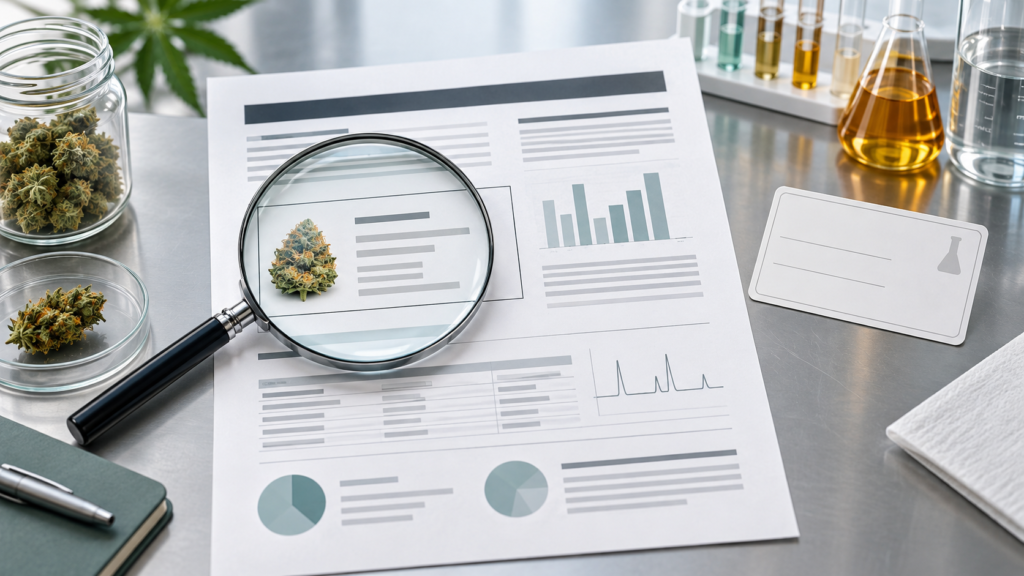
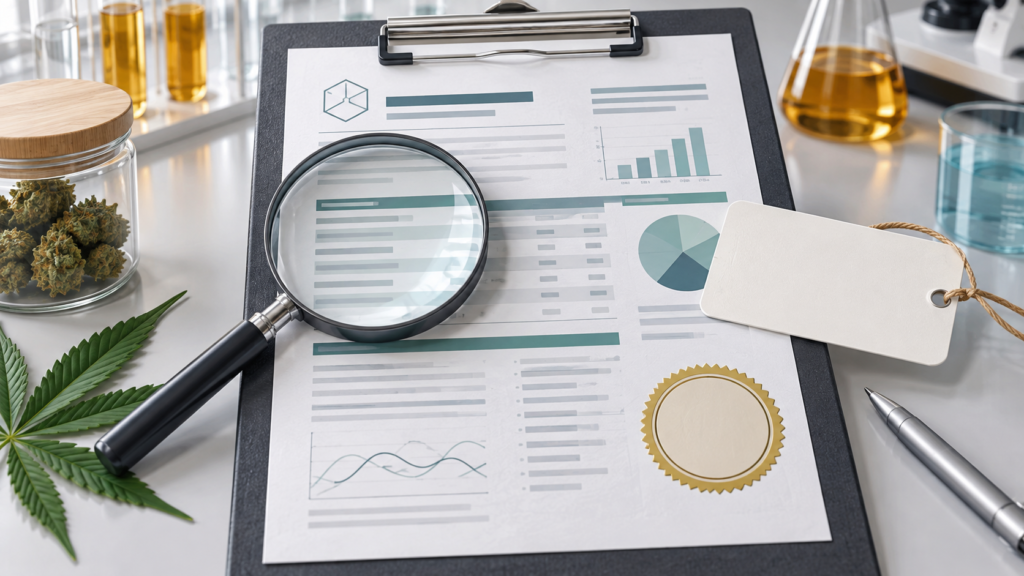
A certificate of analysis is useful only when it belongs to the product and batch under review. Confirm the report’s laboratory identity, sample date, report date, product description, sample or batch code, units, and testing panels. A report can show a cannabinoid profile without proving every marketing statement, so read its scope carefully.
- Write down the batch number printed on the package.
- Open the seller’s testing page or request the report.
- Match the batch code exactly.
- Compare the CBD and THC results with the label and the report’s units.
- Review whether the report includes the panels relevant to the product.
- Check for a clear laboratory name, date, method, and result table.
- Save the report with the order record and note the retrieval date.
Use the lab-results resource when available, and review the batch-matching checklist. If the report is generic, expired, inaccessible, or unrelated to the code on the bottle, it does not give you strong batch-level confirmation.
Does full-spectrum CBD work better?
Be cautious with comparative claims. Full-spectrum products contain more than CBD, but the presence of more compounds does not establish that a particular product will work better for a particular person. Product composition, amount, individual circumstances, and evidence quality all matter. “Entourage effect” is often used in marketing; it should not be treated as a guarantee, diagnosis, or treatment claim.
The FDA explains that it has not approved most cannabis-derived products for treating or preventing diseases and continues to distinguish research questions from approved medical uses. Read the FDA facts about approvals and its CBD regulation overview. A consumer article can explain how to compare a product; it cannot convert a label into medical evidence.
THC, drug testing, and practical caution
Because full-spectrum formulas may include THC, shoppers who need to avoid THC should not rely on the word “hemp” or a front-label CBD claim. Read the COA and the seller’s stated detection information. A “non-intoxicating” marketing phrase does not mean “contains no THC,” and it does not guarantee a result in an individual drug test.
Consider age, medications, pregnancy, allergies, workplace rules, and personal risk tolerance. The CDC’s cannabis FAQ and health-effects information provide general public-health context. Speak with a qualified healthcare professional about personal medical questions, and do not use this guide to change prescribed treatment.
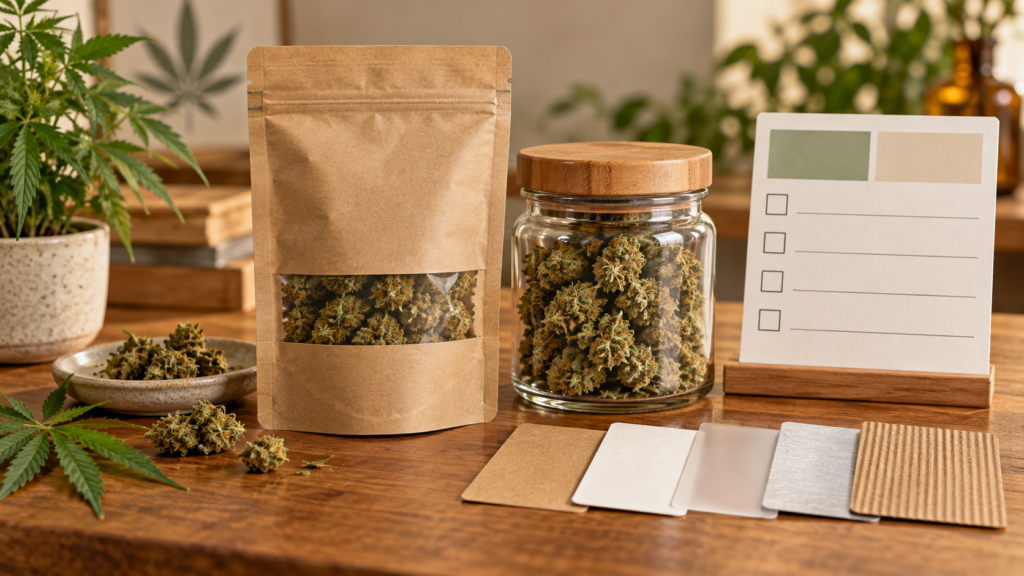
Full-spectrum CBD buying checklist
- Is “full-spectrum” supported by a clear ingredient and cannabinoid description?
- Does the label state total CBD and clarify the serving unit?
- Is THC identified rather than hidden behind “hemp extract”?
- Does the batch number match a recent, product-specific COA?
- Does the report show relevant cannabinoid results and units?
- Are carrier oil, flavorings, and other ingredients disclosed?
- Is the seller’s identity and customer-support route easy to find?
- Are shipping limits and destination availability explained?
- Does the copy avoid treatment, cure, diagnosis, and guaranteed-effect language?
For a destination check, review shipping information and regional availability. Rules are not static, so verify the current requirements where the order will be received.
Storage and label records
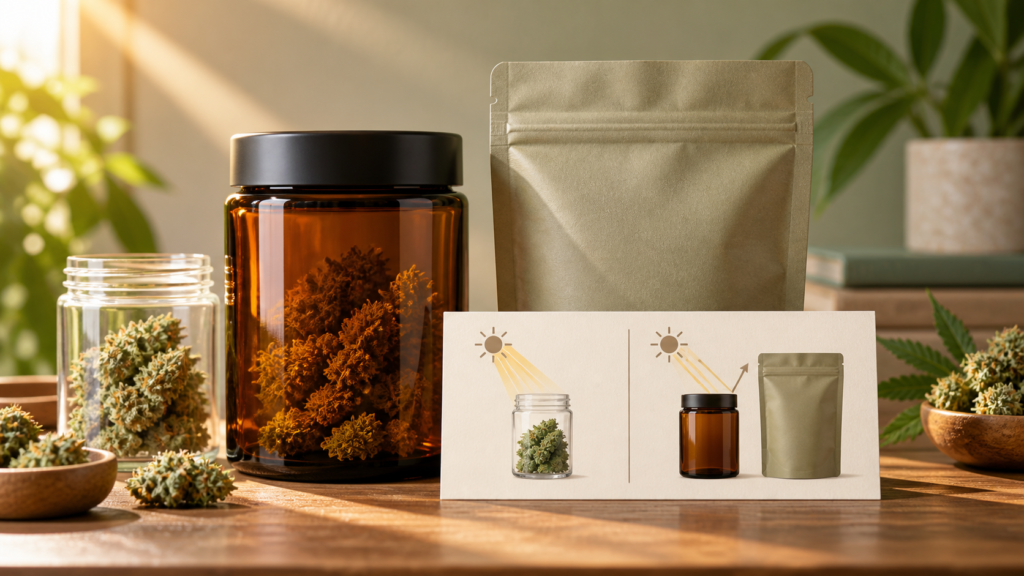
Keep the bottle in its original packaging and follow the product’s storage instructions. Heat, light, moisture, and time can affect a packaged product, while an opened bottle may have a different shelf-life expectation than an unopened one. Record the purchase date, batch code, product page, and COA URL. These details make it easier to ask the seller about a future change in packaging or report.
Do not transfer a product into an unmarked container, especially when it contains THC or other cannabinoids. Keep products away from children and pets, and follow local disposal instructions for unwanted or damaged items.
Frequently asked questions
Does full-spectrum CBD always contain THC?
Not necessarily at the same concentration, but the category can include THC. Read the exact label and batch report instead of assuming either zero or a fixed amount.
Is broad-spectrum CBD guaranteed to be THC-free?
The term is used to describe a product marketed without detectable THC, but the relevant detection limit and batch result matter. Ask for a product-specific COA if the distinction is important.
Can I use full-spectrum CBD for a medical condition?
This guide cannot recommend a product for treatment or diagnosis. CBD products are not automatically FDA-approved medicines, and personal questions should be discussed with a qualified healthcare professional.
Why do two full-spectrum products have different COAs?
Plant material, extraction, formulation, batch, laboratory method, and reporting units can differ. Compare like with like: same product, same batch, same units, and a clear report date.
How to compare full-spectrum products without overreading the label
Put two products in a simple comparison table. In the first column, record bottle size and total CBD. In the second, record the labeled THC amount and whether it is reported per serving or per container. In the third, record the carrier oil and other ingredients. In the fourth, record the COA date, batch match, and relevant testing panels. Add shipping restrictions and price only after the information fields are complete.
This method exposes several common differences. A larger bottle may contain less CBD per milliliter. A lower advertised price may come with no accessible current report. Two products may both say full-spectrum while one lists minor cannabinoids and the other provides only a broad extract statement. None of these differences automatically chooses a winner, but they change how much confidence you can place in a comparison.
Be precise about what a lab report can show. A report is evidence about the submitted sample and stated method. It may not verify a future batch, storage history after testing, every marketing statement, or an individual response. If a seller says the report represents every bottle forever, ask how batches are controlled and how new reports are posted. Evidence has a boundary, and recognizing that boundary is part of responsible shopping.
When to pause instead of guessing
Pause if the label and COA use unexplained units, if the product name changes between pages, if the THC statement is missing, or if the seller cannot identify the report’s batch. Also pause when advertising makes an absolute health promise. The FDA’s consumer resources explain that approval status and permitted claims are not the same as a product’s marketing language. A cautious decision may mean requesting clarification, choosing a more transparent product, or waiting until current information is available.
Responsible buying also includes the people and animals around the product. Store it in the original child-resistant packaging when provided, keep it away from children and pets, and do not leave it in a vehicle where heat can damage the package. Follow the product directions and local disposal guidance. These habits do not prove a formulation’s quality; they reduce preventable handling mistakes.
Conclusion: judge the extract by evidence
Full-spectrum CBD is best understood as a broader extract category, not a performance promise. Read the whole label, verify CBD and THC amounts, match the batch to a recent COA, and review shipping and regional policies. When a claim sounds absolute, look for the specific evidence behind it. A measured, record-based comparison protects shoppers from confusing extract terminology with quality, legality, or guaranteed results.
Editorial note: Herbxmind publishes educational content for adult shoppers. This article is not medical or legal advice, and it does not promise a product effect. Formulas, testing reports, and regulations may change; verify current information before purchase or use.