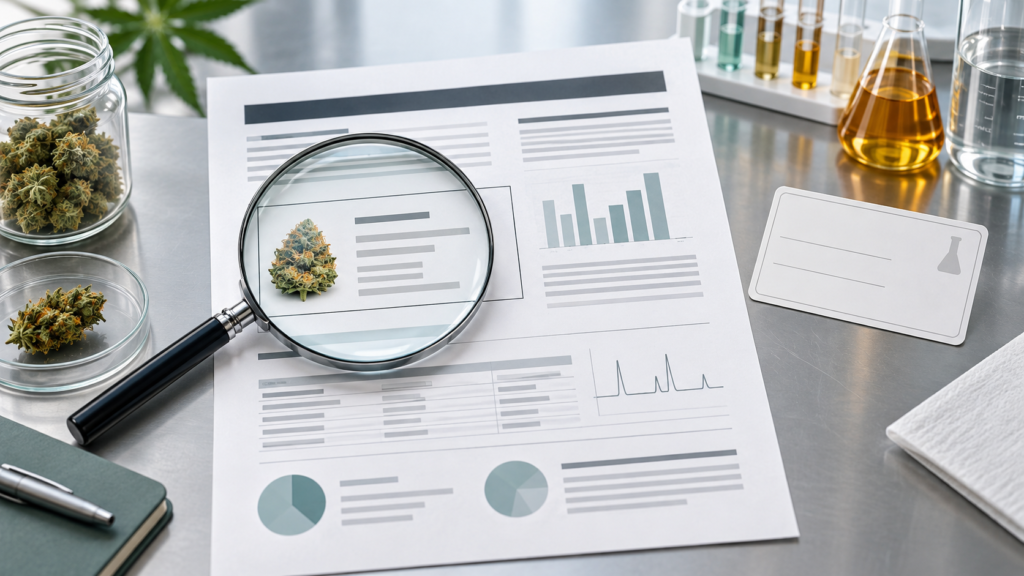



Buying a cannabis vape product should never be based on flavor, packaging, or potency numbers alone. For eligible adult buyers, lab results are one of the most important tools for understanding what a product is, how it was tested, and whether the available documentation matches the product being considered.
A lab result, often called a Certificate of Analysis or COA, can help explain cannabinoid potency, batch details, and selected safety testing categories. But not every report means the same thing. Some reports apply to raw materials. Some apply to concentrates. Some apply to development samples. Others apply to finished retail batches. The difference matters.
This guide explains how to read cannabis vape lab results in a practical way before buying.
Start With The Sample Name And Matrix
The first thing to check is the sample name. The sample name should clearly connect to the product or material being reviewed. If the report names a concentrate, extract, oil, or development sample, it should not automatically be treated as a finished vape product report.
The matrix is equally important. Matrix describes the type of material tested. Common examples include concentrate, flower, edible, oil, or finished vape product. A concentrate potency report can be useful, but it does not replace finished product testing when hardware, formulation, packaging, or batch-level retail compliance matters.
Before comparing a COA to a product page, ask:
- Does the sample name match the product?
- Does the batch or lot number match?
- Does the matrix match the finished product type?
- Is the report date recent enough for the batch being sold?
If these details do not line up, the report may still be informative, but it should be described carefully.
Check Cannabinoid Potency Carefully
Most cannabis vape buyers look first at THC percentage. That number matters, but it should not be read in isolation. A good potency section may show Delta 9 THC, THCA, CBD, CBG, CBC, total cannabinoids, and sometimes minor cannabinoids.
For vape products, potency helps buyers understand strength and product identity. It does not prove safety by itself. A high THC result does not automatically mean a finished vape product has passed all relevant safety checks. Potency is one part of the testing picture.
Look for:
- Total THC or Delta 9 THC
- Total cannabinoids
- CBD and minor cannabinoid values
- Units such as percent, mg/g, or mg per unit
- Clear test method and lab identity
If the product is advertised by volume or unit size, the potency data should be understandable in relation to that format.
Look Beyond Potency
A vape COA should ideally include more than cannabinoids. Finished vape products may require additional review because they combine oil, hardware, heat, and inhalation use.
Important testing categories may include:
- Pesticides
- Heavy metals
- Residual solvents
- Microbials
- Mycotoxins
- Vitamin E acetate absence documentation
- Hardware or heavy metal migration testing when available
Not every report contains all categories. If a report only shows cannabinoids, it should be presented as a potency report, not a complete safety or compliance report.
Confirm Batch-Level Documentation
Batch-level documentation is one of the most useful signals of transparency. A batch number or lot number connects a lab result to a specific production run. Without that connection, buyers may not know whether the report applies to the product currently available.
If the batch number is listed as N/A, the report may still provide useful information about the material tested, but it should not be used as a finished batch match.
For Herbxmind, the best long-term approach is to build a lab result library where each product or batch can be checked by product name, batch number, matrix, date, and report type.
Understand What A COA Does Not Do
A COA is a transparency tool. It is not a medical claim, a guarantee of effects, or a universal legal clearance document. Cannabis laws vary by region, and product availability depends on local rules, customer eligibility, product type, and fulfillment requirements.
Responsible sellers should avoid saying that one report proves everything about a product unless the report clearly covers the finished batch and the required testing scope.
Final Buyer Checklist
Before buying a cannabis vape product, eligible adult buyers should check:
- Product name
- Batch or lot number
- Matrix
- Report date
- Lab name
- Cannabinoid potency
- Safety testing categories
- Whether the report applies to raw material or finished product
- Regional eligibility and local rules
Lab results are most useful when they are specific, current, and easy to connect to the product being reviewed.
FAQ
What is a cannabis vape COA?
A cannabis vape COA is a lab report that may show potency, batch details, and selected safety testing data for a cannabis material or product.
Is a potency report the same as a full compliance report?
No. A potency report may only show cannabinoid levels. A full finished product report may include additional safety categories and batch-specific details.
Why does the matrix matter?
The matrix tells you what type of sample was tested. A concentrate report should not automatically be treated as a finished vape product report.
Can lab results predict product effects?
No. Lab results can provide transparency about tested contents, but they should not be used as medical advice or as a guarantee of personal effects.
Compliance Note: Herbxmind products are intended only for eligible adults in regions where local law allows access. This article is for informational purposes only and is not legal or medical advice.