

Quick answer: To read a CBD oil label, identify the product type, total CBD amount, serving information, ingredient list, batch or lot number, testing link, and the seller’s age, shipping, and return policies. Compare the label with a recent, product-specific certificate of analysis (COA), and treat every number as information to verify—not a promise of a medical result.
A CBD oil label is a compact information system. It should help an adult shopper understand what is in the bottle, how much product is present, what cannabinoids are represented, and where the supporting test information can be found. It cannot tell you everything about quality, and a polished label is not proof that a product is safe, legal everywhere, or effective for a particular person. This guide explains a practical CBD oil label review process for U.S. shoppers.
What to find first on a CBD oil label
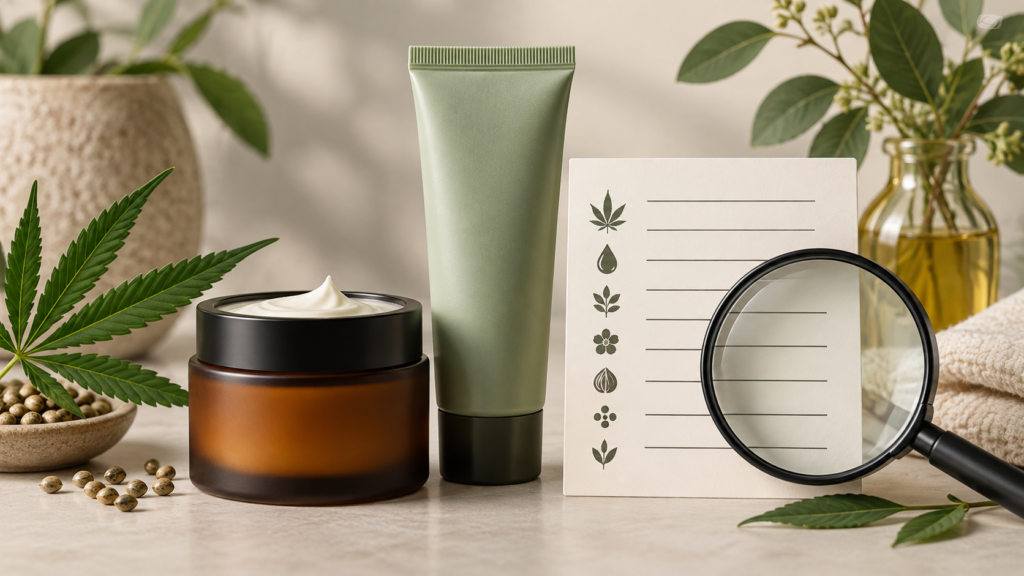
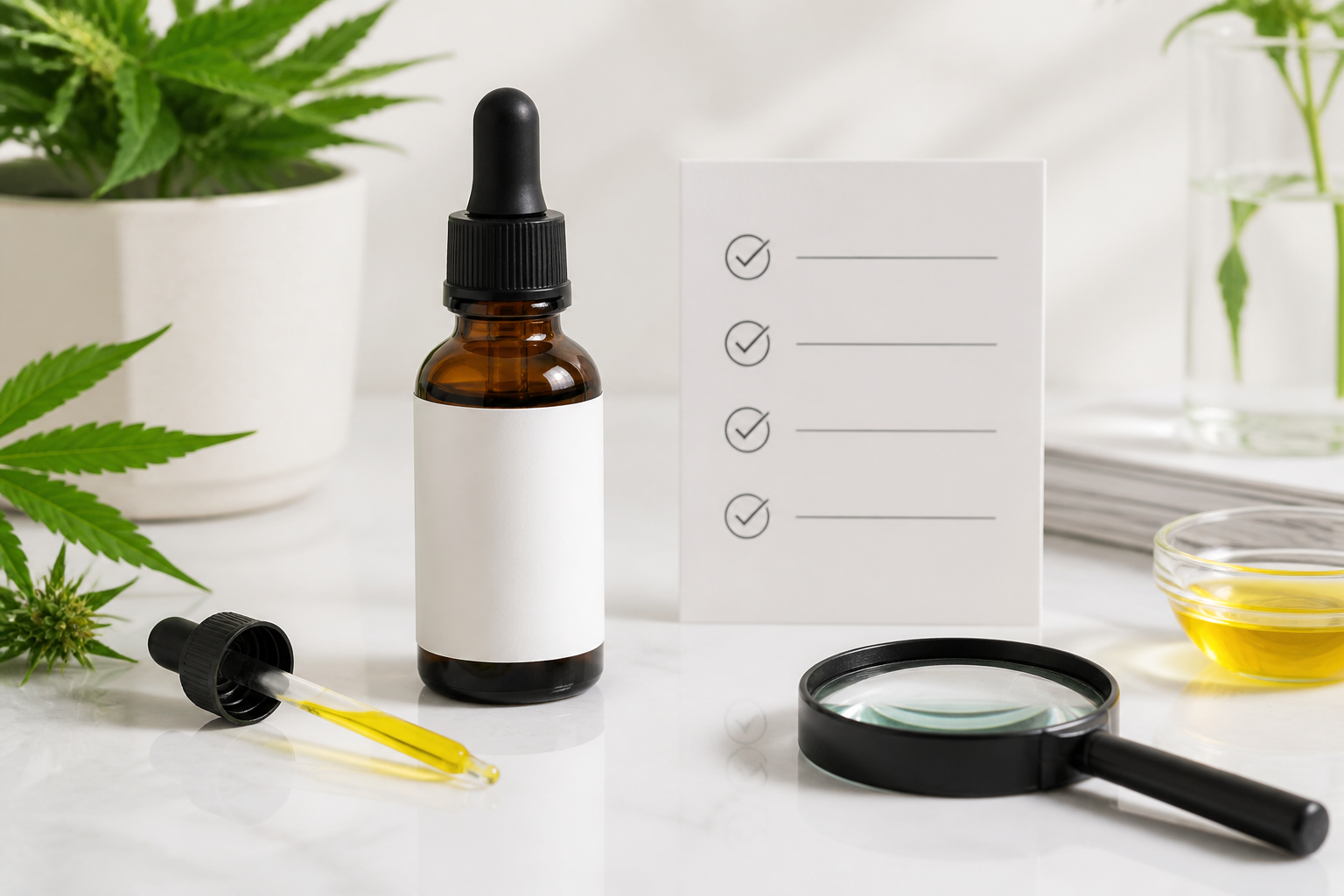
Start at the front, but do not stop there. Record the product name, bottle size, total CBD amount, cannabinoid wording, and any batch identifier. Then turn to the Supplement Facts-style panel or other product details. A useful first-pass checklist is:
- Product identity: oil, tincture, broad-spectrum, full-spectrum, or CBD isolate.
- Net contents: usually shown in fluid ounces or milliliters.
- Total CBD: the amount claimed for the entire bottle, not automatically per dropper.
- Serving size: the volume the label uses for one serving.
- Other cannabinoids: such as CBG, CBC, or THC, if listed.
- Ingredients: carrier oil, flavorings, botanical ingredients, and allergens where applicable.
- Batch, lot, or production code that can connect the bottle to a test report.
- Manufacturer or seller contact information and a way to report a problem.
These fields answer different questions. Net volume tells you how much liquid you bought. Total CBD tells you the declared amount in the bottle. Serving size helps you compare products, but a serving is not a universal dose recommendation. The label should make those distinctions clear rather than hiding them in tiny print.
CBD oil label terms explained
CBD oil versus tincture
“CBD oil” is commonly used for a cannabinoid extract blended with a carrier oil. “Tincture” may describe a liquid intended to be measured with a dropper, but the word alone does not establish the ingredients or extraction method. Read the ingredient panel and product directions instead of assuming that a name guarantees a particular formulation.
Full-spectrum, broad-spectrum, and isolate
Full-spectrum generally indicates that the extract contains CBD plus other naturally occurring hemp compounds, potentially including a small amount of THC. Broad-spectrum is commonly used for a multi-compound extract marketed without detectable THC, although the exact formulation and detection limit must be checked. Isolate refers to CBD as the featured isolated cannabinoid, but the complete ingredient and testing information still matters. These terms are useful starting points, not substitutes for a batch report.
For a deeper comparison, read the full-spectrum CBD guide. If you are comparing extracts rather than choosing based on a label claim, also review how to read a cannabis COA.
How to calculate CBD per serving
The simplest comparison is total CBD divided by the number of labeled servings. For example, a hypothetical 30 mL bottle claiming 600 mg total CBD and a 1 mL serving would state 20 labeled servings and 30 mg CBD per serving. That is arithmetic, not a recommendation to use a particular amount. If the serving is 0.5 mL, the same bottle would contain 40 labeled servings and 20 mg per labeled serving.
Check whether the number is “CBD per serving,” “CBD per container,” or “CBD per mL.” Confusing these units can make two similar bottles appear dramatically different. A label that says only “600 mg hemp extract” does not necessarily mean 600 mg CBD. Hemp extract, total cannabinoids, and CBD are not interchangeable terms.
Also check the dropper markings. A dropper is not always a full milliliter, and the printed line may be approximate. Use the product’s stated volume and serving definition for comparisons. Do not convert a label into a personal health plan; medications, pregnancy, age, allergies, and other circumstances can change the relevance of any product decision.
How to compare the label with a COA
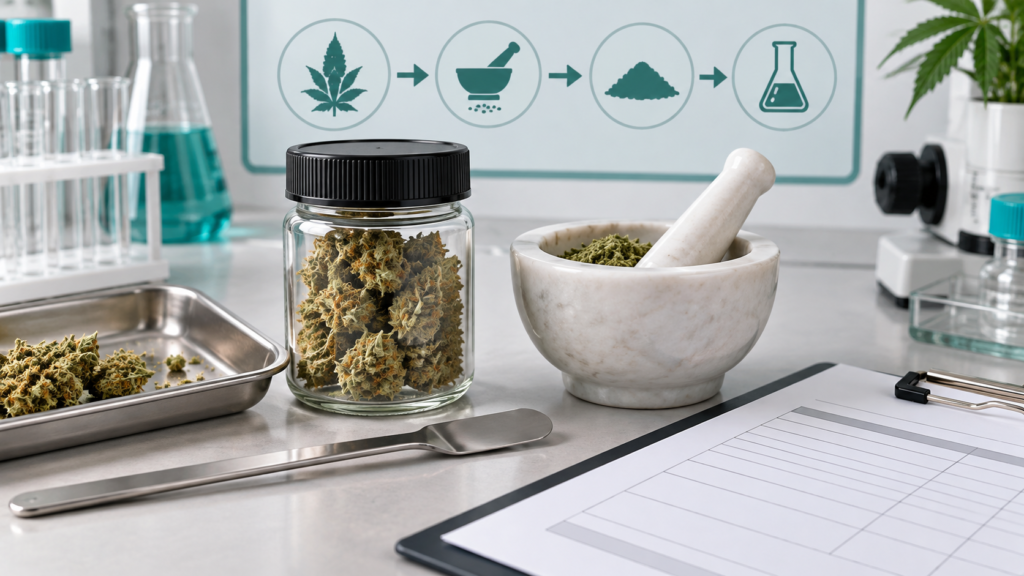
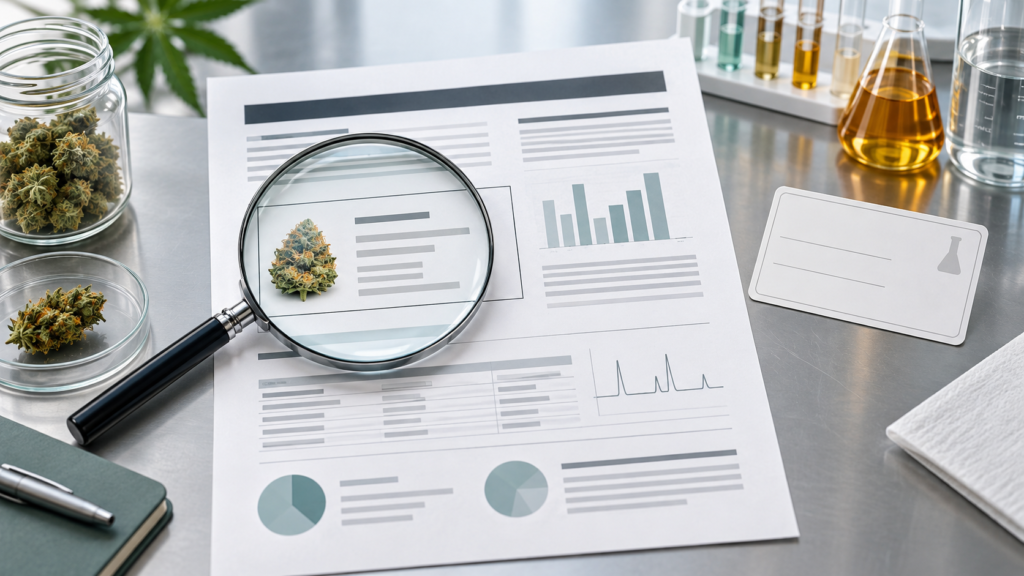
A COA should identify the laboratory, report date, sample or batch identifier, testing methods, and results. The most important match is the batch or lot code. A generic report for an older batch does not verify the bottle in your hand. The product name, formulation, sample description, and report date should also make sense together.
- Find the bottle’s batch or lot code.
- Open the seller’s lab-results page or request the report from customer support.
- Confirm the code exactly, including letters, numbers, and hyphens.
- Check the report’s sample date and whether it covers the current formulation.
- Compare reported CBD and THC with the label’s claims, allowing for the report’s units and laboratory tolerances.
- Look for the panels relevant to the product, such as cannabinoids and contaminants.
- Save the report URL or PDF with your purchase record.
Use the site’s lab-results information when available, and learn how batch codes work in the cannabis batch number checklist. If a link is broken, the code does not match, or the report is impossible to interpret, pause before buying and ask a specific question.
Ingredients, warnings, and practical buying checks
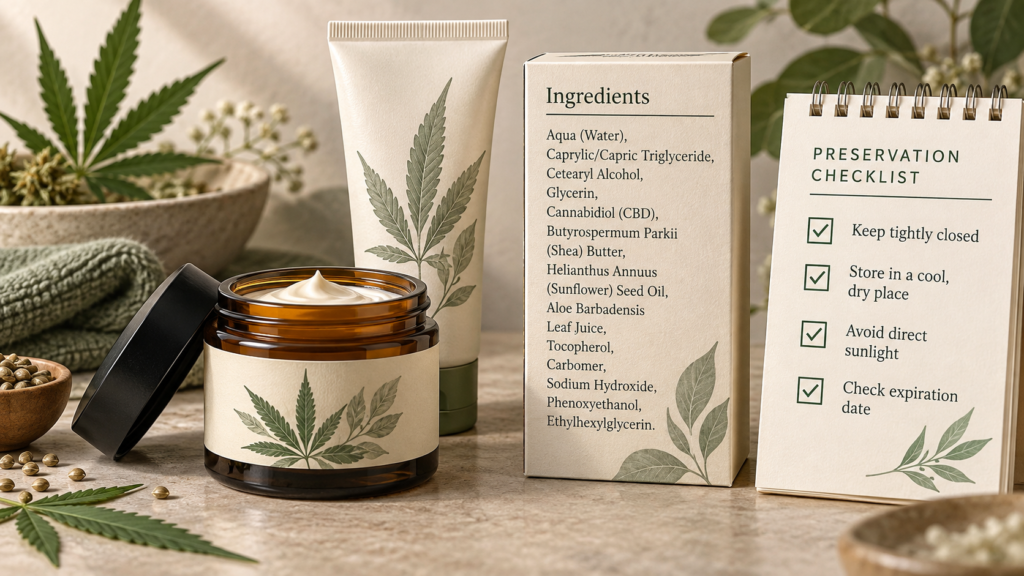
The ingredient list can reveal the carrier oil and added flavor. People with allergies or dietary restrictions should not rely on a product name alone. Look for clear directions, storage guidance, an expiration or best-by date when provided, and contact information. A warning about THC content is important because even hemp-derived products can have different cannabinoid profiles and may be regulated differently across jurisdictions.
Federal agencies describe cannabis and cannabis-derived products as an evolving regulatory area. The FDA explains that it has not approved most cannabis-derived products for general use and that state and federal rules can differ; review the FDA consumer update and the FDA CBD regulation overview. These sources are better references than a seller’s broad statement that a product is “legal everywhere.”
Before ordering, check the site’s shipping policy and regional availability guide. Rules may change, and the buyer remains responsible for checking the current rules where the product will be received.
Red flags on a CBD oil label
- Only “hemp oil” is listed, with no clear CBD amount.
- Total extract is presented as if it were pure CBD.
- No batch code or no way to connect the code to a report.
- Medical promises such as treating, curing, preventing, or diagnosing a condition.
- Unclear serving units or a dropper claim that conflicts with the bottle volume.
- Missing ingredients, seller identity, or customer contact method.
- A COA with no laboratory identity, date, sample information, or relevant results.
- Universal shipping or legality claims that ignore local restrictions.
A red flag is a reason to investigate, not proof of misconduct. Ask for the missing information, compare it with the bottle, and choose a different product if the answers remain vague.
Frequently asked questions
Does more CBD on the label mean a better product?
No. Total CBD is only one comparison point. A shopper should also consider ingredient transparency, batch-specific testing, packaging quality, price per stated amount, shipping limits, and whether the formulation fits the intended adult-use purpose.
Is a CBD label the same as a medical label?
No. Consumer labels provide product information. They do not diagnose a condition or establish that a product treats or cures one. For current safety information, the FDA and CDC are more appropriate sources than marketing copy; the CDC’s cannabis FAQ discusses questions and uncertainties that shoppers should consider.
What if the COA has a different CBD number?
First check units, batch identity, report date, and whether the result is per gram, per serving, or per container. If the difference still cannot be explained, contact the seller before using the report as a purchase decision.
Can I travel with CBD oil?
Do not assume that a federal hemp reference answers every travel question. Transportation, destination, THC concentration, carrier rules, and local law can matter. Check current official guidance and the destination’s rules before traveling.
A repeatable label-reading routine
For regular shoppers, consistency is more useful than memorizing every industry term. Use the same five-minute routine each time: identify the product, translate the units, match the batch, inspect the ingredients, and check the destination rules. Save a screenshot of the exact product page because online descriptions can change after a purchase. If the bottle differs from the page, photograph both and ask the seller which information controls.
When comparing price, calculate cost per labeled milligram only after confirming that the milligrams refer to CBD rather than total extract. Then consider the cost of the information you receive. A slightly more expensive product with an accessible batch report, clear ingredient list, and responsive support may be easier to evaluate than a cheaper bottle with vague numbers. Price is not proof of quality, but missing information is a real comparison disadvantage.
Keep claims in three separate columns: what the label says, what the COA reports, and what an official source explains. This prevents a marketing phrase from quietly becoming a fact in your notes. It also gives customer support a precise question, such as “Can you explain why this batch report uses mg/g while the label uses mg per bottle?” Clear questions usually produce better answers than a general request to confirm that a product is “safe.”
If the information cannot be reconciled, do not feel pressured to complete the purchase. A transparent seller can explain its units, batch process, and shipping limits. Your goal is not to prove that a product is good or bad from a label; it is to decide whether the available evidence is sufficient for your own buying criteria.
Conclusion: make the label earn your trust
A reliable CBD oil label gives you a starting map: what the product is, how much is in the bottle, what ingredients are included, and how to connect it to a batch report. The strongest review combines that map with a product-specific COA, clear seller policies, current government information, and realistic language about what the evidence can and cannot show. Keep your own checklist, verify the batch, and do not let a bold front-label claim replace careful reading.
Editorial note: Herbxmind publishes consumer education for adults shopping for hemp and cannabis products. This article is not medical, legal, or individualized advice. Regulations, product formulas, and laboratory reports can change, so verify current information before purchasing or traveling.